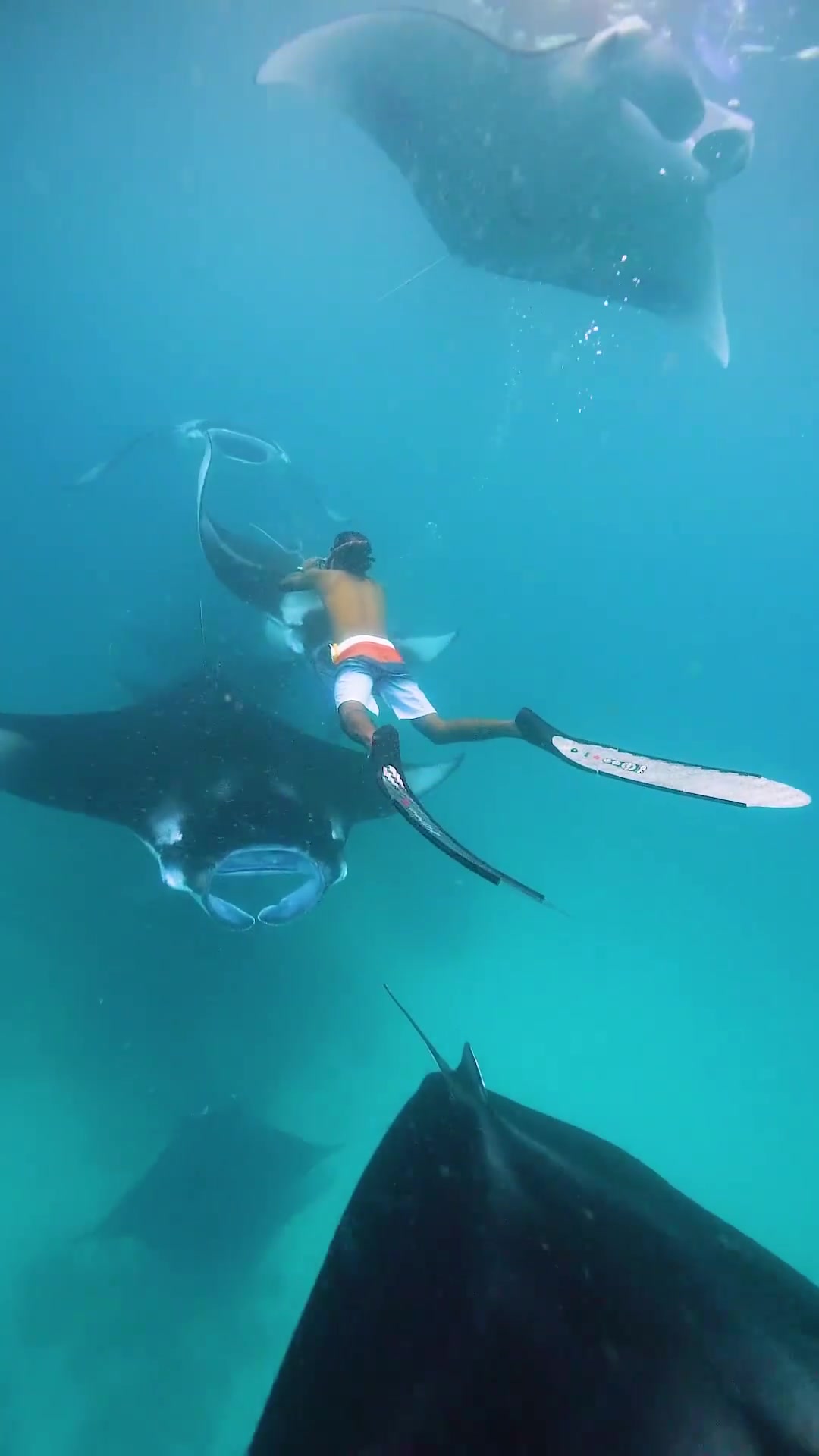
A freediver swims with large manta rays in vivid blue water, a moment of underwater serene coexistence "I hope you'll find some peace of mind in this lifetime," the voiceover begins. The diver flows through the water with a monofin, gliding alongside the graceful rays in a scene that’s as much about mindfulness as it is about marine adventure.
What is freediving with manta rays?
Freediving is a type of diving where divers descend underwater without the use of compressed air tanks. It relies primarily on the diver’s ability to efficiently hold their breath during the dive and involves the use of only a wetsuit and fins. Swimming with manta rays elevates the experience, merging the thrill of marine exploration with the tranquility of the deep. The freediver navigates using a monofin, which is a single fin that covers both feet. This tool helps them move more efficiently through the water, extending dive time and allowing for a more harmonious interaction with the gentle giants. Freediving promotes a sense of peace which is especially encouraged while swimming with manta rays, as they are known for their peaceful behavior. Encounters with these gentle giants are regulated to ensure their well-being and the diver’s experience. Divers are encouraged to maintain a respectful and calm demeanor in their presence. Some freedivers are attracted to the challenge of depth and breath retention. This is a sport that demands rigorous training and specialized gear to ensure the safety of the diver. Divers must develop their lungs capacity, and practice how to exhale and inhale properly.
Where freediving meets mindfulness
Freediving with manta rays offers a unique opportunity to cultivate mindfulness, as the diver must be deeply aware of their breathing and surroundings. This focus can foster a sense of inner peace, and enjoyment of the present moment. The clarity of the water and the graceful movements of the manta rays can create a meditative experience. The absence of noise and the serenity of the underwater environment amplify tranquility. Such experiences can be transformative, helping divers to disconnect from the stresses of daily life. To get the full benefits, divers must also follow guidelines for interacting with manta rays which involve keeping a safe distance and respecting the animal's space.
The elegance of the manta ray
The manta ray is the largest species of rays, with the largest recorded manta ray being 29 feet from wing tip to wing tip. Its grace and form are unmatched and can reach speeds of up to 15 miles per hour. Manta rays are found in tropical and subtropical seas, which makes them a popular attraction for underwater sightseeing. Divers are often drawn to manta rays because of their intelligence and playful behavior, and swim alongside them in sightseeing excursions. Divers must learn how to approach the manta ray and interact effectively. The manta ray is on the endangered species list, making preservation of the marine environment and the species a priority.
The art of the monofin
Using a monofin is essential to freestyle diving. The monofin, a single fin that a diver wears on both feet, propels divers through the water with ease, efficiency, and stability. Monofins offer several advantages. For instance, they allow divers to swim faster and with less physical exertion. This reduces the need to breathe and conserves the air supply. The monofin's design lets the diver imitate a fish-like dolphin kick. This movement is efficient and has been shown to reduce drag. The monofin also gives divers a greater range of motion, which makes it easier to maneuver in the water and to perform various maneuvers.
The goal of inner peace
Manta rays are peaceful animals. They are docile and generally do not pose a threat to humans. Divers should always interact with them respectfully. Diver studies show that divers are more relaxed and focused during these encounters. This contributes to the overall experience, reinforcing the connection between the diver and the environment. The sense of peace that divers experience while swimming with manta rays has a real impact on their mental and emotional well-being. Divers can bring this sense of tranquility back to their daily lives and benefit from it.
Guidelines for an enriching experience
To experience freediving with manta rays most effectively:
- Get Proper Training: Learn the freediving techniques. Take courses that offer instruction from trained professionals. These courses will teach divers about the safety precautions in place for divers and marine animals.
- Prepare for the Environment: Ensure you have the right gear, most importantly a monofin. Research the specific location to know the water temperature, depth, and visibility. Research the marine life.
- Know the Depth of the Encounter: Generally, manta ray dives can be conducted at various depths. Some divers prefer shallow depths for a more casual experience, while others prefer deeper dives for the thrill.
- Respect Marine Life: Remember the rules of responsible diving and follow the guidelines for interacting with manta rays. Although the peaceful encounter itself only has one sentence of transcribed caption, the experience of freediving with manta rays is one of the ocean's most beautiful and infectious joys.
Watch the Reel
Questions readers ask
What is the difference between freediving and scuba diving?
Freediving is different from scuba diving because it doesn't involve the use of compressed air tanks. Divers rely on their ability to hold their breath and use a monofin for propulsion. Freediving is more about the experience of the dive and being in the moment, while scuba diving is more about exploration and underwater activities.
How do manta rays behave around freedivers?
Manta rays are generally peaceful and graceful creatures. They are known for their intelligence and playful behavior, which makes them a popular attraction for freedivers. Divers are encouraged to maintain a respectful and calm demeanor in their presence, which can lead to a harmonious interaction.
Is freediving with manta rays safe?
Freediving with manta rays can be safe if divers follow proper guidelines and have the necessary training. The sport demands rigorous training and specialized gear to ensure the safety of the diver. Divers must develop their lung capacity and practice proper breathing techniques to extend their dive time.
How do divers approach manta rays?
Divers must learn how to approach manta rays effectively. This involves maintaining a respectful and calm demeanor, as well as keeping a safe distance and respecting the animal's space. Divers should also follow guidelines for interacting with manta rays to ensure their well-being.
What are the benefits of using a monofin?
A monofin helps divers move more efficiently through the water, extending dive time and allowing for a more harmonious interaction with marine life. It propels divers through the water with a dolphin-like kick, making it essential for freediving.
Why are manta rays endangered?
Manta rays are endangered due to various factors, including habitat destruction, pollution, and overfishing. They are also vulnerable to bycatch in fisheries targeting other species. Preservation of the marine environment and the species is a priority, making sustainable practices essential for their survival.
Related deep dives
Similar reads based on topic and creator.




Recent articles
Fresh deep dives from the latest Reels we unpacked.




Comments
Be the first to comment.