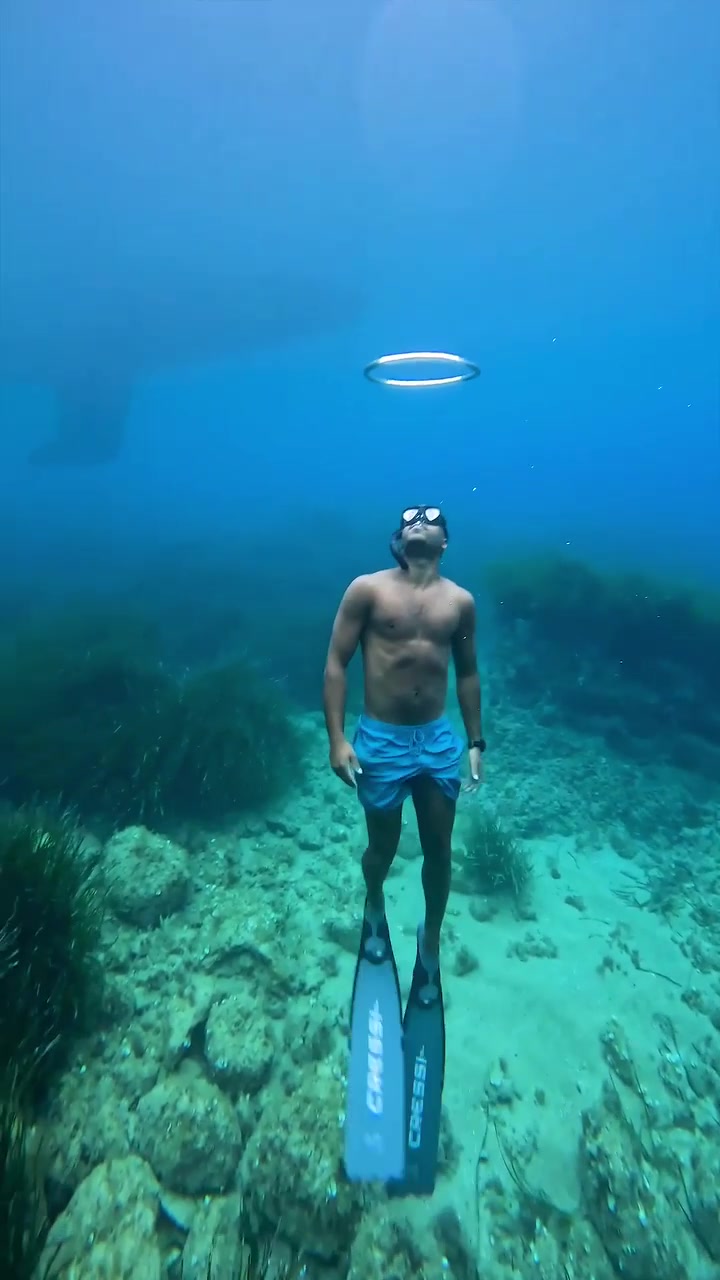
A diver floats effortlessly in a clear blue underwater world, a ring of bubbles surrounding their head. To the casual eye, it looks like magic. In reality, this diver is using Cressi freediving gear to stay submerged for extended periods. This isn't just a sport, it's a way of life for underwater explorers embracing the quiet and serene underwater challenge.
Submerged Symphony
Freediving is the art of exploring underwater depths on a single breath. Unlike scuba diving, you do not expend energy understanding the mechanics of air cylinders. The diver has to concentrate on airflow, buoyancy, and control. Knowing the body’s limits and acclimating to the underwater world with minimal equipment, the freediver’ goal is to go as deep as possible, then return to the surface when his body tells him to. Some freedivers can also hold their breath underwater for up to 10 minutes. That is the extreme. This represents the ultimate test of willpower, technique, and mental fortitude. Freedivers often wear only a mask, a snorkel, a pair of fins, and a weight belt. Advanced divers may use a wetsuit to protect from cold water. The Cressi fins used in the video are designed to help the diver swim efficiently. They are longer and stiffer than normal fins, which generates more propulsion with less effort.
The Submerged Life
Buddhists are a tribe of freedivers who practice elements of apnea. This is the recreational water discipline where divers attempt to hold their breath underwater for as long as possible. Such divers are part of a growing community of adventure seekers who seek deeper connections with both the natural world and their own. For some, freediving is therapeutic and meditative. Mental clarity and focus are critical for a successful dive. Technical aspects have to be mastered as well. The freediver learns what pressures to anticipate, how to manage those pressures, and how to track physiological functions like heartbeat and respiration to enhance performance.
The Underwater Breath
Freediving is about the art of breath control. The diver breathes up through a snorkel before holding it. Make sure the muscles are relaxed and that the diaphragm does not get cramped. Normally, the diver will take a deep, long breath through the nose or mouth to fill her lungs with air. For freediving with fins, the diver's legs propel the more buoyant body downward. Breath-hold divers aim to return as quickly as possible to the surface. With Cressi fins, this makes the propelling motion more streamlined and flexible.
Crazed Colossal Technique
The diver virtually needs to be a fish in order to perform a number of various exercises. A freediver must breathe deeply and slowly, relax and control body movements. On a deeper level, the freediver extends his dive by saving oxygen. Many freedivers employ a variety of methods to achieve this. They go underwater in the form of duck diving on a breath-hold and then come back to the surface. The diver may swim underwater to a depth of 20 to 30 meters (66 to 98 feet) and then float vertically back to the surface. This is where they continue to practice breathing techniques.
The Deep-Dive Fin
The freediver jumps in the water and dives underwater in a streamlined position. She floats underwater and glides. She glides back to the surface after reaching max depth. She does so with a minimal body movement or fin strokes. Cressi freediving fins feature a design that mimics the natural movements of a fish, helping the diver achieve greater efficiency. The diver can travel greater distances with less energy. This increases the diving time underwater. It provides more valuable time underwater for site-seeing and practicing meditation.
Anchoring to the Surface
Eager to recover your breath after a deep dive? Consider the right equipment, wear a wetsuit designed to retain body heat to maintain buoyancy to the diver. Diving too deep or too long exposes divers to hazards that can include drowning, blood circulation failure, and drowning. Understand the environment and know your limits, and you can dive deeper.
Watch the Reel
Questions readers ask
What makes Cressi fins different from regular scuba diving fins?
Cressi fins are designed specifically for freediving, which means they are longer and stiffer than regular scuba diving fins. This design helps generate more propulsion with less effort, making them ideal for the efficient swimming required in freediving.
How do Cressi fins help in achieving deeper dives?
Cressi fins assist in achieving deeper dives by allowing the diver to swim more efficiently. Their design reduces the effort needed to propel through the water, conserving energy and oxygen, which are crucial for extending the duration of a dive.
Can I use Cressi fins for regular swimming or snorkeling?
While you can use Cressi fins for regular swimming or snorkeling, they are specifically designed for freediving. Their longer, stiffer design might make them less suitable for casual swimming or snorkeling, where shorter, more flexible fins are often preferred.
What are the benefits of using Cressi fins for freediving?
Cressi fins offer several benefits for freediving, including improved propulsion, reduced effort, and enhanced streamlining. These features help divers conserve energy and oxygen, allowing them to explore deeper depths and stay submerged for longer periods.
Are Cressi fins suitable for beginners in freediving?
Cressi fins can be suitable for beginners, but it's important to consider that they are designed for efficiency and performance. Beginners might find them a bit challenging to handle at first, but with practice, they can greatly enhance the diving experience.
Related deep dives
Similar reads based on topic and creator.



Recent articles
Fresh deep dives from the latest Reels we unpacked.

Comments
Be the first to comment.