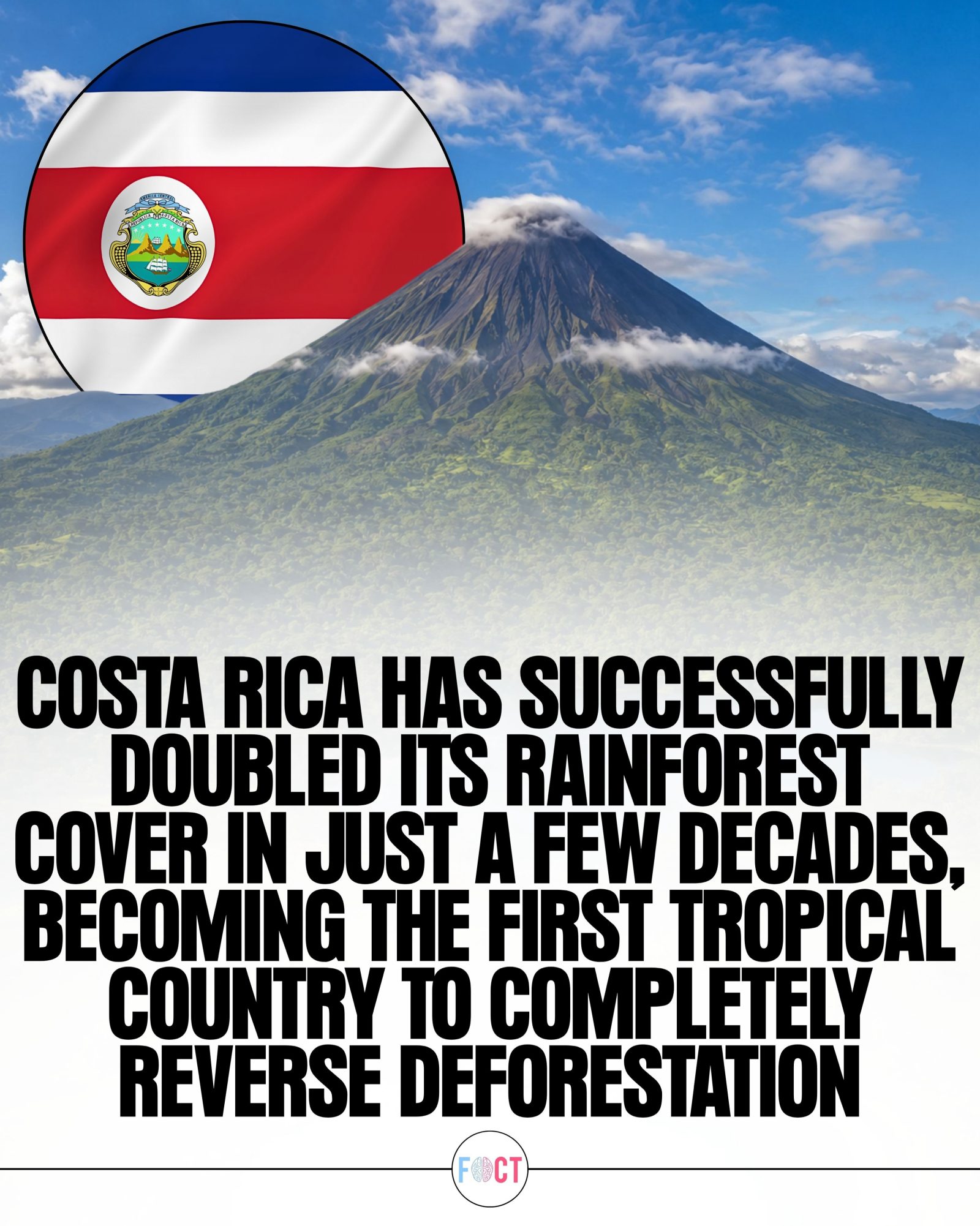
Costa Rica's Reforestation Success
Costa Rica has successfully reversed deforestation, achieving an impressive transformation in its environmental landscape. This journey, fueled by a combination of strict regulations and innovative economic incentives, showcases how strategic environmental conservation can lead to remarkable outcomes.
Why This Matters
The success of Costa Rica's reforestation efforts is a beacon of hope for the global environmental conservation movement. The country's experience demonstrates that it is possible to not only halt deforestation but also to reverse it through a multi-faceted approach that includes both regulatory measures and financial incentives. This serves as a model for other countries grappling with environmental degradation, highlighting the potential for sustainable development and ecological restoration.
The Path to Reforestation
Shifting Focus from Agriculture to Conservation
Costa Rica's journey began with a significant shift in focus from an agriculture-centric approach to one that prioritized environmental conservation. This transition was pivotal, setting the stage for the country's forest cover to rebound from a mere 21% to approximately 60% of its landmass. The shift involved implementing strict regulations and harnessing economic incentives to drive this transformation.
The Introduction of the Payments for Environmental Services (PES) Program
The turning point in Costa Rica's reforestation story was the introduction of the Payments for Environmental Services (PES) program. This program compensates farmers and private landowners for protecting existing forests, planting new trees, and preserving watersheds. Funded by taxes on fossil fuels and international carbon credits, the PES program made protecting and growing forests more financially rewarding than clearing land for cattle or logging.
The PES program is a cornerstone of Costa Rica's environmental success. By offering financial rewards, it incentivizes landowners to preserve their forests and engage in reforestation efforts. This economic framework ensures that landowners benefit directly from maintaining healthy ecosystems, aligning their interests with the broader goal of environmental conservation.
National Bans on Deforestation
In addition to the PES program, Costa Rica enforced national bans on deforestation. These regulations provided a legal backbone that supported the reforestation efforts. By making deforestation illegal, the country ensured that its forests were protected from widespread destruction, further contributing to the successful reversal of deforestation.
The Role of Ecotourism
Costa Rica's booming ecotourism industry has also played a crucial role in its reforestation success. Ecotourism not only provides economic benefits but also raises awareness about the importance of environmental conservation. Tourists flock to Costa Rica to experience its lush rainforests and diverse wildlife, creating a demand for preserved natural environments. This demand, in turn, supports the country's efforts to protect and restore its forests, creating a positive feedback loop.
Practical Tips for Reforestation
Drawing from Costa Rica's success, here are some practical tips for countries aiming to reverse deforestation and achieve similar environmental conservation milestones.
Implement Economic Incentives
Economic incentives, particularly those that compensate landowners for environmental services, are key to driving reforestation efforts. By making conservation profitable, countries can align the interests of landowners with broader environmental goals.
Enforce Strict Regulations
Strict regulations and legal bans on deforestation are essential for protecting existing forests. Without a legal framework, reforestation efforts may be undermined by continued deforestation activities. Enforcement of these regulations ensures that forests are preserved and new ones are allowed to grow.
Promote Ecotourism
Ecotourism can be a powerful tool for promoting reforestation. By highlighting the unique natural landscapes and biodiversity, countries can attract tourists, generate economic benefits, and raise awareness about the importance of environmental conservation. This, in turn, supports reforestation efforts and creates a positive cycle of growth and protection.
Engage in Comprehensive Planning
A comprehensive approach to environmental conservation is necessary for achieving successful reforestation. This involves not only reforestation efforts but also sustainable land-use planning, waste management, and water conservation. By taking a holistic approach, countries can ensure that their environmental conservation efforts are effective and sustainable.
Important Takeaways
Costa Rica's remarkable success in reversing deforestation underscores the importance of a multi-faceted approach to environmental conservation. The implementation of a PES program, enforced legal bans on deforestation, and the promotion of ecotourism have all played crucial roles in the country's reforestation efforts.
The country's journey highlights the importance of aligning economic incentives with environmental goals. By making conservation profitable, Costa Rica has demonstrated that it is possible to achieve significant environmental success while also promoting economic development. This approach can serve as a model for other countries seeking to reverse deforestation and promote sustainable development.
Conclusion
Costa Rica's reforestation success is a testament to the power of strategic environmental conservation. Through a combination of strict regulations, innovative economic incentives, and a thriving ecotourism industry, the country has doubled its rainforest cover and reversed deforestation. This journey serves as an inspiring example for global environmental efforts, demonstrating that with the right approach, environmental degradation can be reversed, and sustainable development can be achieved.
Watch the Reel
Questions readers ask
What specific regulations has Costa Rica implemented to reverse deforestation?
Costa Rica has enforced strict regulations, including bans on logging in protected areas and requirements for landowners to maintain a certain percentage of forest cover on their properties. Additionally, the country has implemented a payment for ecosystem services (PES) program, which provides financial incentives to landowners who protect and restore forests.
How has Costa Rica's reforestation journey impacted its forest cover?
Costa Rica's reforestation efforts have significantly increased the country's forest cover. Since the 1990s, the forest cover has grown from around 21% to over 52%. This remarkable increase is a testament to the effectiveness of the country's restoration policies and initiatives.
What role do economic incentives play in Costa Rica's reforestation success?
Economic incentives, such as the PES program, have been crucial in driving Costa Rica’s reforestation. This program compensates landowners for maintaining and restoring forests, making it financially beneficial for them to engage in conservation efforts. This approach ensures that environmental goals align with economic interests.
Can other tropical countries learn from Costa Rica's reforestation model?
Yes, Costa Rica's model offers valuable insights for other tropical countries. By combining regulatory measures with financial incentives, Costa Rica has demonstrated that it is possible to reverse deforestation. This multi-faceted approach can be adapted to suit the unique challenges and contexts of other regions.
How does Costa Rica's reforestation impact its biodiversity and ecosystem services?
The reforestation efforts in Costa Rica have led to a significant increase in biodiversity and the restoration of essential ecosystem services. Forests provide habitats for numerous species, regulate water cycles, and help mitigate climate change. This ecological restoration contributes to the overall health and sustainability of the country's natural environment.
What are some of the key challenges Costa Rica faced during its reforestation journey?
Costa Rica faced several challenges, including economic pressures from industries that depend on deforestation, such as agriculture and logging. Additionally, balancing the needs of local communities with conservation goals required careful planning and implementation. However, the country's commitment and innovative approaches have helped overcome these obstacles.
How does Costa Rica's success in reforestation contribute to global sustainability goals?
Costa Rica’s success in reversing deforestation and increasing forest cover sets a global benchmark. It showcases that ambitious environmental targets can be achieved through a combination of strong policy measures and sustainable practices. This can inspire and guide other nations in their efforts to combat environmental degradation and promote ecological restoration.
Related deep dives
Similar reads based on topic and creator.

Recent articles
Fresh deep dives from the latest Reels we unpacked.




Comments
Be the first to comment.