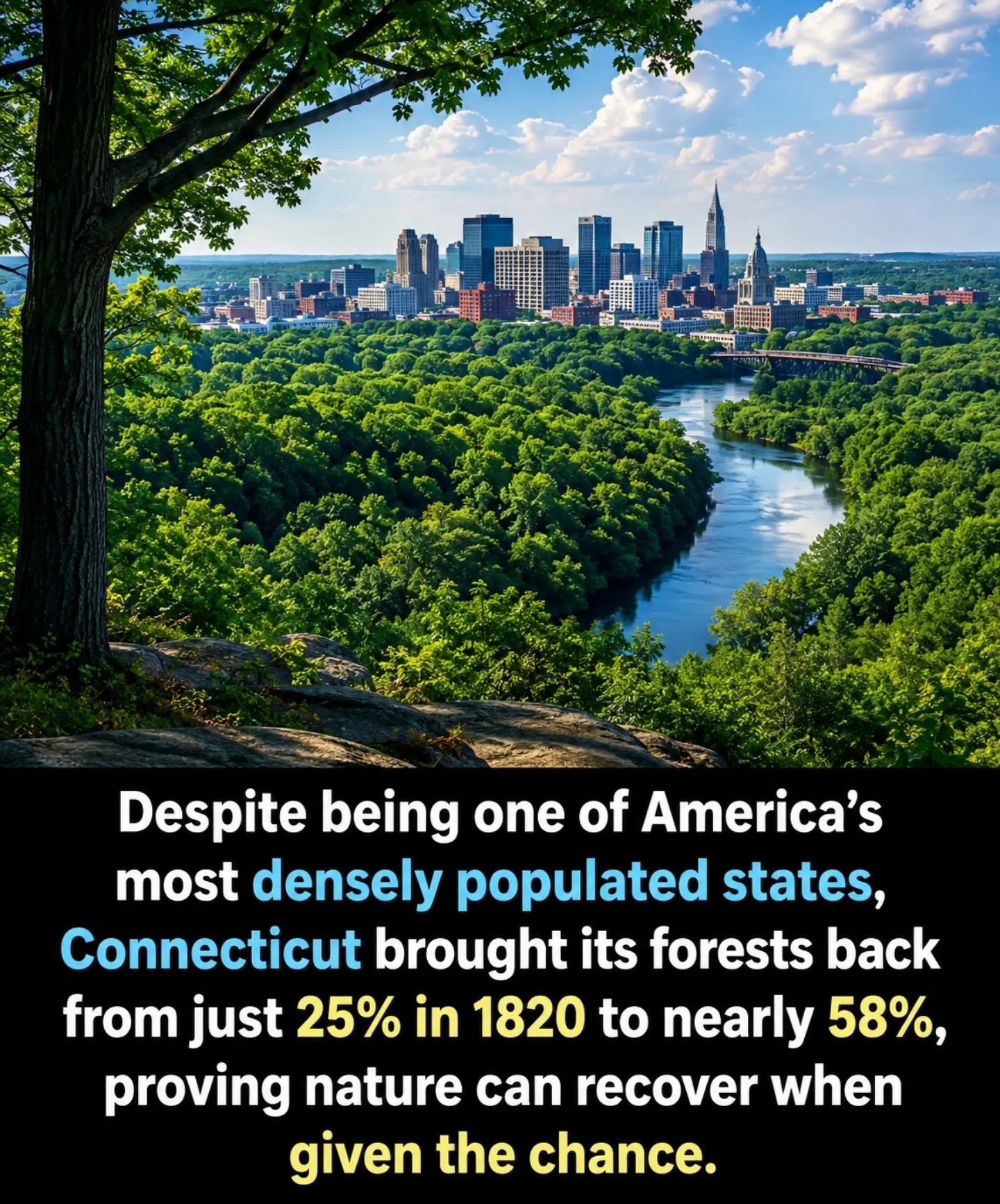
Connecticut Forest Recovery
Connecticut's forest recovery is a striking example of nature's resilience. Despite being one of the most densely populated states in the U.S., Connecticut has seen a remarkable increase in forest cover. From just 25% in 1820, the forest cover has grown to nearly 58%. This transformation highlights the state's commitment to environmental conservation and sustainable development.
Why This Matters
The recovery of Connecticut's forests is not just a local success story; it has broader implications for environmental conservation and urban planning. Understanding how this recovery happened can provide valuable insights for other densely populated regions facing similar challenges. The contrast between urban development and natural beauty in Connecticut serves as a reminder that progress and sustainability can coexist.
The Journey of Forest Recovery
Historical Context
Connecticut's journey towards reforestation began in the early 19th century. At that time, the state was heavily deforested, with only 25% of its land covered by forests. This deforestation was driven by agricultural expansion, industrialization, and urban development. However, as these industries flourished, so did the realization of the environmental toll they were taking.
Early Conservation Efforts
The early 20th century saw the beginning of conservation efforts in Connecticut. Organizations like the Connecticut Forest and Park Association (CFPA) were established to promote reforestation and sustainable forest management. These efforts were crucial in turning the tide against deforestation.
Modern Conservation Practices
Today, Connecticut's forest recovery is sustained through a combination of state policies, community initiatives, and technological advancements. The state has implemented various conservation practices, including reforestation programs, sustainable forest management, and habitat restoration. These practices have not only increased forest cover but also improved the overall health and biodiversity of the ecosystems.
Urban and Natural Balance
Sustainable Urban Development
Connecticut's success in balancing urban development with environmental conservation is a testament to its forward-thinking policies. The state has implemented zoning laws and green spaces that ensure urban areas do not encroach on natural habitats. This approach has helped maintain the lush, green landscapes that are a hallmark of Connecticut.
Economic Benefits
The recovery of Connecticut's forests has also brought significant economic benefits. Tourism, a major contributor to the state's economy, thrives on the natural beauty of its landscapes. Additionally, sustainable forestry practices have created job opportunities and supported local industries. The balance between urban development and natural beauty has thus proven beneficial for both the environment and the economy.
Practical Tips
Connecticut's forest recovery offers valuable lessons for other regions. Here are some practical tips inspired by Connecticut's success:
- Community Involvement: Engage local communities in conservation efforts. Community-driven initiatives can be more effective and sustainable in the long run.
- Policy and Planning: Implement policies that promote sustainable development and protect natural habitats.
- Technology and Innovation: Utilize technology for monitoring and managing forest health.
- Economic Incentives: Provide economic incentives for sustainable forestry practices and reforestation efforts.
Important Takeaways
Connecticut's forest recovery is a beacon of hope for environmental conservation in densely populated regions. The state's journey highlights the importance of community involvement, forward-thinking policies, and sustainable practices. The balance between urban development and natural beauty showcases that progress and sustainability can go hand in hand.
Conclusion
Connecticut's forest recovery is a testament to the resilience of nature and the power of human intervention. By understanding and implementing the practices that led to this success, other regions can also achieve similar feats. The journey of Connecticut's forests serves as an inspiration and a guide for sustainable development and environmental conservation.
Watch the Reel
Questions readers ask
What factors contributed to the significant increase in Connecticut's forest cover?
Several factors contributed to this growth, including the abandonment of agricultural lands, successful reforestation efforts, and stringent environmental policies. These factors allowed forested areas to expand from 25% to 58% of the state's total land area since 1820.
How does Connecticut's forest recovery benefit urban areas?
The increased forest cover in Connecticut helps mitigate urban heat island effects, improve air and water quality, and provide recreational spaces. These benefits enhance the quality of life for residents in densely populated areas, showcasing the importance of integrating nature and the city.
What can other states learn from Connecticut's forest recovery?
Other states can learn about the effectiveness of conservation policies, reforestation initiatives, and urban planning strategies that balance development with nature. By studying Connecticut's success, other regions can gain insights into managing and increasing their forest cover, even in densely populated areas.
How does Connecticut manage to balance urban development and forest preservation?
Connecticut achieves this balance through careful planning, zoning laws that protect forested areas, and programs that incentivize landowners to maintain or restore forests. This approach ensures that urban development does not come at the expense of the state's natural landscapes.
What role do local communities play in Connecticut's forest recovery story?
Local communities play a crucial role by participating in volunteer programs, supporting conservation efforts, and adhering to sustainable practices. Community involvement is essential for the continued success and expansion of forest restoration initiatives across the state.
How does Connecticut's forest recovery impact wildlife and biodiversity?
The expansion of forests in Connecticut has created vital habitats for wildlife and promoted biodiversity. This recovery has led to the return of various plant and animal species, contributing to a healthier and more balanced ecosystem.
What are some of the best places to witness Connecticut's scenic forests and city skylines?
Some notable spots to witness the harmony between Connecticut's forests and urban landscapes include the Connecticut River Valley, the Litchfield Hills, and the coastal towns. These areas offer stunning river views and city skylines framed by lush, scenic forests.
Related deep dives
Similar reads based on topic and creator.




Recent articles
Fresh deep dives from the latest Reels we unpacked.




Comments
Be the first to comment.