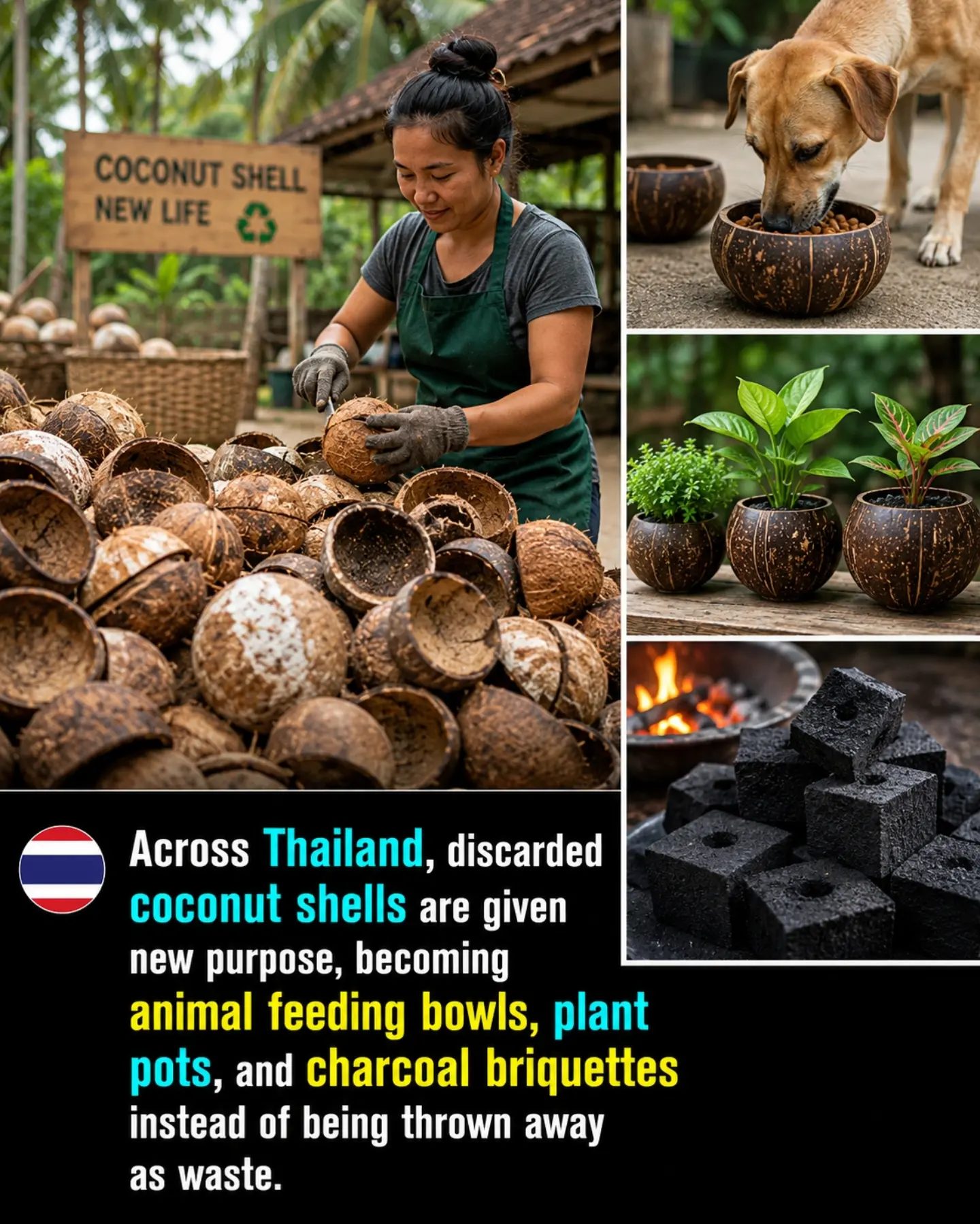
Coconut Shell Recycling
In Thailand, discarded coconut shells are finding new life as eco-friendly products such as animal feeding bowls, plant pots, and charcoal briquettes. This initiative not only reduces waste but also creates useful, sustainable items for everyday use.
Context / Why this matters
Coconut shells are a byproduct of the coconut industry, which is significant in Thailand. Traditionally, these shells were often discarded as waste, contributing to environmental issues. However, this initiative transforms them into practical and eco-friendly products, addressing both waste management and sustainable living.
By repurposing coconut shells, Thai communities are not only reducing waste but also creating a more sustainable and eco-friendly environment. This effort showcases how everyday waste can be transformed into valuable resources, contributing to a circular economy.
Main discussion
The Art of Repurposing Coconut Shells
The transformation of coconut shells into useful products involves several steps. Firstly, the shells are collected and cleaned to remove any remaining coconut flesh. This step is crucial as it ensures the shells are free from impurities, making them safe for use in various products.
Once cleaned, the shells are cut and shaped into the desired forms. For animal feeding bowls, the shells are typically cut into circular shapes and smoothed out to create a bowl-like structure. Plant pots are made by cutting the shells into deeper, wider shapes that can hold soil and support plant growth. Charcoal briquettes, on the other hand, are produced by burning the shells at high temperatures and then compressing the resulting charcoal into briquette form.
These products are then polished and finished to enhance their durability and aesthetic appeal. The final products are not only functional but also visually appealing, making them a popular choice among eco-conscious consumers.
Environment Benefits
The environmental benefits of repurposing coconut shells are significant. By reducing the amount of coconut shells that end up in landfills, this initiative helps lower greenhouse gas emissions associated with waste decomposition. Additionally, the use of coconut shells as a raw material for other products reduces the need for new resources, further contributing to environmental sustainability.
Moreover, the process of transforming coconut shells into charcoal briquettes can also help reduce deforestation. Charcoal made from coconut shells can be used as a sustainable alternative to traditional charcoal, which is often produced by cutting down trees.
Economic Benefits
Repurposing coconut shells into eco-friendly products also has economic benefits. It creates new job opportunities for local communities, particularly in rural areas where coconut farming is prevalent. The production of these products can provide an additional source of income, contributing to the local economy.
Additionally, the demand for eco-friendly products is on the rise, both locally and internationally. By producing high-quality, sustainable products from coconut shells, Thailand can tap into this growing market, potentially increasing exports and boosting the economy.
Cultural Significance
In Thailand, coconuts hold cultural significance and are used in various aspects of daily life, from food and beverages to traditional medicines and cosmetics. By repurposing coconut shells into eco-friendly products, this initiative not only aligns with Thai cultural traditions but also promotes sustainable living and environmental conservation.
The transformation of coconut shells into useful products is a testament to the creativity and resourcefulness of the Thai people. It demonstrates how traditional knowledge and modern techniques can be combined to create innovative and sustainable solutions.
Practical tips
Starting Your Own Coconut Shell Recycling Project
If you're interested in starting your own coconut shell recycling project, here are some practical tips to get you started:
- Collect and Clean: Begin by collecting discarded coconut shells from local farms or markets. Ensure they are cleaned thoroughly to remove any remaining coconut flesh and impurities.
- Design and Shape: Decide on the products you want to create, such as animal feeding bowls or plant pots. Use tools like saws and sanders to cut and shape the shells into the desired forms.
- Polish and Finish: Polish the products to enhance their durability and aesthetic appeal. You can use natural oils or waxes to give them a smooth finish.
- Market and Sell: Identify potential markets for your products, both locally and online. Highlight the eco-friendly and sustainable aspects of your products to attract environmentally conscious consumers.
- Collaborate and Educate: Collaborate with local communities and schools to spread awareness about the benefits of recycling coconut shells. Conduct workshops and demonstrations to educate others on how to repurpose these shells into useful products.
Important takeaways
Repurposing coconut shells into eco-friendly products is a sustainable and practical solution to waste management in Thailand. It not only reduces environmental impact but also creates economic opportunities and promotes cultural traditions. By transforming discarded coconut shells into useful items, we can contribute to a greener and more sustainable future.
Conclusion
Coconut shell recycling in Thailand offers a tangible example of how waste can be turned into valuable resources. By repurposing coconut shells into animal feeding bowls, plant pots, and charcoal briquettes, Thai communities are leading the way in sustainable living and waste management. This initiative showcases the potential of eco-friendly products and the importance of a circular economy.
Watch the Reel
Questions readers ask
How are coconut shell bowls made in Thailand?
Coconut shell bowls in Thailand are crafted by cleaning and drying the discarded shells, then carefully cutting and shaping them into bowls. The shells are often polished and sealed to ensure durability and safety for food use.
What other products can be made from upcycled coconut shells?
Besides bowls, upcycled coconut shells in Thailand are used to create a variety of items, including animal feeding bowls, plant pots, and even charcoal briquettes. These products are not only practical but also contribute to waste reduction and sustainability.
How does upcycling coconut shells benefit Thailand's waste management?
Upcycling coconut shells in Thailand helps to reduce the amount of waste sent to landfills. By transforming these shells into useful products, the initiative supports a circular economy and minimizes the environmental impact of coconut waste.
Can coconut shell pots support plant growth effectively?
Yes, coconut shell pots can support plant growth effectively. They are porous, allowing for proper drainage and aeration, which are beneficial for plant health. Additionally, they are biodegradable, making them an eco-friendly option for gardening.
What is the process of turning coconut shells into charcoal briquettes?
To turn coconut shells into charcoal briquettes, the shells are first dried and then carbonized in a low-oxygen environment. The resulting charcoal is ground into a fine powder, mixed with a binding agent, and pressed into briquette shapes. This process not only reduces waste but also creates a renewable fuel source.
What role do coconut shell crafts play in Thailand's eco-friendly practices?
Coconut shell crafts in Thailand play a significant role in promoting eco-friendly practices by repurposing a byproduct of the coconut industry into valuable resources. This reduces waste and encourages sustainable living, contributing to a more environmentally conscious community.
How does the transformation of coconut shells align with Thailand's circular economy?
The transformation of coconut shells in Thailand aligns with the principles of a circular economy by keeping resources in use for as long as possible. By turning waste into products like bowls and pots, the initiative minimizes waste, conserves resources, and promotes sustainable practices within the community.
Related deep dives
Similar reads based on topic and creator.

Recent articles
Fresh deep dives from the latest Reels we unpacked.




Comments
Be the first to comment.