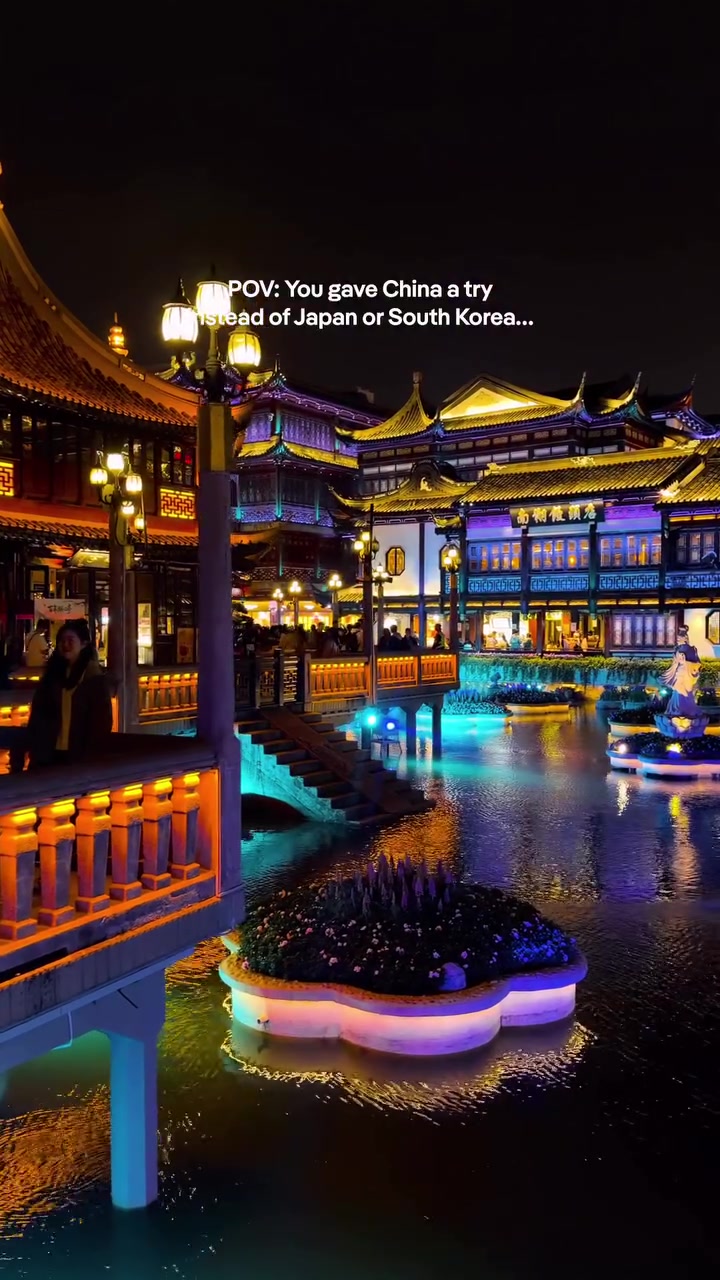
A Glimpse of Contrasts: East and West on One Screen
China’s nightscapes are at once traditional and modern, giving travelers a journey through two worlds — classic architecture and bustling cityscapes. This blend is distinctly Chinese. The first few frames feature a beautifully lit traditional Chinese building complex with a river and illuminated fountains. Contrasted with urban, contemporary landscapes, China’s nighttime scenes offer a unique narrative to anyone who “gave China a try” as a holiday option. Changing nighttime perspectives of China, featuring one city-like setting with a waterfall and one more serene scene of traditional architecture under a full moon. But what impression of the country do these nighttime cityscapes create, and how does China view its own allure as a travel destination? Nighttime scenes transport the viewer into China’s bustling evenings and contrasting tranquil rivers and buildings.
Sanctuary of the Night
Nighttime scenes from China are a canvas of traditional and modern, a lucrative tourism selling point. Beyond the typical travel itinerary of temples, markets, and landscapes, contemporary China uses its cities’ lights and landmarks to captivate the world. Modern buildings and ancient architecture each have their own charm, with the contrast inviting all kinds of visitors — from stargazing seniors to light pollution lovers. The diversity makes it a top choice for tourists, especially for viewers who "gave China a try" instead of Japan or South Korea, according to the reel. In the global marketplace for tourism, China competes with Asian peers like Japan and South Korea. With its unique combination of modern urban scenes and traditional venues, China can offer tourists a unique holiday experience.
Shanghai and Suzhou’s Riverbanks
China’s urban cityscapes, Shanghai and Suzhou blend history with modernity. China’s cityscapes — particularly those of Shanghai and Suzhou — draw international tourists with their modern structures and the river-bending Suzhou Creek. On one hand, Shanghai’s high-rises and neon lights are a canvas of action and development. On the other, Suzhou’s ancient architecture, particularly the classical architecture bordering the historic Suzhou River, offers respite from the bustling city. These riverside settings are worth lingering over, with serenity gently flowing in Suzhou. Tourists who love both lively and quiet settings find both in these cities. Fans of cityscapes, especially those who enjoy riverscapes, will find this twin city experience invaluable.
Moonlit Magic and Blended Architectural Gems
Beyond the bustling cityscapes, China’s peaceful nightscapes offer a unique tranquility through architectural heritage. Traditional housing and historical buildings, especially those near rivers, stand out in their use of authentic materials and colors. The architecture is not only about heritage but about a sophisticated Chinese tradition passed down through generations, and visible in the famed traditional housing. The full moon backdrop illuminates the serenity of traditional Chinese architecture. In the nighttime, the whitewashed walls and timber beams of traditional architecture are exposed, showcasing Chinese craftsmanship. The juxtaposition adds a sense of depth to the viewer’s eye. This is a China still rooted in tradition.
Romanticization of Nightscapes
China uses the enchantment of nightscapes to cultivate a romanticized view of the country. This romantic view accentuates the beauty of Chinese cities with lights that dance back and forth. Tourists and content creators alike are seduced by this romantic image. In the digital media, these images enhance the idea of a beautiful, peaceful, and safe destination. Tourists have the possibility of experiencing China’s urban sensibilities and heritage at night. The romanticization at night also highlights the passion of the Chinese people and their love for their country.
The Nighttime Travel Experience
If you want to experience China’s nightlife:
- Shanghai and Suzhou: Visit Shanghai and Suzhou for a mix of modern and historic architecture.
- Night Markets: Visit the vibrant night markets for a taste of China’s local street food. The night markets not only offer authentic Chinese cuisine but also exhibit the local culture in a very interactive and engaging way.
Watch the Reel
Questions readers ask
What kinds of traditional architecture can I expect to see in China's nighttime scenery?
China's nighttime scenery features a variety of traditional architecture, including beautifully lit complexes, classical buildings around rivers, and historic architecture along the Suzhou River. These structures often use authentic materials and colors, reflecting a sophisticated tradition passed down through generations. The serene atmosphere is accentuated by the soft glow of moonlight, offering a tranquil contrast to the bustling cityscapes.
How do Shanghai and Suzhou differ in their nighttime cityscapes?
Shanghai and Suzhou present distinct nighttime cityscapes. Shanghai is known for its modern high-rises and neon lights, offering a vibrant and action-packed atmosphere. In contrast, Suzhou provides a more tranquil experience with its ancient architecture and the historic Suzhou River, creating a serene riverscape that contrasts with Shanghai's bustling energy.
What makes China's nighttime scenery a unique tourist attraction?
China's nighttime scenery is unique because it blends traditional and modern elements, offering travelers a dual experience of serenity and bustle. This contrast is particularly appealing to tourists, especially those who appreciate both contemporary cityscapes and historical architecture. It sets China apart from other Asian destinations like Japan and South Korea, making it a top choice for visitors.
Can I experience both modern and traditional China in a single trip?
Yes, you can experience both modern and traditional China in a single trip. Cities like Shanghai offer modern urban landscapes with high-rises and neon lights, while Suzhou provides a more traditional setting with ancient architecture and serene riverbanks. This blend allows tourists to enjoy the best of both worlds, making China a diverse and captivating destination.
What is the impact of nighttime scenery on China's tourism industry?
Nighttime scenery is a significant draw for tourists, enhancing China's appeal as a travel destination. The unique combination of modern and traditional elements creates a compelling narrative that attracts visitors from around the world. This lucrative tourism selling point helps China compete in the global marketplace, offering a distinctive experience compared to other Asian countries.
Is the nighttime scenery in China only about big cities like Shanghai?
No, China's nighttime scenery extends beyond big cities like Shanghai. While Shanghai offers a vibrant urban experience, other cities like Suzhou provide a more tranquil and traditional atmosphere. Additionally, the peaceful nightscapes featuring historical buildings and rivers offer a unique tranquility, showcasing China's rich architectural heritage and cultural traditions.
Related deep dives
Similar reads based on topic and creator.



Recent articles
Fresh deep dives from the latest Reels we unpacked.



Comments
Be the first to comment.