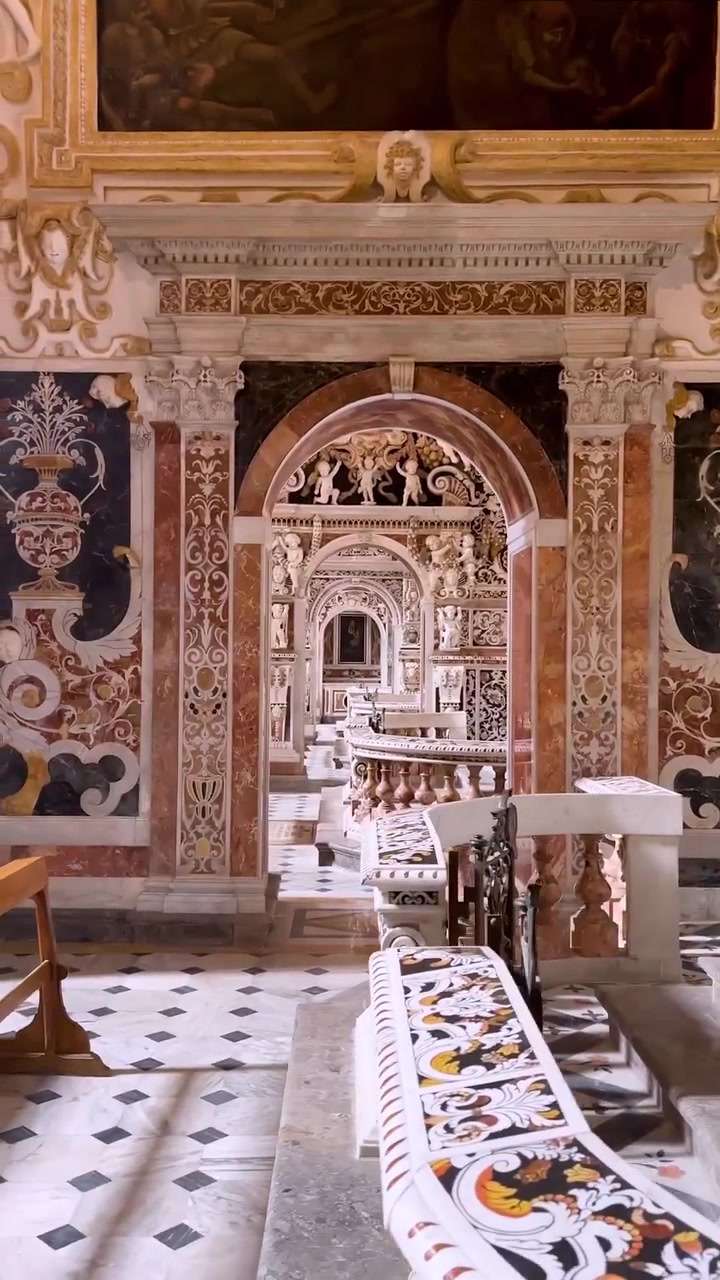
The intricate beauty of Chiesa del Gesù’s interior is a tapestry of Baroque artistry. The marble floors echo underfoot. Marble, stucco, and painted ceilings speak of opulence. This is Chiesa del Gesù, a Baroque masterpiece in Palermo, Sicily.
The Grandeur of Baroque Architecture
The Church of the Jesus in Palermo, Sicily, is an architectural treasure where Baroque style shines in full force. Baroque architecture is known for its ornate detail. It celebrates grandeur, drama, and opulence. The style emerged around 1600 and reached heights across Europe. In Italy, it stretched from the Vatican in Rome to the cathedrals Sicily. As the 17th century unfolded, Baroque details often depicted religious and mythological themes. Their bulky lines and dramatic flourishes inspired patrons to commission the style. The lavish interiors of Baroque churches signaled status and wealth.
How the Baroque sets Italy apart
Italy holds a special place in the development of Baroque architecture. The style was used across the country but it found a special place in Italy. The country's ornate Baroque churches set it apart from the rest of Europe. Indeed, the style was particularly associated with Roman Catholicism. Andrea Giorgio highlights the treasure, evoking the grandeur of Tuscany or the Vatican, insuch a way you imagine the visitors to the Church being moved by the 18th- and 19th-century tourist culture in Italy.
Locating Chies del Gesu in Urban Palermo
The Sicilian Church and its urban environment
Palermo is the capital city of Sicily, Italy. Sicily is home to a vibrant, multi-faceted Baroque architecture. Palermo has been ruled by various dynasties. This has influenced the churches of the island. Baroque architecture is just one component. It stands in tandem with other architectural styles that have flourished in Sicily. The Cathedral of Palermo and the Church of San Cataldo are both important landmarks. Andrea Giorgio captures the Church by showing how it fits into the city's architectural style.
Awe-inspiring interiors
The Church of the Jesus, or Chies del Gesu, hosts onlookers with its intricately carved marble. There is also the use of stucco from the 18th century. This stucco is a decorative element made from gypsum. The ornate carvings depict religious and mythological figures. There are extensive paintings and murals too. These cover the ceilings and walls. The visual data shows that the soft curves, and gilded ornamentation are prime examples of this style.
The Sense of space
The Church has a spatial layout that is typical of Baroque churches. The hall not only has a hall space but also features side chapels. This layout is atypical: the ceiling is vaulted in places. The Church incorporates visual and spatial illusion. The visual data is testament to this. It allows for a more immersive experience. It feels like the world comes together in the middle of space.
The Baroque experience
Moving through the Church of Chiesa Del Gesu
The interior of the Baroque Church of Chiesa del Gesu is designed for movement. The hallway is spacious, stretching out into infinity, daring the person to walk forward. The bright colours of the ceiling are a direct contrast to the marble that lines the walls. The dimming lights makes you want to step forward.
A Historical Experience
The Church of the Jesus is a Historical marvel. As a part of Italy’s Baroque heritage, it depicts stories with its intricate details, symbolism, and its connection with the past. Andrea Giorgio's presentation allows the viewer to imagine walking through its hall, and witnessing the grandeur. Beyond story-telling, it entertains and creates memories and emotions.
Taking the journey
Sicily’s Churches, the Church of the Jesus included, are a testament to the rich opulent Baroque architecture. Giovanni Andrea plans to be your guide through the ornate halls, using it as a model of the city’s architectural heritage. Entering the Church can be like following a sculpture. It makes you walk through rooms — from the long expansive corridors to the vaulted ceilings — anticipating what’s next. The marble and stucco walls create a contrast to the colourful ceilings. The act of walking through the halls makes you feel the grandeur and extravagance of the structure. The ornate carvings are designed to invite you into a world of artistry.
Practical experience through virtual tours
- Virtual Tours:Designate a virtual tour guide or simply use technology to go through the Church. Make sure the image quality is positioned correctly. The Church is symbolic of the lavish history of Sicily.
- Timing: Make sure to take your time to study every aspect of the Church: the paint on the ceiling, the marble floors, the ornate carvings on the walls. The more you explore, the more you notice the beauty of the church.
- Language and Translation:Be proficient in the history. The easier it is to explain, the more you will enjoy the experience. Stereotypes and translations might blur your understanding.
Take a Moment
Architecture enthusiasts are likely to recognize Italy's artistic legacy. It reflects different styles that define the country. Sicily's architectural heritage is both overwhelming and awe-inspiring in its unique way. Visiting the Church of the Jesus is an enriching experience, encapsulating the stately grandeur, artistry, and rich history of Baroque.
Watch the Reel
Questions readers ask
What makes Chiesa del Gesù a prime example of Baroque architecture?
Chiesa del Gesù is a standout example of Baroque architecture due to its ornate details, grand scale, and use of dramatic flourishes. The church's marble floors, stucco, and painted ceilings create a tapestry of opulence that is characteristic of the Baroque style. The intricate carvings and extensive paintings further emphasize the drama and grandeur that define Baroque artistry.
How does the interior of Chiesa del Gesù enhance the Baroque experience?
The interior of Chiesa del Gesù is designed to immerse visitors in the Baroque experience. The spacious hallways, vaulted ceilings, and side chapels create a sense of movement and infinity. The ornate carvings, paintings, and murals covering the walls and ceilings add to the visual and spatial illusion, making the experience more engaging and awe-inspiring.
What role does Baroque architecture play in Italian culture and history?
Baroque architecture holds a significant place in Italian culture and history, particularly in relation to Roman Catholicism. It emerged around 1600 and spread across Europe, with Italy being a hub for its development. The ornate Baroque churches in Italy, including Chiesa del Gesù, signal status, wealth, and the grandeur of the Catholic Church, making them important cultural and historical landmarks.
What other notable Baroque landmarks can be found in Palermo?
Palermo, the capital of Sicily, is home to several notable Baroque landmarks besides Chiesa del Gesù. The Cathedral of Palermo and the Church of San Cataldo are both important examples of Baroque architecture. The city's rich history and multi-faceted architectural styles, influenced by various dynasties, make it a treasure trove for Baroque enthusiasts.
How does the spatial layout of Chiesa del Gesù contribute to its Baroque aesthetics?
The spatial layout of Chiesa del Gesù is typical of Baroque churches, featuring a hall space with side chapels and vaulted ceilings. This layout creates a sense of immensity and allows for a more immersive experience. The visual and spatial illusions, along with the ornate decorations, make the church feel grand and awe-inspiring.
What are some of the key architectural features that set Chiesa del Gesù apart?
Chiesa del Gesù stands out due to its marble floors, carved stucco, and painted ceilings. These elements, along with the extensive use of gilded ornamentation, soft curves, and dramatic flourishes, create a unique and opulent interior. The church's use of visual and spatial illusions to engage visitors is another key feature that sets it apart from other architectural styles.
Related deep dives
Similar reads based on topic and creator.


Recent articles
Fresh deep dives from the latest Reels we unpacked.



Comments
Be the first to comment.