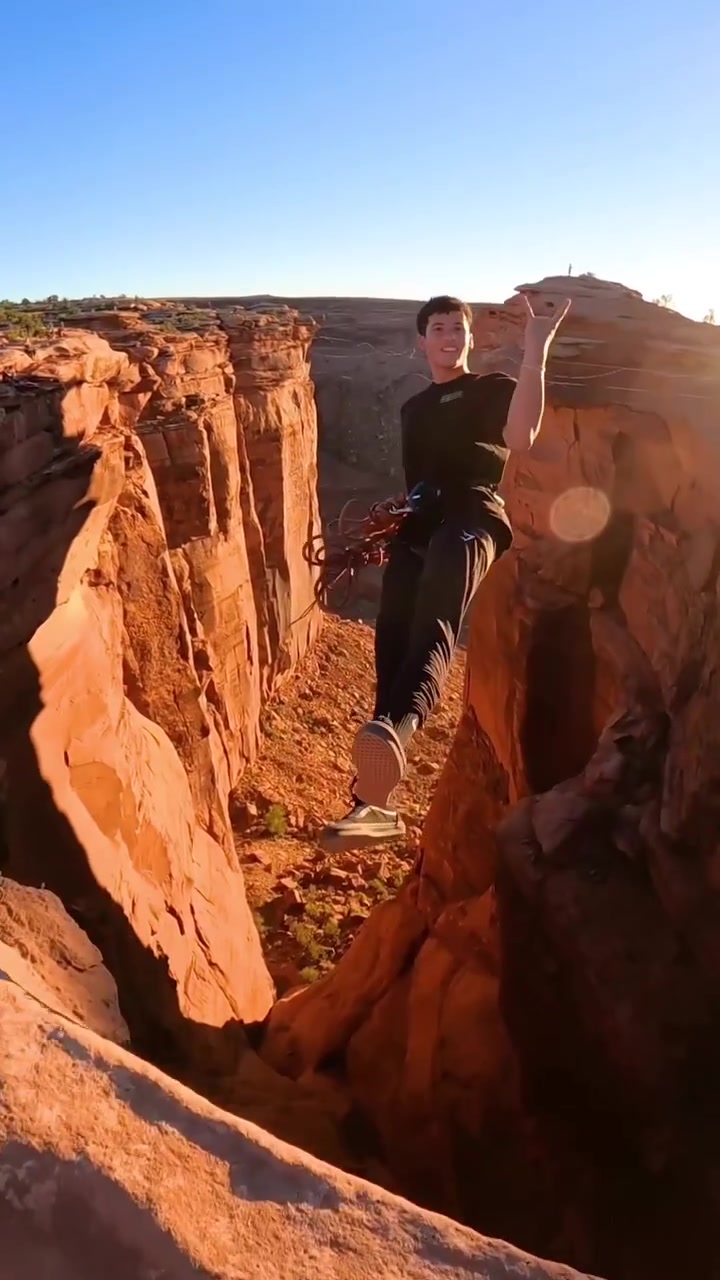
Canyons aren't just geological formations. For intrepid travelers, they're portals to the primal, where the world's layers are laid bare, and the self is tested. The person in this video steps to the canyon's edge, looking down into the bowel of time.
Edge climbing: The draw of precarious beauty
Edge climbing is a sub-genre of hiking that lends the nervous thrill of climbing to day-long hikes. To access points of solitude and beauty, people willingly walk on the edge of narrow ledges or abdominally-assure difficult crossing at the expense of stable footing. Some would call it extreme hiking or canyoning, but edge climbing has its own nuanced mechanics and community of practitioners. Many edge hikes aren’t technical climbs. Hiking through a slot canyon may require slowing down during climactic moments, but the bulk of the trail is simply an intricate rock-garden. Climbing gear is rarely necessary but should be roughed up in case someone feels the urge to step back into safety. An edge climber’s kit trails from hiking gear to actual rock-climbing. The equipment involves mandatory hiking essentials: a backpack, hydration, layers of clothing, gravity boots, a tactical flashlight, and food. But some outdoor enthusiasts will carry the following:
- Climbing shoes
- Gloves
- Harness and ropes
- A helmet Edge climbers know this is a walk on the wild side. They’re uniquely qualified for the terrain, eager for the adrenaline, and willing to embrace risk. Some are experienced climbers, others are trail runners searching for their next thrill.
Elevating adventure: The rise of edge climbing
The drive to edge climb stems from a desire to further explore the natural world. The Adventures Market released a report last year with their take on this rising activity in the industry. Edge climbers are touching the very edges of our planet. Some aspects of this drive include the following:
- Getting to the unmarked trails: Edge climbers are eager to explore topics that reach the furthest boundaries of their explorations. Winding through landscapes, mountain trails, and island fronts are only a few of the criteria.
- Extreme hiking/trekking: This is frontier-level hiking, moving away from on-trail paths, and towards rugged, less familiar, and more dangerous terrain. Hiking to the edge of a cliff to peer down into a 600-foot deep chasm is not for the faint of heart.
- Solo excursions: As many hunters know, solo expeditions can be a rare moment of self-reflection and discovery.
- Canyons: These natural features have long been playgrounds for horseback riders, hikers, and 4×4 drivers. It has always been a small, passionate niche group of people, but they may rank among the most adventurous of all.
Verticality: The aesthetic of canyons
Many canyons are carved by rivers flowing through the rock, but some form via geological faulting or erosion. It’s these contrasts that create such stunning and dramatic views. On a high ledge, blue skies stretch out above, contrasting sharply with the red rock walls.
- Red Rocks: The red rocks have formed a cliff, dropping hundreds of feet into a valley below. Edge climbers experience a strong aesthetic connection with canyons. Canyons are a striking example of nature’s power, where sheer scale and raw beauty are on display.
The Camel’s lessons: Experiences on the Slovenian wall
The Slovenija Wall is a 700-foot-high formation on the edge of Lake Bohinj in Slovenia. For travelers who want a more intensive version of trekking, this wall is world-renowned for its technical edge-climbing hike. You have to climb around the 300-foot tall and around 150-foot wide wall and the sensation of feeling physically exposed to the elements is an emotional thrill. Along the way, the trail takes walkers to picturesque locations. Traversing through the Slovenian Wall is a sensory experience of nature’s beauty. The florae and fauna of the Slovenian landscape are another highlight as you observe alpine flowers, falcons, and other fascinating creatures around you. It hardly takes specialist mountaineering skills, just an average-level gear and a pair of steel nerves. Everyday hikers can experience the thrill of summiting the plateau of the Slovenian wall. The only requirement is a bit of endurance and a level of resilience to tackle the rocky surface and a bit of guts to enjoy the view. Getting back down is an adventure in itself.
The feeling of edge: Experience
Edge climbs train razor-fine focus and mental grit. You learn to stand your ground in the face of extreme heights. You develop a deeper appreciation for the natural world at the same time. The world literature is filled with stories of people who saw their own lives put into perspective by some dangerous moment, something that makes you compare situations into life-or-death. An edge climb can produce those stark contrasts and can catalyze spiritual growth. The experience of edge climbing involves a deep and rich immersion in an unspoiled corner of the world. The excitement of discovering the unexpected around the bend is only part of the holistic kick. Silent wonder, too, in some moments, stands in contrast to the squeals of the crowd at the edge of the cliff.
Epilogue: The allure of canyon balcony ledges
Canyons offer precision in the face of immense forces. They are the slow, inexorable work of earth and water. For edge climbers, they are a rare portal to the best and worst of humanity — “the best” being the humility and resolve found at the eerie edge, “the worst” being the assurance that any of us could slip at any time and fall.
Watch the Reel
Questions readers ask
What exactly qualifies as edge climbing, and how is it different from regular hiking or climbing?
Edge climbing is a unique blend of hiking and climbing, focusing on navigating narrow ledges and precarious crossings, often found in canyons. Unlike regular hiking, it involves more risk and technicality, but unlike climbing, it doesn't always require specialized gear. It's about embracing the thrill of walking on the edge, both literally and metaphorically.
Is edge climbing only for experienced climbers, or can beginners give it a try?
While edge climbing can be dangerous, it's not exclusively for experienced climbers. Many edge hikes don't require technical climbing skills, but beginners should start with easier trails and be prepared with the right gear and knowledge. It's always important to know your limits and be cautious.
What kind of gear do I need for edge climbing, and is it different from regular hiking gear?
Edge climbing gear can range from standard hiking equipment to actual rock-climbing gear. Essential items include a backpack, hydration, clothing layers, sturdy boots, and a flashlight. For more challenging routes, you might need climbing shoes, gloves, a harness, ropes, and a helmet. The gear can vary based on the specific trail and your comfort level.
Are there specific locations known for edge climbing, or can it be done anywhere with a bit of a drop?
Edge climbing is typically found in locations with unique geological features, like canyons, slot canyons, and steep mountain trails. Places known for this activity include areas with red rock formations, such as those found in the American Southwest. It's not just about the drop; it's about the terrain and the thrill of the edge.
What are the potential risks involved in edge climbing, and how can they be mitigated?
The primary risks in edge climbing include falls, getting lost, and encountering unexpected weather changes. To mitigate these risks, always research the trail, check the weather, and carry the necessary gear. Going with an experienced partner or guide can also enhance safety. Furthermore, knowing your limits and being prepared to turn back if needed is crucial.
Can edge climbing be done solo, or is it better to have a partner?
Edge climbing can be done solo, and many enthusiasts enjoy the self-reflection and discovery that comes with solo excursions. However, having a partner can enhance safety, especially in more challenging or remote locations. If you choose to go solo, make sure someone knows your plans and expected return time.
How has edge climbing gained popularity, and what drives people to try it?
Edge climbing has gained popularity as adventurers seek out new and thrilling experiences in the natural world. The desire to explore unmarked trails, engage in extreme hiking, and experience the unique aesthetic of canyons drives many to try this activity. The sense of accomplishment and the adrenaline rush are significant factors in its growing appeal.
Related deep dives
Similar reads based on topic and creator.



Recent articles
Fresh deep dives from the latest Reels we unpacked.


Comments
Be the first to comment.