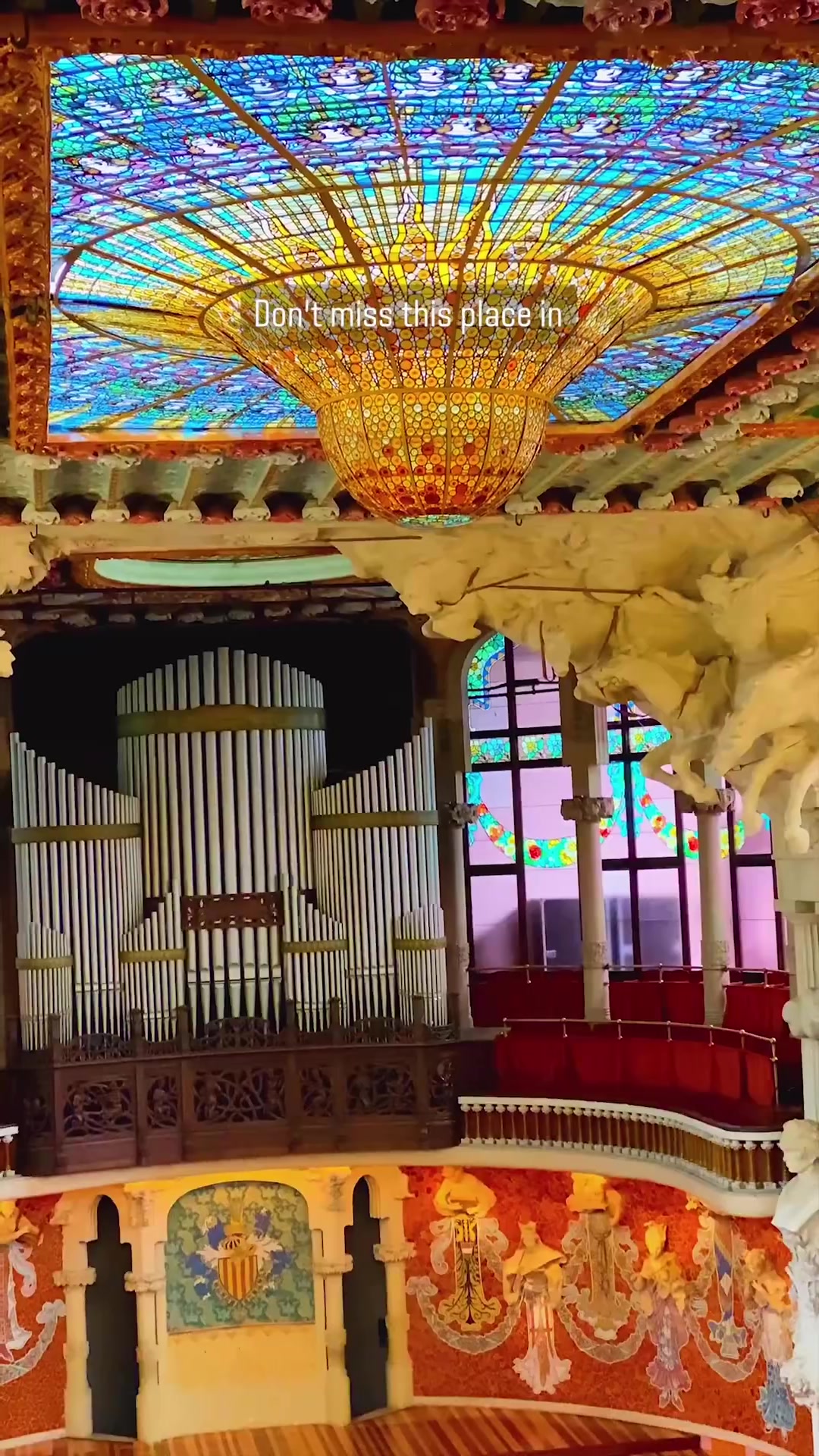
Palau de la Música Catalana sits quietly majestic off Barcelona’s La Rambla, a feast of ornaments and colors overlooked by many tourists. This 2,000-capacity concert hall, in the Catalan Romanesque style, was established in 1908, and it is the only concert hall to be awarded UNESCO World Heritage status. Unlike the more famous Sagrada Familia and Casa Batlló by Antoni Gaudí, Palau de la Música Catalana’s music and architecture stand against the crowd.
The Palace of Catalan Music: Mosaics and Sounds
The building in Barcelona was designed by Lluís Domènech i Montaner. The palace features a concert hall with striking stained glass windows and mosaics, ornate carvings, and rich colors. The style is Catalan modernisme (Catalan Art Nouveau). A design element shaped like a glass water drop in the ceiling of the concert hall is a particular attraction. The building is a UNESCO World Heritage Site. It showcases not only its original, modernist architecture, but also its cultural significance. The hall has been used to host notable music performances and events. Built between 1905 and 1908 in Barcelona, its concert hall holds audiences in the 2,000-capacity audience. The structure elevates Catalan music symbolically and culturally. It showcases a grand staircase, mosaics, colorful marquetry, and stained glass windows. The Palau de la Música Catalana is often overlooked as a tourist destination due to its architecturally lesser-known facade compared to Barcelona’s other notable landmarks. It stays underappreciated for the colors and mosaics inside, but it is also undervalued as a venue for music and its historical legacy. The hall’s primary focus is musical and lacks the flashy, intricate architecture that draws people to Casa Batlló. Its surroundings also lack the tourist flows that feed into its popularity.
The Modernismo movement
The Palau de la Música Catalana is a forgotten landmark in Barcelona. The building combines live music with modernist architecture and is a UNESCO World Heritage Site. When compared to other buildings designed by Antoni Gaudí, the building is a lesser-known historical and physical landmark in Barcelona. Its modernist style falls within the Catalan modernisme movement. The movement began in the late 19th and early 20th centuries. The movement advocated for Catalan culture and arts after being suppressed under the Franco regime. The movement produced original architectural works. It also generated original sculptors, artists, and designers. This modernist interior resulted from the movement’s attempt to use the Catalan style of Catalan Modernisme. The movement used themes like folk art and Catalan art. The goal of this hall was to showcase Catalan culture and traditions. The Palace of Catalan Music breaks away from the norms of buildings in Barcelona and is one of UNESCO’s four World Heritage Sites. This concert venue, like other UNESCO World Heritage Sites, is a place of cultural significance and a great place to visit. And yet, it stands as an overlooked gem that provides value to the travel experience in Barcelona.
The Overall Experience
The Concert Hall
The concert hall’s structure is a feat in itself. The hall is designed in a semi-circular plan with a high ceiling stretching upwards from the orchestra floor. The audience in the hall can hear the music being played at the front not just due to the chamber acoustics but also because of the hall’s unique construction. The design also features a promenade area. Intricate decorations decorate the wall.
The Orchestra
Palau de la Música Catalana stands as a prime example of modernist architecture and a testimony to the Catalan Modernisme movement. The orchestra in the hall is renowned for its vibrant and lively performance across different genres. The performance by the Barcelona Symphony Orchestra is an inspiration for many in the Catalan community.
The Roof Terrace
Violent wind and storms have caused significant damage to the building's roof. Despite these challenges, the builders elevated the roof and added a new layer of mosaic tiles. This new feature is a striking addition to the building’s exterior. When compared to other aspects of Palau de la Música Catalana, the terrace remains a personal favorite among many visitors to the hall.
How to Visit
Tickets
- Concerts: Visitors should anticipate booking tickets up to a month in advance.
- History Museum Tour: Explore the fascinating history of the structure behind the architecture.
- Performance Tour: Discover the stories and history of the performance and architecture.
Tours
Guided tours of the Palau de la Música also allow visitors to the hall to explore it. They detail the history of the performing arts and modernist architecture of the hall.
The Orchestral Feel
Tourists are advised to keep a few things in mind. Barcelona’s modernist architecture and its rich music history remain a favorite haunt of many travelers who find the city intriguing. Tourists can get a feel of the hall’s acoustics by attending a live concert or live music performance to experience the hall. Alternatively, visitors can choose to explore the hall and the museum in the building to get an authentic feel of the structure.
Watch the Reel
Questions readers ask
What makes Palau de la Música Catalana unique among concert halls?
Palau de la Música Catalana is unique because it's the only concert hall to receive UNESCO World Heritage status. This distinction highlights its exceptional architectural and cultural significance, which sets it apart from other venues, even in a city famous for its architectural marvels like the Sagrada Familia and Casa Batlló. It is also notable for its Catalan Romanesque style and its use of vibrant colors and intricate mosaics.
Why is the Palau de la Música Catalana often overlooked by tourists?
Despite its stunning interior and historical importance, the Palau de la Música Catalana is often overlooked because its facade is less flashy compared to more famous landmarks in Barcelona. Many tourists are drawn to the more visually striking and well-known sites, so they miss out on the hidden gems and the rich cultural significance of this concert hall. It also lacks the tourist flows that feed into its popularity, making it a lesser-known destination.
Can you still find traditional Catalan music at the Palau de la Música Catalana?
Yes, the Palau de la Música Catalana is known for showcasing Catalan music, which is a central part of its cultural significance. The hall was built to elevate Catalan music symbolically and culturally. It hosts a variety of performances and events, including traditional Catalan music, which makes it a unique venue for both locals and tourists who appreciate the region's musical heritage.
What is the Modernisme movement and how does it relate to the Palau de la Música Catalana?
The Modernisme movement, also known as Catalan Art Nouveau, was a cultural and artistic movement that began in the late 19th and early 20th centuries. It aimed to promote Catalan culture and arts, which had been suppressed under the Franco regime. The Palau de la Música Catalana is a prime example of this movement, showcasing its unique style with elements like stained glass windows, mosaics, and ornate carvings that reflect Catalan folk art and traditions. It is also a UNESCO World Heritage Site, making it a significant landmark of the movement.
How does the Palau de la Música Catalana stand out compared to other modernist buildings?
The Palau de la Música Catalana stands out because it combines modernist architecture with a strong cultural and musical focus. While other modernist buildings in Barcelona, like those designed by Antoni Gaudí, are known for their intricate and flashy architecture, the Palau de la Música Catalana's appeal lies in its rich interior design and its role as a venue for notable music performances. This dual emphasis on architecture and music makes it a unique and overlooked gem in Barcelona's architectural landscape.
Related deep dives
Similar reads based on topic and creator.




Recent articles
Fresh deep dives from the latest Reels we unpacked.



Comments
Be the first to comment.