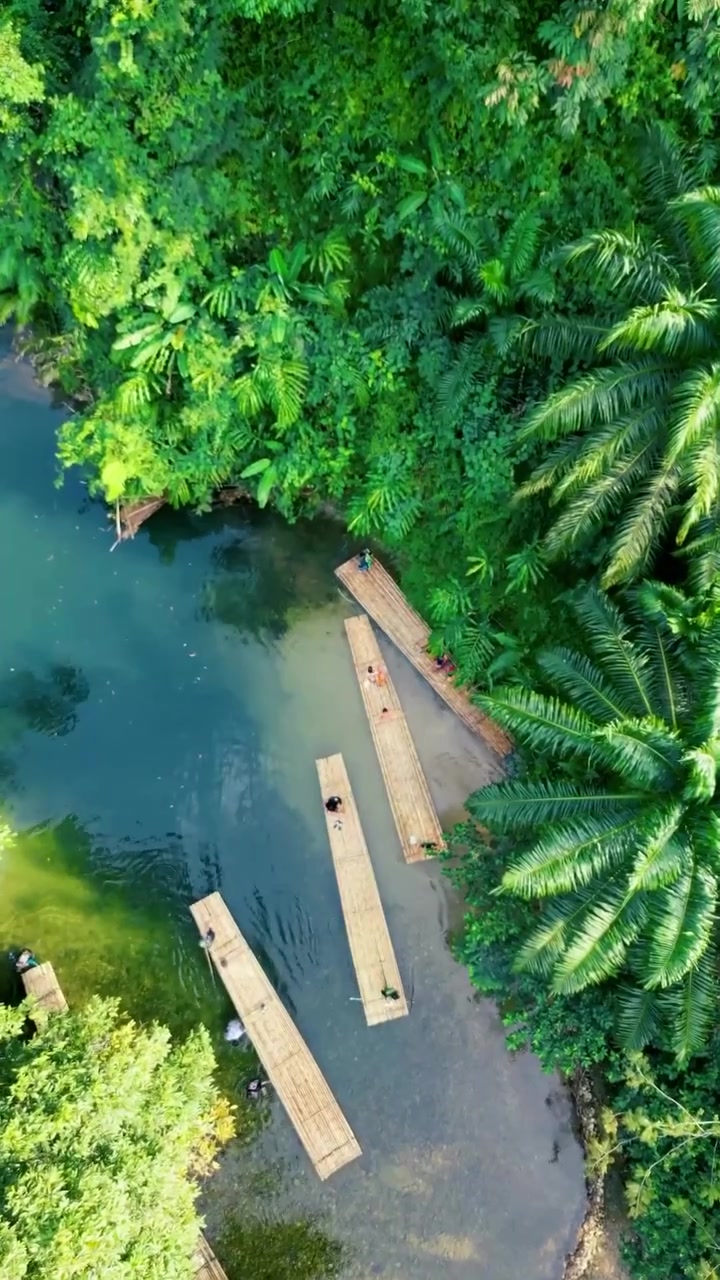
Splashing through lush greenery, the tropical river rafting adventure reveals multiple bamboo rafts and smiling faces aboard, demonstrating the tranquil allure of this water-borne journey. A smooth transition from bird’s-eye views of tight bends in a winding river stuffed with greenery to closer views of companions enjoying a carefree ride speaks to the immersive, social nature of this alternative to a hotel vacation.
What Makes a River Raft Excursion?
A bamboo rafting excursion is a nature outing where participants float down a river on a craft constructed from bamboo. Typically, the rafters navigate calm waters on a raft built from lashed together bamboo poles and travellers along with a guide watch the tropical scenery as it flows gently by. Bamboo rafts are especially popular in tropical settings because that’s where the bamboo grows tallest and strongest. The bamboo rafting experience combines natural beauty with the simplicity of waterways. Instead of motoring along in a motorboat, or straining to paddle a kayak, riders glide lazily on a crafted raft. The experience is a fun way to explore a river and its surrounding environment. These bamboo rafts are sturdy, long-lasting, and have a low environmental impact. Rafting is also an accessible form of eco-tourism, an increasingly popular trend as more people look for vacations that won’t harm the environment. Bamboo rafts navigate easily through calm or slow-moving water, making them ideal for such a leisure experience. In tropical regions, rafting adventures are way more than just an activity. They are low impact and an excellent way to enjoy nature’s beauty for a few hours.
Seeing Rivers Up Close
As an alternative to costly vacations with lots of baggage and high hotel bills, slow adventure travel encourages people to see the world at a relaxed pace. The river rafting experience is increasingly popular in tropical environments in response to trends in tourism. Eco-tourism is slowly replacing mass tourism as preferred form of leisure for younger generations. Instead of tropical beach resorts, travelers are seeking the experience of living in harmony with nature for a few days. They want to visit tropical destinations and be surrounded by stunning nature in a cost-effective way on a budget. Rather than coming to relax on a luxury hotel beach, river rafting gives people that much closer a chance to connect to nature. Bamboo rafts are uniquely suited for this type of exploration. They’re easy to transport and build, and they’re sturdy enough to support multiple passengers. Still, rafting is not as well known as other forms of eco-tourism, such as hiking and fishing. This is a growing niche within the eco-tourism market. For example, the bamboo raft industry is expanding and more rafters are visiting tropical bamboo raft stations for a day or two. These travel days are not hours of hard paddling. Instead, they are tranquil and relaxing.
Traversing Tropical Rivers
On the Water
The river is the destination for bamboo rafting. These rafts navigate slow-moving or calm water, combining beauty, simplicity, and low cost. The natural beauty of the tropical landscape frames a relaxing water activity. The winding river showcases multiple bamboo rafts and lets the beauty of the setting itself be the star. Navigating these waters often requires a guide to navigate the waters and help the tourists relax and enjoy the sceneries. Rafting also requires the ability to maneuver the raft through calms and rapids, a guide will do that for tourists with ease. A guide provides the most relaxing part of the voyage, they will take the necessary steps to navigate the river, allowing the tourists to just enjoy the beautiful scenery.
A Bamboo Raft
The design of a bamboo raft is simple. A raft consists of several bamboo poles lashed together. The structure is typically long and narrow, allowing it to move through the water easily. These rafts are designed to be lightweight, sturdy, and durable, making them an ideal choice for eco-tourism. The bamboo rafts are typically built with natural materials, reducing their environmental impact. Its bamboop poles and ropes are easy to transport. The strength of the poles allow travelers to be transported with ease and comfort.
River Safety
River rafting is generally safe, but some precautions are necessary when venturing out in a bamboo raft. The rafts are typically designed to be stable and safe. However, it is essential to follow safety guidelines and stay alert at all times. Wearing a life jacket is especially important. It’s also important to be aware of the environment and avoid any potential hazards, such as sharp rocks or debris in the water. When rafting, it’s crucial to keep an eye out for other boats.
Commune with Nature
Tropical bamboo rafting offers more than just a journey down a river: it’s a holistic experience that appeals to the eco-conscious and the curious. Leaving the land to float across the water, riders are fully immersed in the natural world. The bamboo rafts are made from natural materials and have a low environmental impact. The ecological aspects of the rafting experience highlight the natural beauty of the environment. Rafting provides a unique perspective on nature, allowing travellers to appreciate the sights, sounds, and smells of the surroundings. The bamboo rafts allow the rider to be surrounded by the sights and sounds of nature. The bamboo rafts glide through the water so smoothly and gently that you can almost hear the water. The rafting experience provides a sense of tranquility and relaxation, allowing travelers to unwind and enjoy the natural beauty of the surroundings.
Nature is Your Backdrop
Tropical bamboo rafting is a way to avoid the pollution and congestion of urban centers. You are not only taking a break from the rat race, but you are also literally traveling away from modern civilization and toxic city smog. Bamboo rafting often means that you are traveling in areas where there are very few people. Especially within multiple bamboo rafting stations in the tropics, there’s a sense of being in a place untouched by humans. River rafters are in close contact with nature. There’s no loud music, no artificial lights. You are in the middle of nature, the natural sounds and the birds.
Practical Experience of River Rafting
The experience of river rafting begins with the getting on the raft. When the guide tells you to step onto your raft, you’ll step on the bamboo logs and take a seat. The raft moves slowly and quietly, and you’ll feel the gentle rocking motion. You can sit back and enjoy the scenery, or take in the sights and sounds of the river. Remember to take pictures and share them with your friends and family back home.
- Obey Safety Guidelines: Listen to the guide for instructions, following their guidance on how to navigate the river and enjoying yourself.
- Wear Protective Gear: For safety, never embark on a rafting adventure without a life jacket.
- Follow with your eyes: Watch the scenery. Tropical vegetation can look like a painting.
A Caring River
Tropical bamboo rafting is an experience that combines nature with foreign cultures. It’s an immersive adventure that lets travelers see the natural world from a new angle, all while supporting eco-friendly travel. As someone who sees the plantation in the distance, you realize that the plant was there with purpose. Modern and ancient practices of nature and travel come together in a raft adventure, both for recreation and for the health of the eco-system.
Watch the Reel
Questions readers ask
What kind of rivers are best for bamboo rafting?
Bamboo rafting is best suited for slow-moving or calm rivers. These types of rivers allow for a relaxing and tranquil experience, where you can enjoy the natural beauty of the surroundings without the need for strenuous paddling. The rafts are designed to navigate these gentle waters effortlessly, making it an ideal activity for those looking for a peaceful adventure.
How are bamboo rafts constructed?
Bamboo rafts are typically constructed by lashing together strong, tall bamboo poles. These poles are bound securely to create a sturdy platform that can support multiple passengers. The simplicity of the design makes it both durable and eco-friendly, as bamboo is a renewable resource.
Can I bring my own food and drinks on a bamboo rafting trip?
While the article doesn't specify, it's generally a good idea to check with the tour operator before your trip. Many eco-tourism activities encourage bringing your own supplies to minimize waste. It's likely that you can bring snacks and drinks, but confirming with the tour guide will ensure you're following any specific guidelines or recommendations.
What should I expect from a bamboo rafting experience in terms of physical exertion?
Bamboo rafting is designed to be a low-impact activity. Unlike kayaking or motorboating, you won't be doing much paddling. The rafts are meant to glide gently down the river, allowing you to relax and enjoy the scenery. It's more about taking in the natural beauty and socializing with your companions than exerting physical effort.
Are there any age or fitness requirements for bamboo rafting?
The article doesn't specify any age or fitness requirements, but given the low-impact nature of the activity, it's generally suitable for people of all ages and fitness levels. However, it's always a good idea to check with the tour operator for any specific guidelines or recommendations, especially if you have any health concerns or are traveling with young children or elderly individuals.
How does bamboo rafting compare to other eco-tourism activities like hiking or fishing?
Bamboo rafting offers a unique experience compared to hiking or fishing. It's more relaxed and less physically demanding, making it ideal for those who want to enjoy nature without strenuous activity. Unlike hiking, which can be challenging, or fishing, which requires specific skills and patience, bamboo rafting allows you to sit back and take in the scenery while floating down the river.
What are the environmental benefits of choosing bamboo rafting over other forms of river travel?
Bamboo rafting is an eco-friendly alternative to motorboats or other motorized watercraft. Bamboo is a renewable resource, and the rafts are designed to have a low environmental impact. Additionally, the activity promotes a slower, more mindful way of experiencing nature, which aligns with the growing trend of eco-tourism and sustainable travel.
Related deep dives
Similar reads based on topic and creator.


Recent articles
Fresh deep dives from the latest Reels we unpacked.

Comments
Be the first to comment.