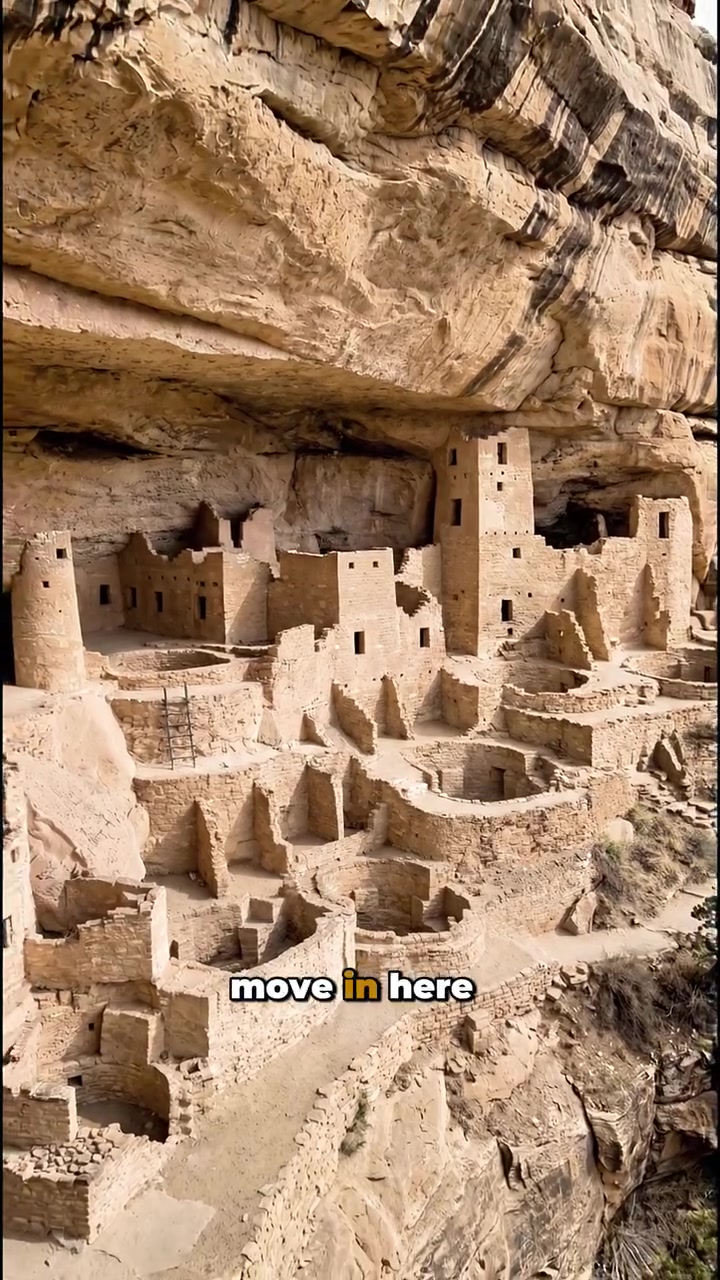
A 150-room stone city carved into a cliff, abandoned for 700 years. This ancient Puebloan cliff dwelling, is no ruin—it's ingenious architecture.
The Architecture of Puebloan Cliff Dwellings
These cliff dwellings are architectural marvels. Puebloans built them in 1200s, into the cliff face. The stone walls, the architecture and most of the rooms are made from mud bricks. Hundreds of rooms, including multi-story structures and communal areas, align the cliff edges. The architecture is connected to the land. They didn’t just build these places to hide; they used their architecture to adapt. The overhanging cliffs provided shelter. The building materials, such as stone and mud, were readily available. The alcove, which is the natural hollow space inside the cliffs, served as a water source. The cliff dwellings were built inside for better protection, shelter and natural resources. The Puebloan cliff dwellings are inside the cliff."
Puebloan Cliff Dwellings and the Past
Peak periods of cliff dwelling construction align with droughts in the broader region. The settlements, for the Ancestral Puebloans, were home, workshops and farming operations. Water and canals were integral to the complex. The Puebloans had developed irrigation systems— canals, cisterns, and dams to manage the water. This confirmed that there was strategic planning and execution of engineering concepts that continue to serve today. The dwellings were built into cliffs for water and protection. They built complex systems for hydrates. This was a quality resource.
The Engineering of Cliff Dwellings
The last tree cut for building was felled in 1281.
"Why keep building a place you are about to leave?" In the late 1200s, there was a sudden shift from cliff dwelling. Since these dwellings relied on wood for building, they had to move to areas where trees were plentiful. They still have descendants living in the same area where they moved to now. Within a few years they had moved on to where their descendants still live..
The Significance of Water in Cliff Dwellings
The cliff dwellings were built in a way that they had water access through the cliff. This water supply was crucial for their survival. The proximity to water was necessary for farming. There are 600 more cliff dwellings in the same park. This shows the significance of their engineering. The shelter and the water supply were the same thing. So they built there for what came out of it. The source of water was a natural hollowed-out alcove within the cliff.
The Enduring Questions
The Ancestral Puebloans integrated the cliff into their architectural design. They built stone cities inside the cliffs. These cliff dwellings served both as shelter and water sources. The refuge they offered in times of drought and threat ensured the survival of the Puebloans. The dwellings stood as a testament to their engineering skills. Many of the engineering practices continued. The engineering practices show how these people preserved their structure. They paved a way for the forward generation to enjoy architecture and engineering. There were 600 years of cliff-dwelling before the Ancestral Puebloans. The shelter and water are important. The dwellings were built into the cliff.
Watch the Reel
Questions readers ask
What materials did the Puebloans use to build their cliff dwellings?
The Puebloans primarily used stone and mud bricks to construct their cliff dwellings. These materials were readily available in the surrounding environment, making them practical for building. The stone walls and mud bricks allowed them to create multi-story structures and communal areas that aligned with the cliff edges.
How did the Puebloans manage water in their cliff dwellings?
The Puebloans developed sophisticated irrigation systems, including canals, cisterns, and dams, to manage water. They built their dwellings near natural water sources, such as hollowed-out alcoves within the cliffs, which provided both shelter and a crucial water supply for farming and daily use.
Why did the Puebloans suddenly stop building cliff dwellings in the late 1200s?
The Puebloans had to move on to areas where trees were plentiful. They had to abandon the cliff dwellings, as they relied on wood for building and the last tree cut for building was felled in 1281. This shift was likely due to a combination of environmental factors, including droughts and the depletion of local resources.
What other structures did the Puebloans build besides the cliff dwellings?
The Puebloans built a variety of structures, including workshops and farming operations, within and around the cliff dwellings. These structures were integral to their daily lives and showed their ability to adapt and innovate in response to environmental challenges.
How many cliff dwellings are there in the same park as the one described in the article?
There are approximately 600 more cliff dwellings in the same park, highlighting the extensive engineering and architectural achievements of the Ancestral Puebloans. These dwellings served as both shelters and water sources, demonstrating their strategic planning and resourcefulness.
What happened to the descendants of the Ancestral Puebloans after they left the cliff dwellings?
After the Ancestral Puebloans left the cliff dwellings, they moved to areas where trees were more plentiful. Their descendants continue to live in the same region, carrying on the legacy of their ancestors' engineering and architectural skills.
Related deep dives
Similar reads based on topic and creator.

Recent articles
Fresh deep dives from the latest Reels we unpacked.
Comments
Be the first to comment.