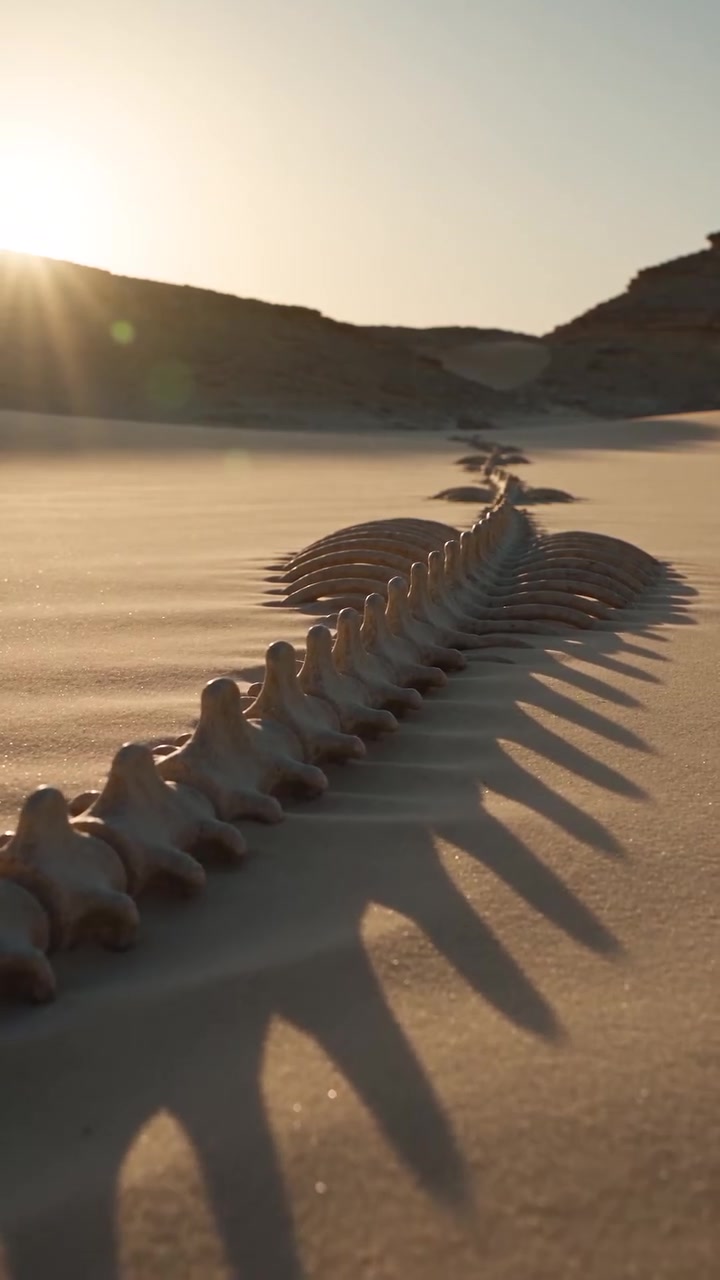
The Whale Cemetery in the Desert
Sand stretches as far as the eye can see. A hundred miles inland where no sea exists now, this sand is a lost graveyard with a mystery: all of the skeletons are whales. The Wadi Al-Hitan desert holds a time-capsule of a previous world, one that ended when the Tethys Sea drained from North Africa. But these are not the same whales we see today. At one point, these creatures had tiny hind legs. These vestigial appendages are remnants of their distant ancestors, who walked on land. This graveyard of ancient whales is one of the biggest paleontological sites for whales, buried in the desert. The largest of the skeletons belong to the Basilosaurus, a whale as long as a bus.
The Evolution of Land-Walking to Ocean-Roaming Whales
Whales today are 100% aquatic. The ancestors of modern whales were not. Their ancestors, land mammals, slowly evolved into aquatic adaptations. The remains of these transitional creatures have not only given insights into evolution, but its stronghold is one of the most poignant evidence of how evolution works — land mammal ancestors evolved into sea creatures. This desert graveyard of whales is one of the event’s biggest attractions. Each whale fossil is an imprint of a previous existence. The giants of Wadi Al-Hitan are the central focus of the fossils and the desert. Bone by bone, from the skull down to the vestigial remains of hind limbs, the Basilosaurus stands as the largest of the fossils. The presence of the leg bones in whales is not simply an exciting quirk of evolution. It is evidence of how limb shapes evolve.
What is Wadi Al-Hitan?
The Valley of Whales gives a look into the37-million-year-old mystery of how ancient gigantic whales evolved in what is a major paleontological site today. Huge marine mammals now lie in sandy graves in the Egyptian Western Desert, about 100 miles from anywhere near a modern sea. The ground of the site is littered with skeleton remains of whales. Scientists theorize that when a shallow, warm sea covered the area, the area was a shallow seawater jungle. The site contains around 600 different fossils from 10 miles in the desert plateau. The Bacillosaurus, which is one of the biggest, had extremely small legs that is not even as large as a human hand.
The Community of Land-Walking Whales
The Valley of Whales is the most spectacular example of what has become known as the “whale graveyard” desert in the world. Over 600 whale fossils have been discovered in the fossilized remains of a shallow sea that once covered parts of what is now the Egyptian desert. The valley holds the remains of over 600 different whales from the early Oligocene age, making it the most important fossil site outside of the Americas. There is a climax point in the process when the whale evolved to live in the sea.
Evolutionary Clues
The wadi itself is a geological history lesson. The skeletons are the bones of ancient cetaceans. The plateau where they were discovered once rested under deep water, but now the surrounding desert reveals the remnants of an ancient seabed. The buried whales of Wadi Al-Hitan include species such as Basilosaurus and Dorudon. This provides a unique window into the evolutionary links between cetaceans and land-based mammals. These fossils provide an incredibly rare snapshot of the transition from land-based mammals to an aquatic existence. The skeletons from the site show the first early whales retain primitive mammal traits, such as functional hind limbs, and teeth not unlike those of pre-historical mammals. The land-walking whales also show how arms, and legs evolved in spurs.
How to Visit the Mystery of Whales in the Desert
The Wadi Al-Hitan is an incredible example of how deserts can preserve ancient history. Watching for artifacts, hiring a guide, and reading up on the history are all great ways to prepare for what will be one of the most incredible surroundings.
- Plan Your Trip: The site is remote and requires a day trip from Cairo. Book a tour with DeepPlanetTV for details about the area and stories behind its history.
- Hire a Guide: A guide is essential for navigating the vast desert and understanding the geological and paleontological details.
- Bring Water and Sun Protection: The desert can be unforgiving with harsh sun and wind conditions, so prepare with water and sun protection.
- Wear Comfortable Shoes: Sand storms are not uncommon, so prepare with comfortable shoes and sturdy footwear.
- Prepare for the Climate: The desert has its own unique climate. The sand can be 100 degree temperatures and can be as low as 32 degrees during the coldest months.
- Avoid Peak Temperatures: When it is extremely hot, and during sandstorms, the valley is a dangerous place to be. Despite the danger, the sight is worth the trip. The bones of the Bacillosaurus and other creatures allow you to really ponder the concept of evolution. The Valley of Whales gives us a fresh perspective on the history of the Earth. The only warning is to view the valley without the comfort of technology. If you venture into the desert and follow the tracks into the past, you will find one of the most stunning geological relics on the planet. You will look into the past and see the land-walking creatures that evolved slowly into the sea creatures.
Watch the Reel
Questions readers ask
What types of whales are found in Wadi Al-Hitan?
Wadi Al-Hitan is home to a variety of ancient whale species, with the most notable being the Basilosaurus, which could grow as long as a bus. Other species found include the Dorudon, which are smaller than the Basilosaurus. These whales are significant because they provide insights into the evolutionary transition from land mammals to fully aquatic creatures.
How were the whale fossils preserved in the desert?
The whale fossils in Wadi Al-Hitan were preserved due to the unique geological history of the area. Around 37 million years ago, the region was covered by a shallow sea, and when this sea drained, the whale remains were left behind and eventually buried under layers of sand. This process of preservation has allowed scientists to study the fossils in detail, providing valuable insights into whale evolution.
What do the tiny hind legs of the whales tell us about their evolution?
The tiny hind legs found in some of the whale fossils at Wadi Al-Hitan are remnants of their land-dwelling ancestors. These vestigial appendages serve as evidence of how these creatures evolved from land mammals into fully aquatic whales. They highlight the gradual changes in limb structure that occurred over millions of years, showing the transition from terrestrial to marine life.
Can visitors explore Wadi Al-Hitan and see the whale fossils?
Yes, visitors can explore Wadi Al-Hitan, but it requires some planning. The site is located in the heart of the Egyptian Western Desert, about 100 miles from the nearest sea. Guided tours are often available, offering a chance to see the fossils and learn about the site's significance in whale evolution. However, it's important to note that the desert environment can be harsh, so proper preparation is essential.
How does Wadi Al-Hitan compare to other paleontological sites?
Wadi Al-Hitan is considered one of the most important paleontological sites for whale fossils, particularly because of the abundance and variety of specimens found there. It is one of the biggest sites for whale fossils outside of the Americas, and the presence of species like the Basilosaurus makes it a unique location for studying the evolution of cetaceans. Unlike many other sites, Wadi Al-Hitan offers a clear picture of the transition from land-dwelling mammals to fully aquatic whales.
Related deep dives
Similar reads based on topic and creator.




Recent articles
Fresh deep dives from the latest Reels we unpacked.
Comments
Be the first to comment.