Ancient Maya Lime Wash: A Sustainable Agricultural Technique
Ancient Maya lime wash, a traditional practice used by the Maya civilization, involved applying a mixture of burnt lime and water to tree trunks. This technique, far from being merely aesthetic, served a crucial role in protecting trees from pests and fungal growth.
Context / Why this Matters
The ancient Maya were adept at sustainable farming practices that have stood the test of time. Their lime wash technique showcases the ingenuity of these early civilizations, providing a natural, environmentally friendly solution to common agricultural issues.
Main Discussion
The Ancient Process
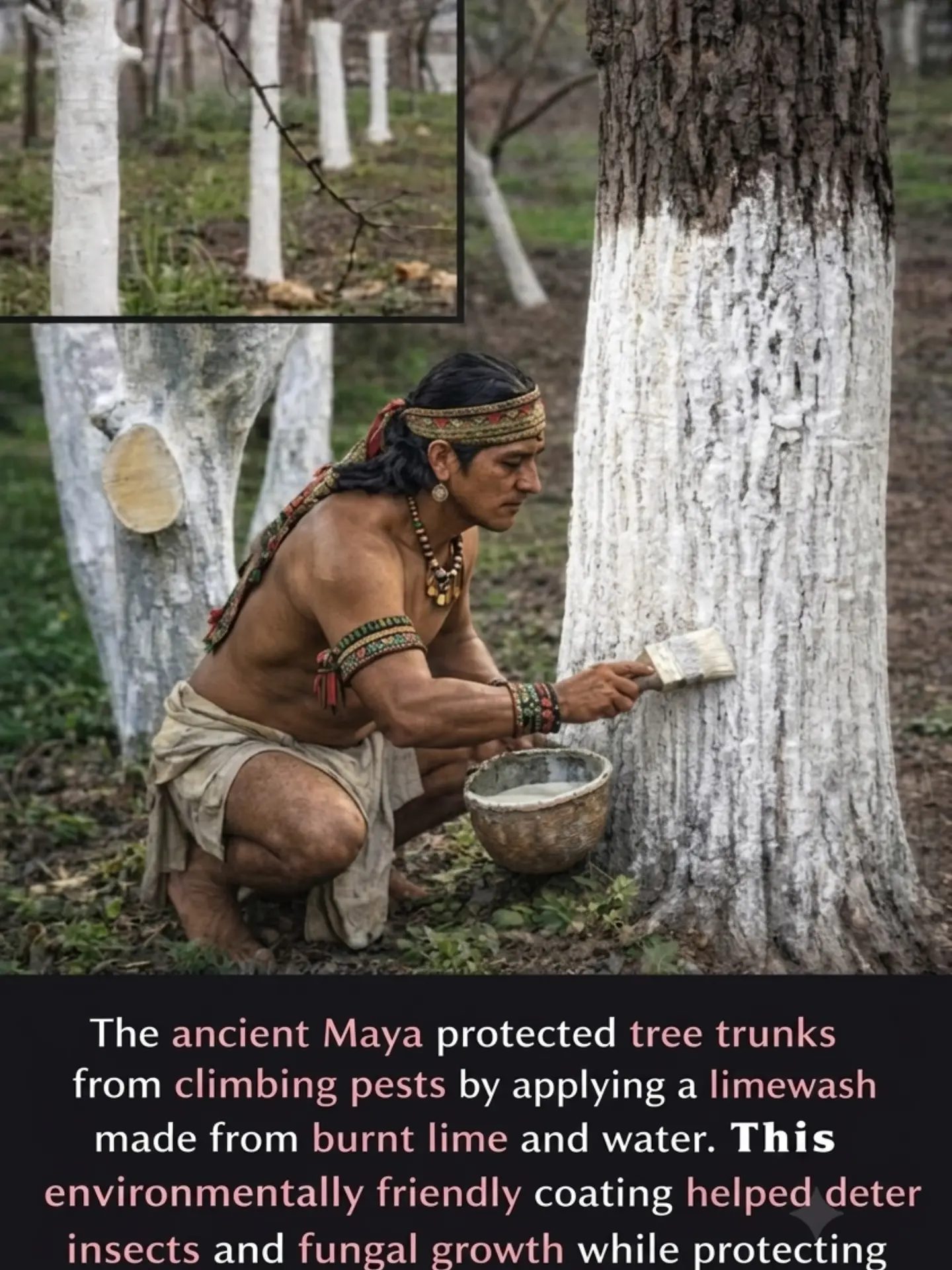
Painting tree trunks white with lime wash was a meticulous process involving burnt lime and water. The mixture was applied by hand, often by someone dressed in traditional Mayan clothing, squatting beside the tree. The visual demonstration underscores the physicality and dedication involved in traditional agricultural practices.
The on-screen text clarifies that this coating was primarily used to protect precious fruit trees. The environmentally friendly coating was effective in deterring insects and fungal growth. This was crucial for maintaining the health of the trees, ensuring a robust harvest.
Benefits of Lime Wash
Lime wash offers several benefits that make it a sustainable and effective agricultural practice:
-
Natural Pest Control: The lime coating acts as a natural deterrent against insects and pests that would otherwise climb up the tree and cause damage. This reduces the need for harmful chemical pesticides, making it an eco-friendly alternative.
-
Preventing Fungal Growth: The coating also helps in preventing fungal growth, which can be detrimental to the health of the tree. This ensures that the tree remains healthy and productive over a longer period.
-
Environmentally Friendly: The use of burnt lime and water makes it a natural, non-toxic solution. This aligns well with modern sustainable farming practices that aim to minimize environmental impact.
Application Techniques
The method of applying lime wash is straightforward but requires attention to detail. The mixture is typically prepared by mixing burnt lime with water to form a paste. This paste is then applied to the tree trunks using a brush or by hand. The thickness of the coating can vary, but it is generally thin enough to allow the tree to breathe while providing sufficient protection.
Practical Tips
If you're interested in trying this ancient technique, here are some practical tips to get you started:
-
Prepare Your Mixture: Ensure you have the right proportions of burnt lime and water. The consistency should be thick enough to adhere to the tree trunk but not so thick that it cracks.
-
Choose the Right Time: Apply the lime wash during the dry season to ensure it dries properly. Avoid applying it during the rainy season, as this can dilute the mixture and reduce its effectiveness.
-
Maintain Regularly: Regular maintenance is key. Inspect the coating periodically and reapply as necessary, especially after heavy rainfall or during the growing season.
Important Takeaways
The ancient Maya lime wash technique offers several important takeaways for modern agriculture:
-
Sustainable Practices: This method is a testament to the sustainability of ancient farming practices. It demonstrates that effective agricultural solutions can be found in nature.
-
Natural Solutions: The use of natural ingredients like lime and water highlights the importance of using non-toxic, environmentally friendly materials.
-
Effective Protection: The lime wash is effective in protecting trees from pests and fungal growth, ensuring the health and productivity of the trees.
Conclusion
Ancient Maya lime wash is more than just a historical practice; it's a sustainable and effective method for protecting trees. By using a simple mixture of burnt lime and water, the Maya achieved a natural, eco-friendly solution to common agricultural challenges. This technique not only preserves the environment but also ensures the health and productivity of fruit trees, making it a valuable addition to modern sustainable farming practices.
Watch the Reel
Questions readers ask
What is Ancient Maya lime wash and how is it made?
Ancient Maya lime wash is a traditional technique involving a mixture of burnt lime and water. It is made by burning lime to create calcium oxide and then mixing it with water. The resulting paste is applied to tree trunks to protect them from pests and fungal growth.
How does lime wash protect trees from pests and fungal growth?
The lime wash creates an alkaline barrier that is inhospitable to many pests and pathogens. This natural coating disrupts the lifecycle of insects and prevents fungal spores from taking hold, thus protecting the tree's health.
Is lime wash safe for the environment and surrounding wildlife?
Yes, lime wash is eco-friendly as it is made from natural materials and does not contain harmful chemicals. It is biodegradable and safe for the environment, making it a sustainable method for tree protection.
Can lime wash be used on any type of tree?
Lime wash can be applied to a variety of tree species. However, it is important to consider the specific needs and health of each tree, as some may react differently to the alkaline nature of the lime wash. It is best to test a small area before full application.
Are there any modern applications for Ancient Maya lime wash techniques?
Yes, modern farmers and gardeners are rediscovering the benefits of lime wash. It is used as an organic pest control method and to prevent diseases. This ancient technique remains relevant for sustainable tree care in today's agricultural practices.
How often should lime wash be reapplied to tree trunks?
The frequency of reapplication depends on weather conditions and the specific environment. Generally, it is best to reapply lime wash annually, or after heavy rainfall, to ensure the tree remains protected throughout the year.
Related deep dives
Similar reads based on topic and creator.

Recent articles
Fresh deep dives from the latest Reels we unpacked.




Comments
Be the first to comment.