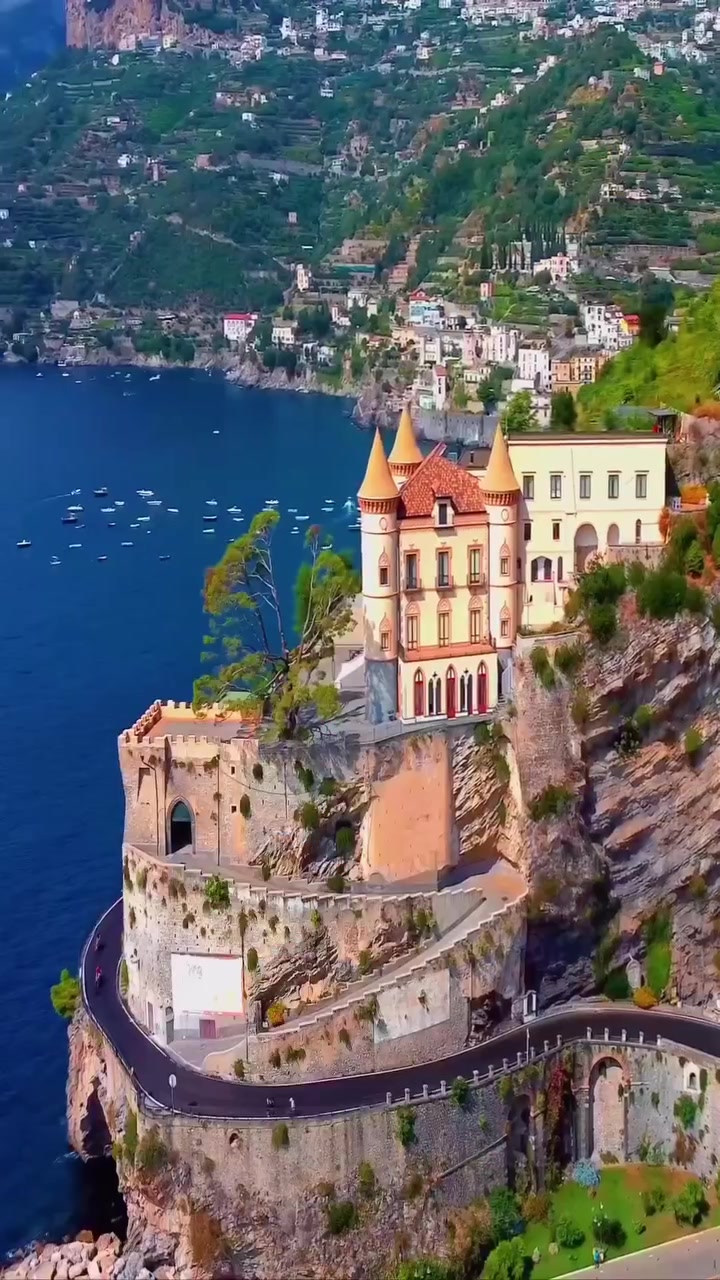
The Amalfi Coast unfurls like a colorful ribbon along Italy’s southwest coast, where vertical towns cascade down to the turquoise Mediterranean. This 50-mile stretch, in four provincial nations, is a tourist destination, but it’s also a UNESCO World Heritage Site. The landscapes, towns and villages comprise a distinct and dramatic resort landscape.
Where the Sea Meets the Cliffs
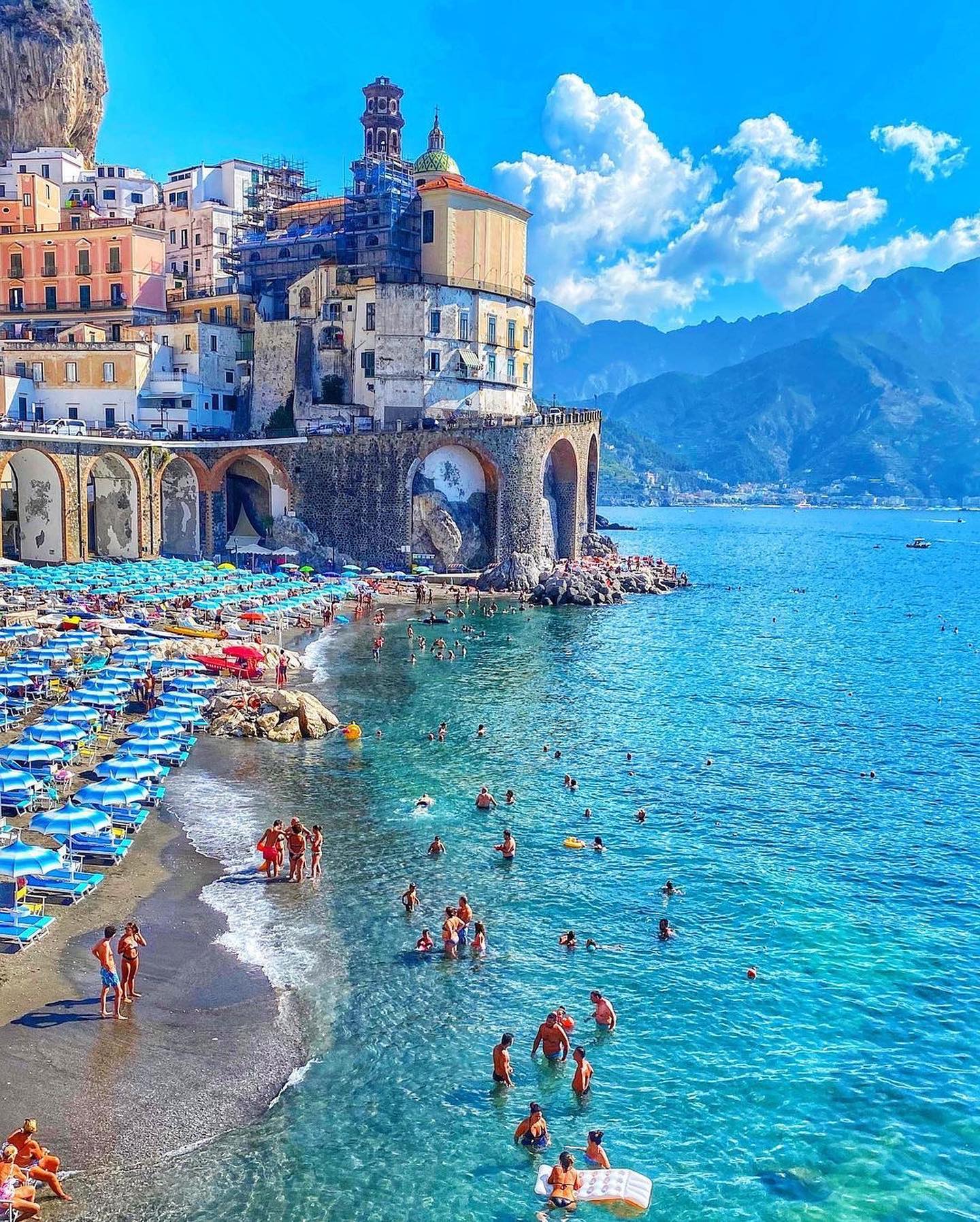
The Amalfi Coast is a string of coastal towns on Italy’s southwest coastline, each town a different shade of pastel or bright. The cliffsides are terraced with lemon groves, vineyards and gardens that create a distinct, vertical landscape. Contrasting against them are the towns themselves, built into the cliffsides, with streets narrow and vertical. The Amalfi Coast is distinctive in the Mediterranean for the unique topography of the settings themselves. Looked at from above, the towns are crisp rectangles of stucco and tile. Located at the foot of Italy, the Amalfi Coast is a part of the Italian Riviera. The towns themselves have townscape features that include distinctive tiles and building facades. Amalfi is built up against a hill, and often has narrow streets where scooters and motorbikes zoom by. Positano features multi-story buildings with dramatic skyward walls and colorful tiles. Ravello is built on a mountaintop with gardens, villas, gardens, all of which are tourist attractions.
The Amalfi Coast’s Tourist Economy
The Amalfi Coast's tourism is supported by three thousand rooms, from a bowl of fresh pasta at the Hotel Marusca or the Hotel Stendhal. Tourism is the economic engine for the region, contributing 30% of the Amalfi region’s total GVA (Gross Domestic Product) . The luxury goods market, however, is not home to Chanel, Prada or other luxury brands. It is instead, all about local goods, like the colorful ceramics that line the coast.
The Economy of Ceramics
The Amalfi Coast’s economy is tied to tourists seeking ceramics. The region is famous for its majolica ceramics. This pottery is distinctive and defined by the colors, and geometric patterns that were created and perfected by the Amalfi region in the 15th century. The distinctive coloring and geometric design is further perfected by the introduction of lead-based glazes. The potters use fragments of broken crockery to adorn their wares. The use of sea shells in pottery decoration is also a distinguishing feature, a testament to the influence of the Amalfi Coast’s geography. “Each piece is an original with a scene of a story to be told.” This craftsmanship of majolica ceramics remains a precious trade that continues.
The Role of Italian Cuisine
Italians are known for their inclusive expression "Tours of Italy." The full Italian tour of Italy includes the Amalfi Coast, the towns and villages, as well as the cuisine. Italian dishes like mozzarella di bufala and sfogliatelle are baked in many of the region’s artisan bakeries. The cuisine of the Amalfi Coast is characterized by its simplicity and quality, focusing on local ingredients. The Amalfi Coast is the heart of the Mediterranean diet.
The Scenic Towns and Their Driving Tour
The Amalfi Coast is a place to drive for the sheer joy of driving a rental car. You can reach any of the towns by way of car. Driving from Afragola to Amalfi is a well-executed, scenic route. It is well-paved, and maintains a consistent gradient. The Scenic Route:
- Start from Naples: Naples is the best launch point. From Naples, find the coastal road SS163, and drive towards Amalfi.
- Through Positano: Positano is a stand out and a vibrant fishing village. When passing through Positano, you'll see the triangular village is fronted by a picture-perfect beach, with grand accommodation overlooking the bay. This town is famous for its high-end clothing.
- Through Amalfi: Amalfi is also an important tourist hub, with the prominent Cathedral of Saint Andrew and the famed Duomo di Amalfi. Amalfi is a commercial hub, a place to buy souvenirs from local stores and markets. To buy high-quality ceramics, visit a ceramic shop.
- Further to Afragola: Afragola is a good option for travelers who want to bypass the tourist zones. The Amalfi Coast is a gem of Italy, safe and scenic.
Where to Stay on Your Amalfi Coast Drive
Driving the Amalfi Coast is a unique, unforgettable experience. There are many hotels all along the Amalfi Coast that offer a unique perspective on the views. Here are a few hotels that are worth your consideration:
- Hotel Capri: Located in Capri, the hotel is fully equipped with a spa and wellness center. It offers a picturesque view of the sea.
- Cervo Village: Located in Positano, this is a hotel that lands at the foot of the cliffside.
- Marameo: Located in Maiori, this hotel offers a panoramic view of the beach.
- Hotel Carmen: Located in Amalfi, this hotel offers all kinds of rooms, from a small apartment to sea view rooms. The amenities here are great and include a pool and a bar.
Watch the Reel
Questions readers ask
What makes the Amalfi Coast's towns look so different from other coastal towns in Italy?
The Amalfi Coast's towns are built into the cliffs, with narrow, vertical streets and terraced landscapes. This creates a unique, vertical look that is distinctive in the Mediterranean. The towns are also known for their pastel and bright colors, which contrast with the lush greenery of the lemon groves and vineyards.
Why is the Amalfi Coast a UNESCO World Heritage Site?
The Amalfi Coast is a UNESCO World Heritage Site due to its distinct and dramatic resort landscape. The towns, villages, and landscapes create a unique coastal environment that has been recognized for its cultural and historical significance.
What are the five coastal towns of the Amalfi Coast?
The article mentions three of the five coastal towns: Amalfi, Positano, and Ravello. The other two towns are not explicitly named in the article, but they are part of the 50-mile stretch of coastline along Italy’s southwest coast. Each town has its own unique characteristics and attractions.
What makes Amalfi Coast ceramics so special?
The Amalfi Coast is famous for its majolica ceramics, which feature distinctive colors and geometric patterns that were perfected in the 15th century. The use of lead-based glazes, broken crockery fragments, and sea shells in the pottery decoration makes each piece unique and tells a story.
Are there luxury brands like Chanel and Prada available on the Amalfi Coast?
No, the Amalfi Coast is not known for high-end luxury brands like Chanel or Prada. Instead, the region focuses on local goods, particularly its famous ceramics and local cuisine, which is part of the Mediterranean diet.
How does tourism impact the Amalfi Coast economy?
Tourism is the economic engine for the Amalfi Coast, contributing 30% of the region’s total GVA (Gross Domestic Product). The region's economy is heavily reliant on visitors coming to enjoy the scenery, ceramics, and local cuisine.
What is the most popular local dish in the Amalfi Coast?
The cuisine of the Amalfi Coast is known for its simplicity and quality, with a focus on local ingredients. Popular dishes include mozzarella di bufala and sfogliatelle, which are baked in many of the region’s artisan bakeries. The cuisine is characteristic of the Mediterranean diet.
Related deep dives
Similar reads based on topic and creator.



Recent articles
Fresh deep dives from the latest Reels we unpacked.


Comments
Be the first to comment.