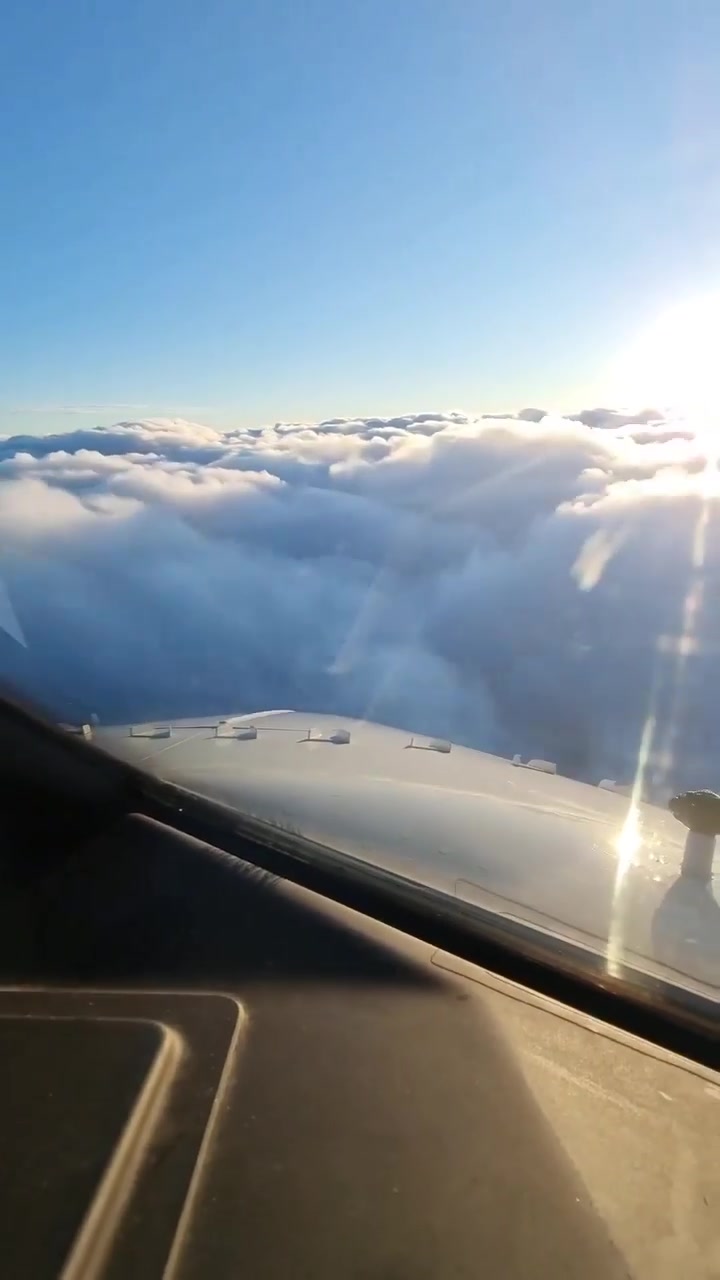
Landing an airplane is hard. But thanks to the purview granted by one pilot, you can see it from the cockpit. Flying from clouds high above the blue sky, the ground gradually begins to get close. It is a perspective that will never be seen by the passengers. Many people enjoy cruising 35,000 feet in the air, but a journey's best moments often happen as the plane's wheels touch the ground. A plane landing makes an exciting moment for both passengers and flight crew alike.
The pilot's view
A pilot’s cockpit view is an experience uniquely different from the passengers' view. Flying is an adventure, but it does not come without risks. Humans have always been captivated by flight, exploring it from the earliest glider and balloon experiments to the dawn of aviation and the present-day airplane. The cockpit view provides the ultimate thrill. Getting into the cockpit is different for everyone. From the passenger's point of view, there is not much more than a resemblance of seats, faces, and cabin crew. Flying a plane is not just about getting to a place. It involves every decision and process that has taken place. You could say the word "cockpit" is key to the idea of the airplane. It is the place where aircraft is controlled and managed during flight. The pilot’s main responsibility is to make the journey safe and comfortable for the passengers. Pilots also collaborate with ground crew in order to ensure that every flight is a smooth experience. The cockpit is strategically positioned to allow the pilot to see the front of the aircraft, including the runway, obstacles, and potential hazards. The pilot must be able to see the sky, horizon, and the ground. With this view, it helps in making critical and timely decisions. It ensures safety. The pilot can also see the status of the aircraft's engine and the condition which it is in. The cockpit view involves several instruments and displays, including speed, altitude, fuel, temperature, and navigation systems. This results in a highly alert and aware pilot.
The convergence of aviation and social media
Pilots pride themselves on their professionalism and the discipline that is required. Passengers often expect pilots to be highly professional and disciplined. Being a pilot is a respected and demanding career and to share the cockpit view is an outlier of the profession, but it has a lot of good to it. The pilot is critical of the tasks happening on the plane. The pilot’s cockpit view is becoming more prevalent in social media and is changing the way people experience and perceive flight. It allows people to experience the thrilling and awe-inspiring experience of flying a plane. Pilots are not the only ones who can experience the thrill of flight. Passengers too, can see things from the perspective of a pilot. It gives people a sense of what it is like to be in the cockpit of a plane. This convergence of aviation and social media allows pilots to document their experiences and share them with a wider audience. It democratizes flight-related experiences
The descent
The cockpit view can also be understood as a visual representation of the plane's landing. Depending on the plane and the approach method, the pilot maneuvers the aircraft into a position that allows it to land smoothly. The plane's landing gear are extended, and the flaps are set to the appropriate position to slow down the plane and allow it to descend safely. The cockpit view during landing allows the pilot to maintain a clear view of the runway. This includes visibility, wind conditions, and potential hazards. There is a lot of change as the plane begins its descent, from the speed of the plane to the angle of approach. Wind is a critical factor in landing an airplane. Piecing together the approach, alignment, and touchdown, the cockpit view is a visual representation of the stages of a plane landing.
The cityscape
For the pilot, flying low is an exciting moment. From the cockpit, the city or town stretching out below is a mesmerizing sight. Buildings, roads, and other landmarks are all visible on the landscape. The view is dynamic and changes constantly. The plane’s descent adds a layer of excitement and drama. As it gets closer to the ground, the view becomes more detailed. It is fascinating to see. The cockpit view brings the world into focus. You can see the intricate details of the landscape. Every street and highway that is visible from the skies becomes more interesting. Every aspect of the city or town becomes more pronounced. It is the combination of the pilot's skill and the plane's design that allows the pilot to see the world in such detail.
A runway perspective
A runway perspective gives a clear view of the narrow strip of paved surface and markings. The pilot needs to ensure that the plane is properly aligned with the runway. Aligning the plane at the correct angle and maintaining speed are critical to a successful landing. The pilot must also ensure the plane follows the correct landing path. Typically, the runway will have lines and lights to guide the pilot. To maintain the correct path, the pilot uses a combination of visual cues and instruments. The cockpit displays various information, including the aircraft's position, speed, altitude, and other relevant data. This data helps the pilot to make critical decisions. The pilot must also be aware of the wind conditions and the surrounding environment. Using the cockpit view, the pilot can successfully land the plane.
How to experience the extra perspective
It is not every day that you can travel the skies. Flying is often seen as a leisure activity, and many people would love to experience it. There are a few ways to experience the cockpit view without leaving the ground.
- Flight Simulators: Flight simulators are an excellent way to experience the cockpit view without flying. You can practice various maneuvers and experience the thrills of flying in a safe and controlled environment. Many flight simulators offer a realistic cockpit view of the aircraft.
- Air Shows: Attending Air Shows is another great way to experience the cockpit view. Air Shows are events where pilots perform aerobatic maneuvers and various stunts. You can witness the cockpit view from a safe distance. It can be an exhilarating experience for anyone who loves aviation.
- Ground Tours: Ground tours offer a unique perspective on the cockpit. They allow you to explore the cockpit from a safe and comfortable position. Ground tours provide passengers with a view of how the cockpit is operated. They are a great way to experience the cockpit view without having to fly in an aircraft. Many air museums and aviation grounds offer ground tours.
Watch the Reel
Questions readers ask
What exactly does a pilot see during the landing process from the cockpit?
From the cockpit, a pilot sees the runway, obstacles, and potential hazards up close. The view includes the horizon, the ground, and the sky, which helps in making critical decisions for a safe landing. Pilots also monitor various instruments and displays, such as speed, altitude, fuel, temperature, and navigation systems. The cockpit is designed to provide a comprehensive view that ensures safety and efficiency during the landing process.
Why is the cockpit view different from what passengers experience?
The cockpit view offers a unique perspective that passengers never get to see. It includes a direct view of the front of the aircraft, the runway, and various instruments and displays that provide real-time information about the plane's status. Passengers, on the other hand, typically see only the cabin and the scenery outside through their windows, without the critical flight information that the pilot monitors.
How does social media play a role in sharing the cockpit view?
Social media has become a platform for pilots to share their cockpit experiences with a wider audience. By documenting and posting their views, pilots allow people to experience the thrill of flying from a pilot's perspective. This sharing democratizes flight-related experiences, making them more accessible and understandable to the general public, and changes how people perceive and experience flight.
Can passengers experience the cockpit view firsthand?
Passengers typically cannot experience the cockpit view firsthand due to safety and regulatory reasons. However, through social media and videos shared by pilots, passengers can get a sense of what it's like to be in the cockpit. This virtual experience provides a unique insight into the pilot's role and the complexities of flying a plane.
What are the key instruments and displays a pilot monitors during landing?
During landing, pilots monitor several key instruments and displays, including speed, altitude, fuel levels, temperature, and navigation systems. These instruments provide real-time data that helps the pilot make informed decisions and ensures the safety and efficiency of the landing process. The cockpit is equipped with advanced technology to support the pilot's critical tasks.
What are the benefits of sharing the cockpit view on social media?
Sharing the cockpit view on social media benefits both pilots and the public. For pilots, it allows them to document and share their experiences, fostering a sense of community and professional pride. For the public, it provides an educational and thrilling glimpse into the world of aviation, making flight experiences more relatable and exciting.
Related deep dives
Similar reads based on topic and creator.




Recent articles
Fresh deep dives from the latest Reels we unpacked.




Comments
Be the first to comment.