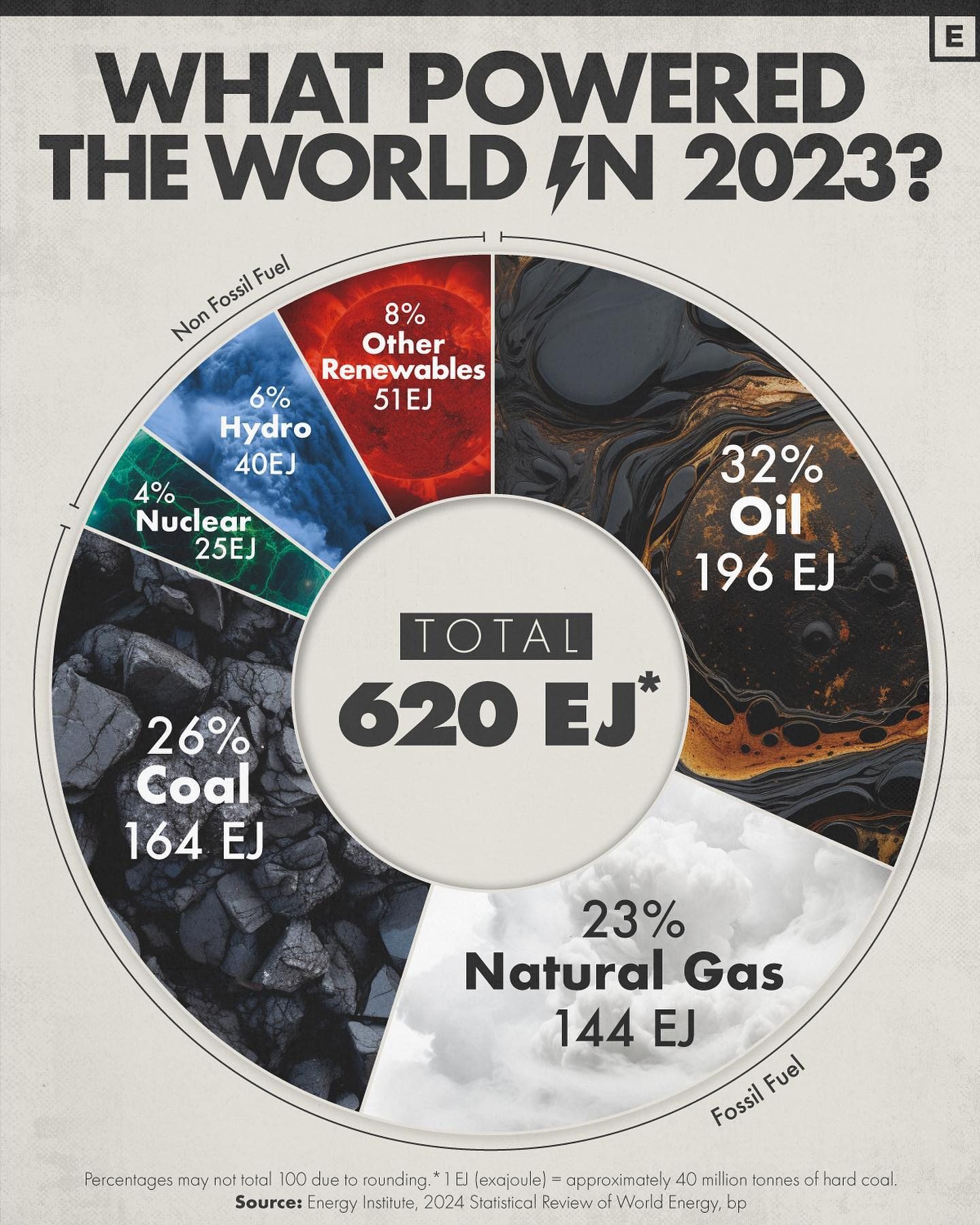
The Breakdown of the World's Energy Sources in 2023
With increasing attention on decarbonization, it is crucial to examine the current state of the world's energy sources. Despite global efforts to shift towards cleaner energy, fossil fuels dominated the energy mix in 2023, accounting for 81% of the total energy consumption. Let's delve into the specifics of how the world was powered in 2023, with a focus on the percentages and types of energy sources used, as detailed in the 2024 Statistical Review of World Energy by the Energy Institute.
Context / Why This Matters
Understanding the composition of global energy sources is essential for evaluating progress towards sustainable development goals and for recognizing the challenges that lie ahead. This data provides a snapshot of the current energy landscape, highlighting the dominance of fossil fuels and the relatively smaller contributions from renewable and nuclear sources.
The Energy Mix in 2023
Fossil Fuels
Fossil fuels continue to be the backbone of the world's energy consumption. In 2023, they made up a significant 81% of the global energy mix.
Oil
Oil remains the single largest contributor to global energy use, accounting for 32% of the total energy consumption. This translates to approximately 196 exajoules (EJ) of energy. Oil is extensively used in various sectors, including transportation, industrial processes, and residential heating, making it an indispensable energy source for many countries.
Oil is a versatile fuel that powers many industries and is crucial for transportation. This high dependence on oil highlights the challenges in transitioning to more sustainable energy sources, particularly in sectors that rely heavily on petroleum products.
Coal
Coal is the second-largest energy source, contributing 26% to the global energy mix, which equals 164 EJ. Despite its polluting nature, coal remains a critical component of the energy landscape, especially in countries that have abundant coal reserves and rely on coal-fired power plants for electricity generation.
Coal's prominence in the energy mix underscores the difficulties in reducing carbon emissions, as many regions still depend on coal for electricity and industrial processes. Transitioning away from coal requires significant investment in renewable energy infrastructure and economic support for affected communities.
Natural Gas
Natural gas contributes 23% to the global energy mix, equating to 144 EJ. Natural gas is often preferred over coal and oil because it produces fewer greenhouse gas emissions when burned. It is commonly used for electricity generation, heating, and as a raw material for industrial processes. Natural gas is also a cleaner alternative to coal and oil, making it a transitional fuel as the world moves towards renewable energy.
Non-Fossil Fuels
Non-fossil fuels made up the remaining 19% of the energy mix. These sources, while smaller in proportion, are vital for the future of sustainable energy.
Nuclear Energy
Nuclear energy provided 4% of the world's energy, amounting to 20 EJ. Nuclear power is a low-emission source of energy, making it an attractive option for countries looking to reduce carbon emissions. However, concerns about safety, waste management, and high upfront costs remain barriers to broader adoption.
Hydro Power
Hydropower accounted for 6% of the global energy mix, equating to 51 EJ. Hydroelectric power is a renewable and relatively stable source of energy, often used for both electricity generation and grid stabilization. Countries with abundant water resources, such as those in South America and Southeast Asia, rely heavily on hydroelectric power, though the construction of large dams can have significant environmental impacts.
Other Renewables
Other renewable sources, including solar, wind, geothermal, and biomass, contributed 8% to the energy mix. These sources are crucial for reducing carbon emissions and increasing energy independence. However, they face challenges such as intermittent energy supply and high initial capital costs, which can limit their widespread adoption.
Practical Tips for Understanding the Energy Mix
When evaluating the energy mix, it is helpful to consider the following:
-
Energy Conversion: Recognize that 1 EJ (exajoule) is approximately equivalent to 40 million tonnes of hard coal. This conversion helps in understanding the energy quantities in a more tangible form.
-
Energy Density: Different energy sources have varying energy densities. For instance, oil and natural gas are highly energy-dense, making them efficient for transportation and industrial use, while renewables like solar and wind have lower energy densities, requiring more land or infrastructure.
-
Sector-Specific Use: Different sectors have unique energy needs. For example, the transportation sector relies heavily on oil, while the industrial sector uses a mix of fossil fuels and some renewable energy, and the residential sector often depends on natural gas for heating.
Important Takeaways
-
Fossil Fuel Dominance: Fossil fuels dominate the world's energy landscape, making up 81% of the total energy mix. Efforts to decarbonize the economy will require significant shifts away from these sources.
-
Renewables and Nuclear: Renewable sources and nuclear energy, while contributing only 19% of the energy mix, are crucial for reducing carbon emissions and transitioning to a more sustainable energy future.
-
Energy Transition: The transition to renewable and low-carbon energy sources will require substantial investment, innovation, and policy support. It is a complex process that involves technological advancements, economic considerations, and social acceptance.
Conclusion
The energy landscape in 2023 reflects a world still heavily reliant on fossil fuels, with oil, coal, and natural gas contributing the lion's share of the energy mix. While these sources remain indispensable, the need to transition towards renewable and low-carbon energy sources is more urgent than ever. Understanding the current energy mix is the first step in recognizing the challenges and opportunities ahead in achieving a sustainable energy future.
Watch the Reel
Questions readers ask
What percentage of global energy consumption came from fossil fuels in 2023?
In 2023, fossil fuels, including oil, coal, and natural gas, accounted for 81% of the world's total energy consumption. This highlights the significant reliance on these non-renewable resources despite ongoing efforts to transition to cleaner energy sources.
Which fossil fuel contributed the most to global energy consumption in 2023?
Oil was the largest contributor to global energy consumption among fossil fuels in 2023, followed by coal. Gas was also a significant contributor. Together, these three fuels made up the vast majority of the 81% fossil fuel consumption.
What role do renewable energy sources play in the global energy mix of 2023?
Renewable energy sources, such as solar, wind, and hydro, make up the remaining 19% of the global energy mix in 2023. This highlights the growth of clean energy, but also the substantial gap that remains in the transition away from fossil fuels.
How does nuclear energy factor into global energy statistics for 2023?
Nuclear energy contributed around 4.3% to the global energy mix in 2023, making it a notable part of the overall energy consumption. Despite its relatively low carbon footprint, nuclear energy faces significant challenges, including public acceptance and safety concerns.
What are some key facts about the global energy consumption trends in 2023?
Key facts include the dominance of fossil fuels at 81%. This is despite ongoing global efforts to decarbonize and shift towards renewable energy. Oil was the largest single source of energy consumption, followed by coal and natural gas.
How did natural gas contribute to the world's energy consumption in 2023?
Natural gas played a significant role in global energy consumption, making up a notable portion of the 81% fossil fuel share. Its contribution reflects its versatility as a fuel source for both electricity generation and heating purposes.
What insights can be gained from the 2024 Statistical Review of World Energy?
The 2024 Statistical Review of World Energy provides a comprehensive overview of global energy consumption trends. It highlights the continued dominance of fossil fuels and offers detailed statistics on various energy sources, aiding in the assessment of progress towards sustainable development goals.
Related deep dives
Similar reads based on topic and creator.


Recent articles
Fresh deep dives from the latest Reels we unpacked.




Comments
Be the first to comment.