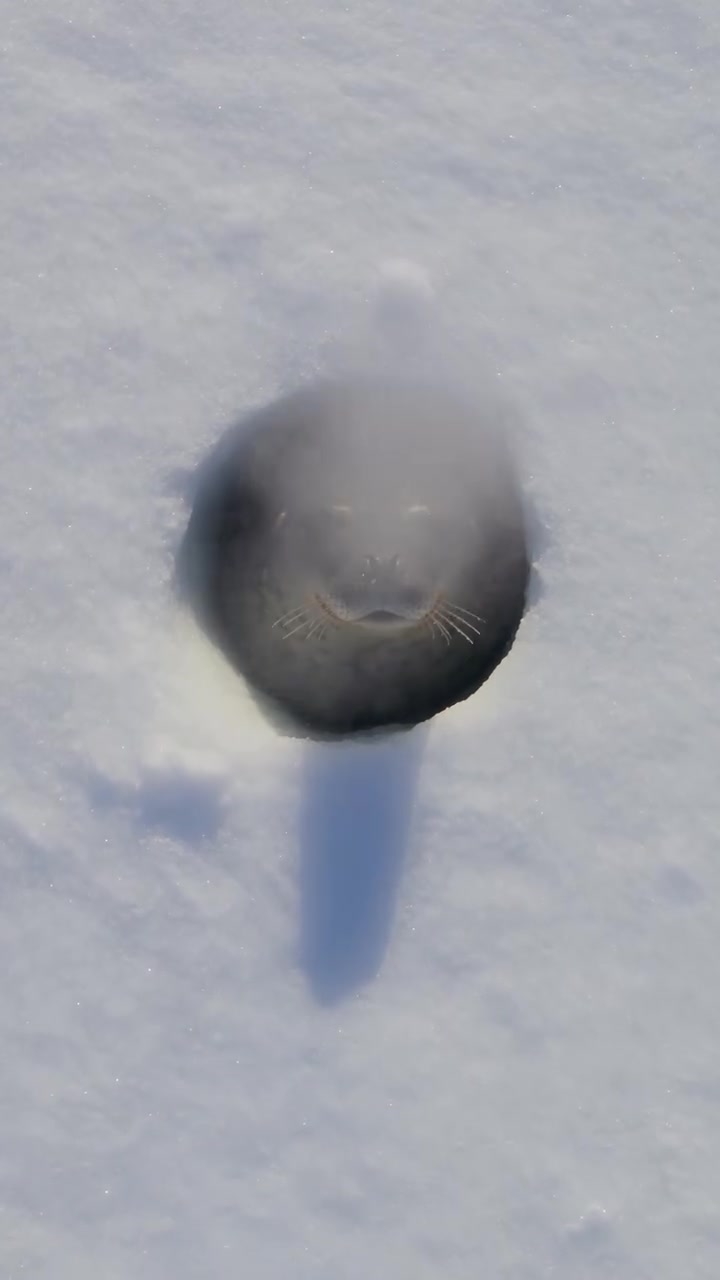
Arctic seals live up to the harshest "visiting rules," and thrive under thick ice, mangled air pockets. The Weddell seal, in Antarctica, can dive for up to an hour without resurfacing.
The Ice-Tempered Inhabitants
The Weddell seal ("the southernmost mammal on Earth") is one of three seal species that live among the continent's ice floes. This seal is able to adapt to the bitter cold, underwater pressure, and lack of oxygen. It takes oxygen in a way that is unlike most species, "storing" it in the blood and muscles. It has also evolved to slow its heart rate during these dives, which can last more than an hour. Researchers have recorded dives lasting for over 70 minutes, "longer than a whole football match.". A Weddell seal is approximately 3 meters in length (around 10 feet) and is primarily solitary, but females and dependent pups are social. The species is well adapted to living in an environment where the ice can be up to 3 meters thick, and its resilience makes it a key model for underwater conservation. A Weddell seal in Antarctica lives on and under the sea ice. This seal can grind the ice with its teeth to keep its breathing holes open.
There's More to Behold
The seal, specifically, has had a global impact on research and science. The deep dives, oxygen capacity, “oxygen saving” body adaptations and “navigational technique” (pronounced "way-finding") are unique for mammals. The seal lives in a way that has inspired medical research, diving technology, and technological innovations. The Weddell seal can dive for up to 70 minutes. One seal is known to have dived for 73 minutes. Scientists have tracked seals diving for more than 700 meters. During a dive, the Weddell seal slows its heart rate to just 25 beats per minute. Its heart rate drops by 90 beats per minute on the surface, while diving it can be reduced to 6-10. Studies have shown that some seals can dive for up to 1,400 meters, or up to 5,400 meters. The seal accomplishes this by diving and conserving oxygen and energy. They have evolved to store oxygen in their muscles and blood, which allows them to carry out amazing feats of endurance. The Weddell seal is a "frontline witness" of the effects of climate change. It lives in Greenland and Arctic waters. Seals are more adaptable to changing temperatures and conditions than other animals. They are resilient and have a high tolerance for cold. Climate change is a direct threat to the Weddell seal. The hunt, the seal, seals, and their food chain are all directly affected by climate change. The "severe, shocking, and extreme" decline in sea ice is a direct threat to the seal's food supply. This is a threat to the seal's food supply, and the seal's food supply is also a threat to the seal's survival.
The world's most "extreme" diver
The Weddell seal is the second deepest diving seal. The deepest diving seal is the southern elephant seal. The Weddell seal is the first seal to dive, and the first seal to successfully dive. However, the Weddell seal is more successful than the southern elephant seal because they have evolved to dive for long periods of time and navigate the ice while diving. The Weddell seal can dive for up to 73 minutes. The seal can dive for 73 minutes while diving for up to 73 meters and maintaining its heart rate. The seal is able to hold its breath for long periods of time and navigate the ice while diving. The seals are well adapted to the conditions, and it is a testament to their ability to navigate the ice while diving. They can dive for up to 73 minutes, 70 meters down before returning to the surface. The Weddell seals are well-adapted to live in the harsh conditions of the Antarctic.
The navigational technique
Weddell seals have been observed returning to their own breathing holes, even after prolonged dives. The seals navigate using “the light from its own holes" and sonar. Seals also navigate by detecting the the movement of water and the temperature of the water to navigate these passages.
The adaptation, survival, and endurance
Researchers report that: "The heart is a four-chambered organ. It pumps blood through the body, supplying oxygen to the tissues. The heart is a four chambered organ. It pumps blood through the body, supplying oxygen to the tissues." It is encapsulated in a sac of fibrous tissue. This sac is known as the pericardium. The heart has four chambers: two atria and two ventricles. The atria receive blood from the body and pump it into the ventricles. The ventricles pump blood out of the heart and into the body. Each heart is well protected in a fibrous layer of muscle. The heart is a four chambered organ that pumps blood through the body, supplying oxygen to the tissues. The heart is encased in a fibrous sac, called the pericardium. The heart is well protected in a fibrous layer of muscle, called the pericardium. The seals are able to breathe for prolonged periods of time. The heart rate slows down to about 25 beats per minute, which reduces the amount of blood circulating through the heart. The blood vessels in the skin and muscles also restrict. The oxygen in the blood is stored, and the seal is able to operate. When oxygen is depleted, the seal is forced to surface. The seals are able to absorb oxygen from the water and survive the underwater dive.
Mindful Travel in the Antarctic
Antarctica offers a rich experience, with unexpected adventure. You will see glaciers, penguins, and whales – all from the safety of a comfortable lodge.
- Choose a Tour: When traveling in Antarctica, choose a tour that "operates in tandem" with local research. This ensures that the tour is directly connected with their research on seals, and penguins. Choose a tour that aligns with your destination, research interests, and overall experience. Choose a tour that offers excellent amenities and a luxury setting. Make sure that the tour is connected to research and conservation efforts.
- Respect the Weddell: Avoid interfering with the Weddell seal's habitat, especially ice floes, and breathing holes, and never getting too close for photographs.
- Be mindful: Avoid interference with the Weddell seal, and its habitat. The seal's habitat is highly specialized and unique. The seal is a solitary animal, and its habitat is unique and specialized.
- Join the Conservation efforts: Contribute to the conservation efforts to preserve the seal's habitat. The seal's habitat is a temple, and a "sanctuary of life preserver."
Watch the Reel
Questions readers ask
What makes Weddell seals able to dive for such long periods?
Weddell seals have evolved several unique adaptations that allow them to dive for extended periods. They can store oxygen in their blood and muscles, and they slow their heart rate dramatically during dives, sometimes down to just 25 beats per minute. This helps them conserve oxygen and energy, enabling dives that can last over an hour.
How do Weddell seals keep their breathing holes open in the thick ice?
Weddell seals use their strong teeth to grind and maintain breathing holes in the ice. This behavior is crucial for their survival, as it allows them to access air even when the ice is up to 3 meters thick.
Are Weddell seals the deepest diving seals?
Weddell seals are not the deepest diving seals; that title goes to the southern elephant seal. However, Weddell seals are known for their exceptional diving endurance, able to dive for longer periods than any other seal species, making them the most extreme divers in terms of duration.
How does climate change impact Weddell seals?
Climate change poses a significant threat to Weddell seals, primarily through the decline in sea ice. This decline affects their food supply and the overall stability of their habitat, which is crucial for their survival. The seals' resilience is being tested by the rapid changes in their environment.
Do Weddell seals have any social behaviors?
Weddell seals are generally solitary creatures, but females and their dependent pups can be social. They are known to live in environments where the ice can be up to 3 meters thick, and their resilience makes them a key model for underwater conservation.
What kind of research has the Weddell seal inspired?
The Weddell seal's unique adaptations have inspired significant research in various fields. Scientists have studied their oxygen-saving techniques, deep-diving capabilities, and way-finding skills to advance medical research, diving technology, and other technological innovations.
Related deep dives
Similar reads based on topic and creator.




Recent articles
Fresh deep dives from the latest Reels we unpacked.
Comments
Be the first to comment.