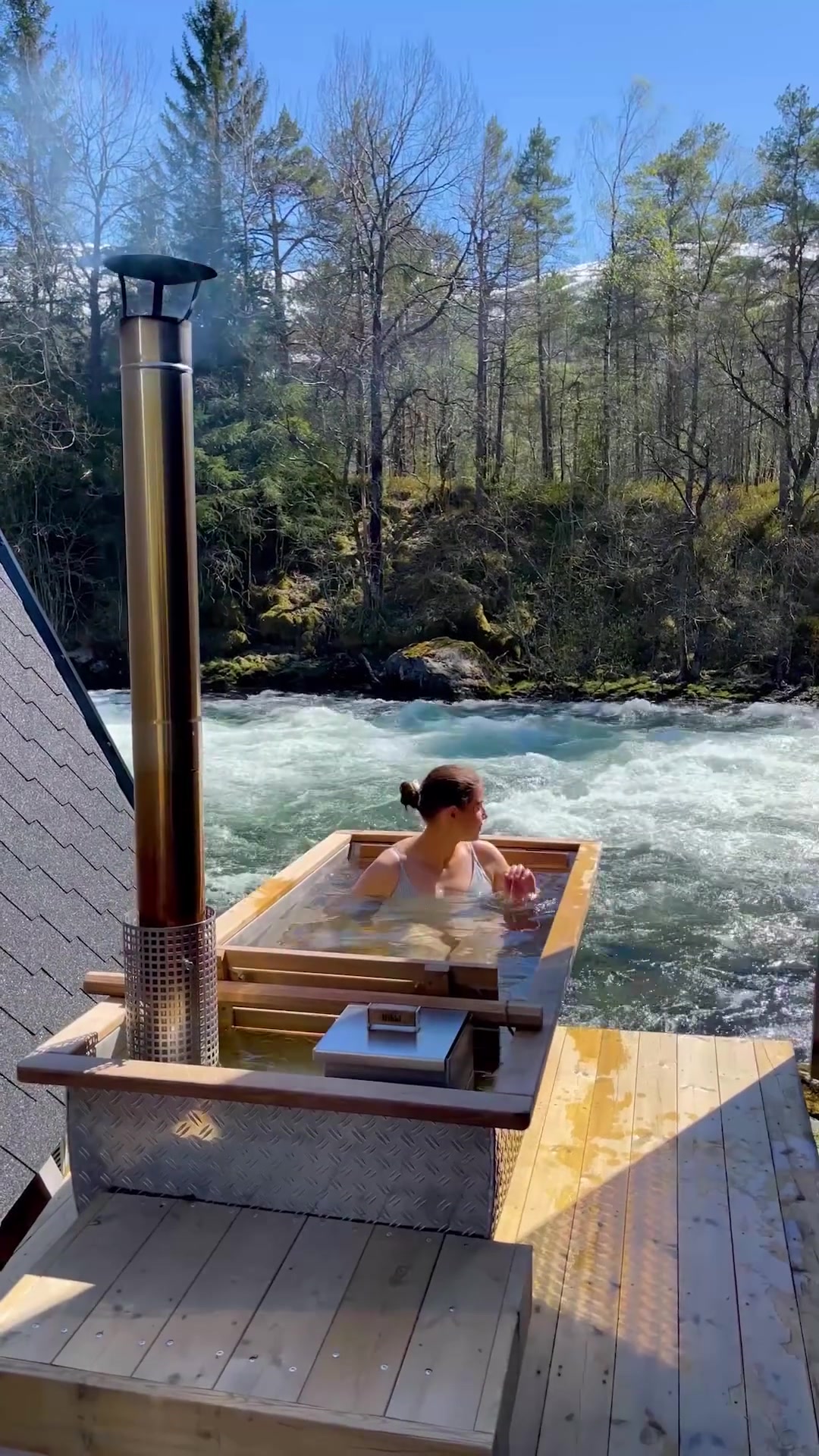
Matilde Gjesdal's home relaxation ritual begins with a wooden barrel, a crackling wood fire, and the roar of the Jølstra River in the distance. The destination, Vassenden in Western Norway, is hardly a tourist trap — it's a quiet corner next to a 22-kilometer river. Gjesdal's wood-fired hot tub evokes a blend of rustic luxury and playful escapism.
Wood-Fired Hot Tubs: The Ultimate in Backyard Zen
These Scandinavian hot tubs embody a single principle: the slower the heat, the richer the experience. Wood-fired hot tubs use a firebox to heat the water instead of an electric element. This slow-heating process, which can take hours, allows the tubs to retain heat for longer than traditional hot tubs. Fans of modern spas may miss the plug-and-play convenience of electric hot tubs, but wood-fired tubs have their own distinct charms. The wood-fired heating process liberates more natural smoke, giving the therapy session an unmistakable aroma, and these hot tubs can accommodate larger numbers of people. A single wood fuel load can heat a tub enough for multiple uses, a practical benefit to its otherwise slower pace.
The New Norwegian Luxury
While some may dream of glassy infinity pools in fancy resorts, a growing number of travelers crave ways to enjoy nature's beauty in more humane forms. The idea of simplicity and simplicity of experience — is catching on. Wood-fired hot tubs are its natural manifestation. They aren't about fancy bells and whistles — they are about unplugging with the basics. So while the tub may embody a type of luxury, especially in the picturesque landscape of Vassenden, Norway, it seems like a new type of luxury — one that celebrates connection to nature with unassuming charm.
Why the Tub?
A Hidden Forest Heater
A wood-fired hot tub is an embers firecooker. The heating mechanism is a brick firebox, usually wood, circulating the heat is a thermoclast — the tub may be brick, and the outer container may be stainless steel or fiberglass to protect against corrosion. Brands vary, ranging from small portable heaters to giant custom builds. The stove captures smoke, all while running this heating process reliably. The best stoves, like the ones in Vassenden, are designed to be efficient, producing low emissions while heating. It's possible to get wood-fired hot tubs with advanced features, such as remote blower systems for easy control and even wood-fired massaging hot tubs.
The Art of Slow Heating
Wood-fired ovens are about more than just heating up the water. The real magic of a properly stoked fire is that it keeps heating the water for hours. The appeal of a wood-fired hot tub is similar to that of slow cooking and other slow living practices. It's a ritual, a tactile connection to nature, and a rewarding way to spend an afternoon. Even with the right windows, a properly heated, full-sized wood-fired hot tub can take most of the afternoon to warm up — about three to four hours, depending on the tub's size and the fuel load. This factor makes wood-fired hot tubs an excellent way to enjoy a long, slow afternoon with friends and family, minus the recharge.
Heating the Heater
The internal fire is what makes the magic happen — you cannot run this heater with any wood that's too wet or green. For most wood-fired hot tubs, you want a mix of 50% hardwood and 50% softwood. Growing pines, for example, are wood that burns quickly and creates more heat; hardwoods, such as oak, burn slower and longer, heating the hot tub for longer. Some wood needs seasoning, or drying, before heating, so the wood-fired aficionado will buy it and store it before heating the tub.
Divining the Water
Smoking wood and slow-heat alike create a special kind of water. Sources agree that a wood-fired hot tub gives the water a feeling of pureness. In the hot tub, soaking in the warm water gives the skin a more natural texture. In some circles, it is said that the smoke from the wood-fired hot tub can produce a kind of spa water that improves skin.
Is a Wood-Fired Hot Tub Right for You?
If you are living in the right climate, you can take advantage of the spa's year-round usability. Building a wood-fired hot tub near a deck or in a covered location extends the warm months of use. Here's what makes a great wood-fired hot tub:
- Size and quality: The more you spend, the more you get. A well-built tub is hard to beat in size and quality, but even the smaller tubs can bring the Norway spa experience home.
- Cost: This tub can range in price from $4,000 to $10,000 or more depending upon the size, finishing, and heating system. Some brands offer wood-fired hot tubs with more modern features, such as remote blower systems, for easy control. The cost for these features varies.
- Location: The space where you build your hot tub is crucial to the overall experience. It needs to have a soothing ambience, a place of peace, and it needs to have the space to heat up the tub. Most require a more rural setting. Building a wood-fired hot tub into a deck or in a covered location extends the warm months of use, but the best locations are outdoors.
The Heater's Courses
Gjesdal's tub was built in Vassenden, a small town in western Norway famous for its tranquil views. Vassenden's natural beauty, the mixture of forests and the river Jølstra, acts as a complimentary backdrop. The tub's design, a modern, wooden deck with a glass firebox that blends with the location's natural landscape, is perhaps one of the few modern conveniences allowed in the tub. Ordinarily, a wood-fired hot tub takes a lot longer to heat up than electric tubs, but the slow process has become something to look forward to. Imagine the scenes of relaxation: sitting in silence, the scent of wood smoke, a warm sun, a gentle breeze, a yellow bubbling fire, the sound of the waterfall.
Watch the Reel
Questions readers ask
How does a wood-fired hot tub work differently from an electric hot tub?
Wood-fired hot tubs use a firebox to heat the water, which takes several hours, whereas electric hot tubs use an electric element for quick heating. This slow process allows wood-fired hot tubs to retain heat longer, providing a more extended soaking experience. The wood-fired heating process also gives off a natural aroma from the smoke, enhancing the sensory experience.
Can I build a wood-fired hot tub in my backyard?
Yes, you can build a wood-fired hot tub in your backyard. These tubs come in various sizes and designs, ranging from small portable heaters to large custom builds. You'll need a firebox, a thermoclast, and an outer container, usually made of stainless steel or fiberglass. You can also find brands that offer advanced features like remote blower systems for easy control.
What is the heating process like for a wood-fired hot tub?
The heating process for a wood-fired hot tub is slow and deliberate. It can take around three to four hours to heat up a full-sized tub, depending on its size and the fuel load. This slow heating is part of the appeal, as it creates a ritualistic and relaxing experience similar to slow cooking or other slow living practices.
How do wood-fired hot tubs contribute to a unique relaxation experience?
Wood-fired hot tubs offer a unique relaxation experience by combining the rustic charm of a crackling fire with the soothing properties of warm water. The slow heating process, natural smoke aroma, and the connection to nature make it a sensory-rich and immersive experience. It's about unplugging and enjoying the basics, which is a growing trend in luxury travel.
Are wood-fired hot tubs eco-friendly?
Wood-fired hot tubs can be eco-friendly if designed and used efficiently. The best stoves are designed to produce low emissions while heating, and the heating process itself can be more sustainable than using electricity. Plus, the wood-fired heating process gives off a natural aroma, enhancing the sensory experience. However, it's important to use responsibly sourced wood and maintain the tub properly to minimize environmental impact.
What are the practical benefits of a wood-fired hot tub over an electric one?
Wood-fired hot tubs can accommodate larger groups of people and a single wood fuel load can heat the tub for multiple uses. This makes them a practical option for social gatherings or extended family time. Additionally, the slow heating process allows the tub to retain heat for longer, providing a more extended soaking experience. The natural aroma from the wood smoke also adds to the overall sensory experience.
Related deep dives
Similar reads based on topic and creator.




Recent articles
Fresh deep dives from the latest Reels we unpacked.



Comments
Be the first to comment.