Trip Planning and the Art of Adaptation
Planning a trip is often an exciting endeavor, filled with dreams of adventure and carefully curated itineraries. However, the reality of travel often diverges from the meticulously laid plans. This disconnect between ambition and execution is a common experience for many travelers. Understanding this dynamic can help you navigate the complexities of group travel and make the most of your adventures.
Context: Why This Matters
Group travel presents unique challenges, particularly when it comes to planning and execution. The contrast between a well-crafted itinerary and the actual events of a trip can be both humorous and frustrating. Recognizing these challenges is the first step toward a more enjoyable and stress-free travel experience. This article delves into the common pitfalls of trip planning, offering practical advice on how to adapt and enjoy your journey, regardless of the obstacles.
Main Discussion
The Dream vs. Reality of Trip Planning
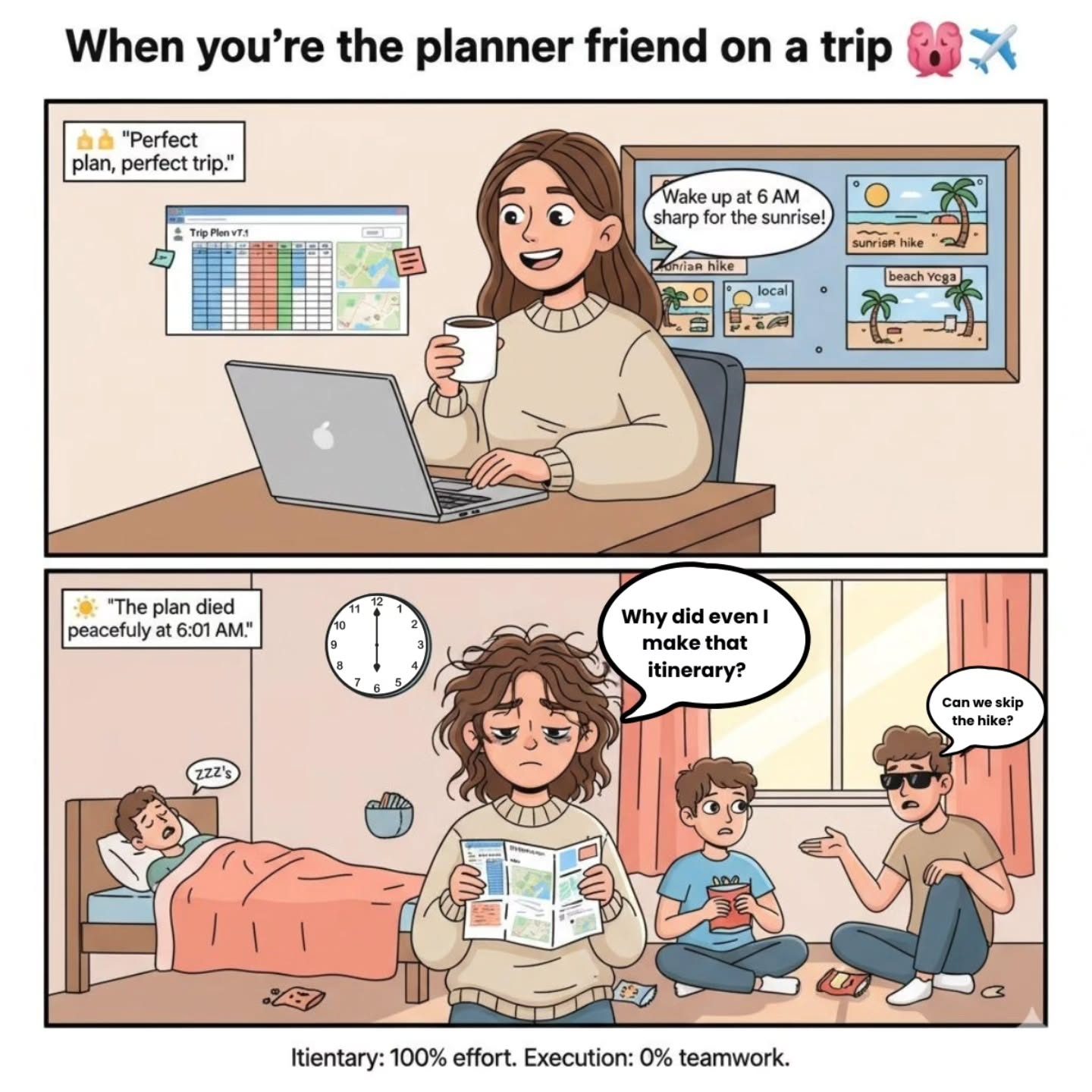
Planning a vacation often starts with an enthusiastic vision of the perfect trip. The idea of waking up at 6 AM for a sunrise hike, followed by a day at the beach and a local market visit, can be intoxicating. However, the reality often looks different. The ideal itinerary, with its detailed schedule and high expectations, frequently collides with the unpredictability of travel.
The disconnect between planning and execution can be seen in the contrast between a detailed itinerary and the actual events of a trip. For example, a meticulously planned 12-page itinerary might be met with 12 excuses from your travel companions. Whether it's a change in weather, transportation hiccups, or simply a desire for relaxation, the reality of travel often deviates from the plan.
Creating a comprehensive itinerary often involves a lot of effort and enthusiasm, but the reality of execution is easier said than done. Many travelers find that their meticulously planned itineraries fall apart quickly, often within minutes of the trip's start. The reasons for this can vary widely, from unexpected delays to a collective desire to skip the planned activities in favor of relaxation.
The Dynamics of Group Travel
Group travel adds another layer of complexity to trip planning. With a mix of personalities and preferences, it can be challenging to create an itinerary that satisfies everyone. The role of the "project manager" often falls to the most organized or enthusiastic planner, while the rest of the group may be more inclined to go with the flow.
This dynamic can lead to a mix of high effort in planning and low effort in execution. The meticulous planner puts in 100% effort, but the rest of the group might contribute only 0% when it comes to sticking to the plan. Recognizing this dynamic and adjusting expectations can help mitigate some of the frustrations that arise from group travel.
The Humor in Trip Planning
The contrast between a meticulously planned itinerary and the chaotic reality of a trip is often a source of humor. The unexpected twists and turns, the spontaneous decisions, and the collective sigh of relief when a hike is skipped can all be seen as comedic moments. Embracing this humor can help reduce stress and make the trip more enjoyable for everyone involved.
Practical Tips
Embrace Flexibility
One of the most important tips for successful trip planning is to embrace flexibility. Recognize that plans may change and be open to adapting your itinerary as needed. This doesn't mean abandoning your plans entirely but rather being willing to adjust them to suit the group's preferences and the circumstances at hand.
Tip 1: Create a Flexible Itinerary
Instead of a rigid schedule, consider creating a flexible itinerary with a mix of must-do activities and optional ones. This allows for some structure while also providing room for spontaneity. For example, you might plan a few key activities but leave the rest of the day open for exploration or relaxation.
Tip 2: Be Open to Changes
Change is inevitable when traveling, especially in a group. Be open to adjusting your plans based on the group's energy levels, interests, and unexpected opportunities. This can make the trip more enjoyable and less stressful for everyone involved.
Tip 3: Prioritize Relaxation
Recognize the importance of relaxation and downtime. Sometimes, the best part of a trip is the moments of relaxation when you can just be present and enjoy the destination. Prioritizing relaxation can help balance the structured activities and reduce stress.
Tip 4: Communicate Openly
Clear and open communication is key to successful group travel. Discuss expectations, preferences, and any concerns with your travel companions before and during the trip. This can help manage expectations and ensure that everyone is on the same page.
Manage Expectations
Understanding the common pitfalls of trip planning can help manage expectations and reduce frustration. Recognize that plans may change, and be willing to adapt as needed. Managing expectations can help make the journey smoother and more enjoyable for everyone.
Embrace Spontaneity
Sometimes, the best travel experiences come from spontaneous decisions. Embrace the unpredictability of travel and be open to new opportunities as they arise. Whether it's a spontaneous hike, an impromptu visit to a local market, or a relaxing day at the beach, spontaneity can add a unique charm to your trip.
Learn from Experience
Each trip is an opportunity to learn and improve. Reflect on what worked well and what didn't, and use this knowledge to plan your future trips. This can help you create more effective itineraries and manage group dynamics more effectively.
Important Takeaways
Understanding the common pitfalls of trip planning is essential for a successful and enjoyable travel experience. Embrace flexibility, manage expectations, and be open to spontaneity. Planning a trip is an art that requires balancing meticulous planning with the ability to adapt and enjoy the journey.
Conclusion
Trip planning can be both an exciting and challenging endeavor, especially when traveling in a group. The contrast between a detailed itinerary and the reality of execution is a common experience that can lead to both humor and frustration. By embracing flexibility, managing expectations, and being open to spontaneity, you can navigate the complexities of group travel and create a more enjoyable and stress-free experience.
Watch the Reel
Questions readers ask
Why do travel plans often differ from reality, especially in group settings?
Group travel plans often diverge from reality due to varying expectations, unforeseen obstacles, and differing priorities among travelers. Each person may have a different vision for the trip, leading to a clash with the planned itinerary. Additionally, unexpected events like weather changes or closures can disrupt even the most carefully laid plans.
What are some common challenges encountered in group travel planning?
Common challenges include coordinating schedules, managing different interests, and navigating unexpected obstacles. Group members may have conflicting ideas about activities, accommodations, and even meal times. These differences can lead to compromises that may not align with the original plan, causing frustration and humor.
How can humorous travel stories help in understanding the realities of travel planning?
Funny travel memes and stories illustrate the unexpected twists and turns that can occur during trips, highlighting that even the best-laid plans can go awry. These anecdotes can help new travelers understand that setbacks are a normal part of the experience and to embrace them.
What should you do when hiking trip plans fall apart?
When hiking trip plans go wrong, it's important to stay flexible and adaptable. Assess the situation, communicate with your group, and consider alternative routes or activities. Remember that the journey is just as important as the destination, and sometimes the unexpected moments create the best memories.
Why is it beneficial to expect the unexpected in travel planning?
Expecting the unexpected allows you to mentally prepare for potential disruptions, reducing stress and frustration. By planning for contingencies, such as having a backup itinerary or flexible travel options, you can better handle setbacks and still enjoy your trip. It's a mindset that helps in navigating the unpredictable nature of travel.
How can sharing funny travel memes help before a trip?
Sharing funny travel memes before a trip can set a positive and humorous tone for the journey. It prepares everyone mentally for potential mishaps and fosters a sense of camaraderie. By laughing at the unexpected, you create a resilient and adaptable mindset that can help the group navigate challenges with a smile.
What are some tips for creating a more adaptable itinerary for a group trip?
Creating a more adaptable itinerary involves building in flexibility, such as having a few optional activities and allowing for downtime. Consider the interests and needs of all group members and establish a clear communication plan. This ensures that everyone can voice their concerns and suggestions, making the trip more enjoyable for all.
Related deep dives
Similar reads based on topic and creator.




Recent articles
Fresh deep dives from the latest Reels we unpacked.




Comments
Be the first to comment.