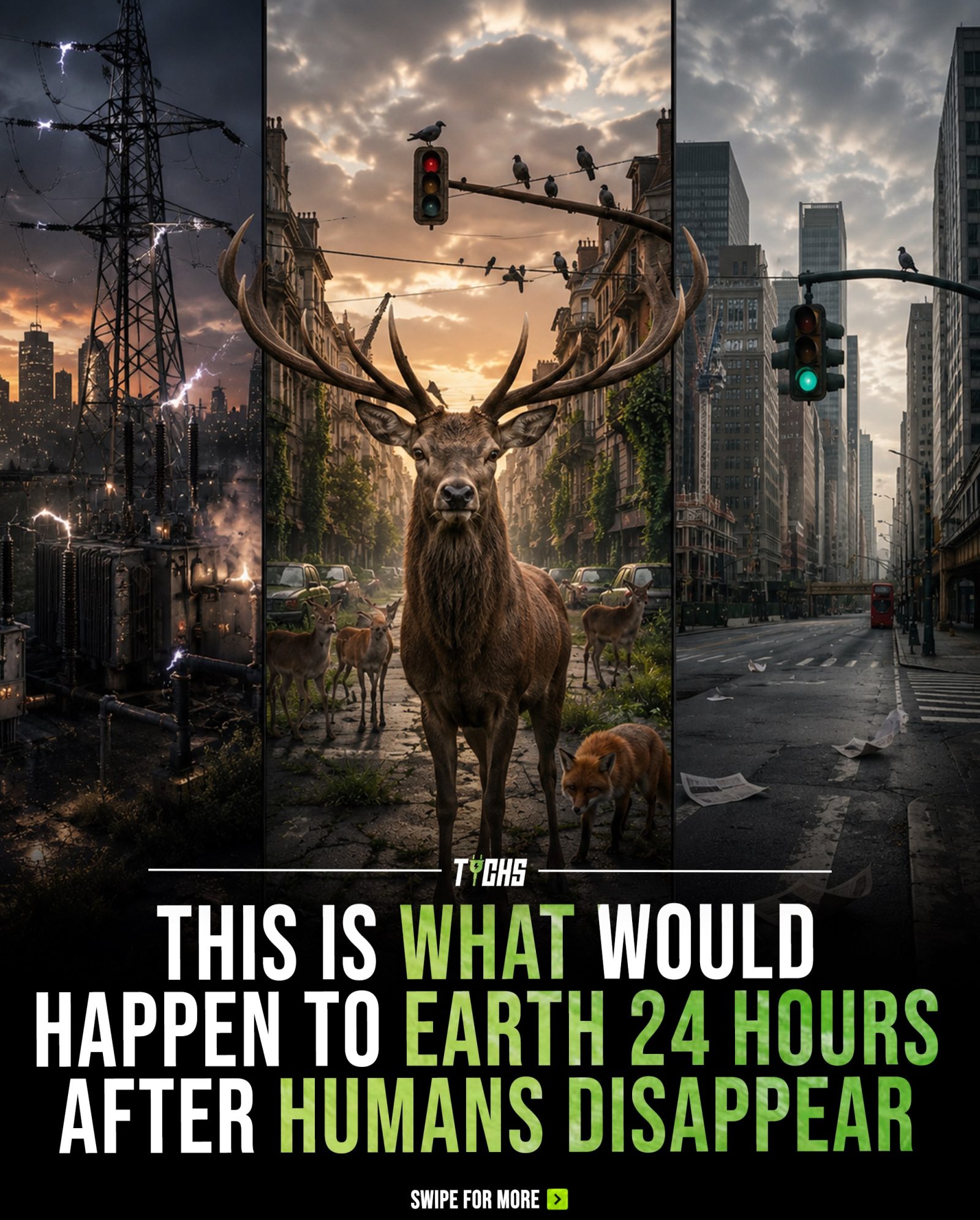
Earth after Humans Disappear
Imagine the world as we know it suddenly emptied of human life. What would happen in the first 24 hours? The impact would be vast and immediate, with nature quickly reclaiming urban spaces and critical infrastructure rapidly deteriorating. The scenario isn't just about the absence of people; it's about the abrupt halt of continuous human activity that maintains and supports our modern civilization.
Context: Why This Matters
Understanding what would happen if humans suddenly vanished provides profound insights into how deeply our society depends on constant maintenance and supervision. It highlights the fragility of our infrastructure and the resilience of natural ecosystems. This thought experiment isn't just about speculation; it's about appreciating the delicate balance between human intervention and the natural world.
Main Discussion
Immediate Impact on Infrastructure
Within the first 24 hours, the absence of human activity would lead to a rapid breakdown of essential infrastructure. Power grids, which require constant monitoring and maintenance, would fail, leading to widespread blackouts. Cities, which rely on electrical networks for everything from lighting to water supply, would go dark. Industrial facilities, which produce and distribute essential goods, would shut down, leading to disruptions in supply chains.
Subway Tunnels and Drainage Systems
One of the most striking changes would be the flooding of subway tunnels. These systems, which are often below sea level, rely on electric pumps to keep them dry. Without the continuous operation of these pumps, water would quickly fill the tunnels, causing significant damage to the infrastructure.
Nature Reclaims Urban Spaces
In the absence of human activity, nature would quickly begin to reclaim urban areas. Animals, which have been forced to the fringes of cities by human development, would return. Deer, foxes, and other wildlife would roam freely through parks and even city streets, untouched by the absence of human interference. Urban nature would bloom, transforming concrete jungles into vibrant ecosystems.
The Silence of the Cities
One of the most profound changes would be the sudden silence that would envelop the world. The constant hum of human activity—the noise of traffic, the chatter of crowds, the machinery of industry—would cease. This abrupt silence would be almost deafening, creating an unusual quiet that has been absent for centuries.
Psychological and Emotional Impact
The psychological and emotional impact of this sudden silence would be profound. Humans are so accustomed to the constant noise of civilization that its absence would be jarring. This silence would highlight how deeply ingrained human activity is in our psyche and how much we depend on the continuous hum of life around us.
Practical Tips
Preparing for Unexpected Events
While the scenario of humans suddenly vanishing is extreme, it highlights the importance of preparedness for unexpected events. Whether it's natural disasters or technological failures, being prepared can make a significant difference. Ensure you have emergency supplies, know basic survival skills, and have a plan in place for unexpected events.
Reducing Our Dependence on Infrastructure
The scenario also underscores the importance of reducing our dependence on critical infrastructure. While it's impossible to live entirely off the grid, there are steps we can take to make ourselves more self-sufficient. This could include investing in renewable energy sources, growing our own food, and reducing our reliance on external systems for essential needs.
Sustainable Living Practices
Implementing sustainable living practices can make a significant difference in our resilience. This could include reducing waste, conserving energy, and adopting eco-friendly habits. These practices not only help the environment but also make us more prepared for unexpected events.
Important Takeaways
The Fragility of Modern Society
One of the key takeaways from this scenario is the fragility of modern society. Our infrastructure and systems are incredibly complex and rely on constant human activity to function. Without this continuous maintenance, they would quickly break down.
The Resilience of Nature
Another important takeaway is the resilience of nature. Natural ecosystems are incredibly adaptable and can quickly reclaim urban spaces. This highlights the importance of preserving natural areas and promoting biodiversity.
The Interconnectedness of Human Activity and the Environment
Finally, the scenario underscores the interconnectedness of human activity and the environment. Our actions have a profound impact on the world around us, and understanding these connections can help us make more informed decisions about how we live and interact with our planet.
Conclusion
The thought experiment of humans suddenly vanishing provides a fascinating glimpse into the future of our world. It highlights the fragility of our infrastructure, the resilience of nature, and the interconnectedness of human activity and the environment. By understanding these dynamics, we can make more informed decisions about how we live and interact with our planet. While the scenario is extreme, the lessons it offers are invaluable.
Watch the Reel
Questions readers ask
What are the initial impacts on urban infrastructure within 24 hours of human disappearance?
Within the first 24 hours, urban infrastructure would start to deteriorate rapidly. Traffic lights, power grids, and water systems, which require constant maintenance, would begin to fail. Public transportation systems, like trains and buses, would come to a halt, leading to immediate disruptions in daily operations.
How quickly would nature start to reclaim cities after humans vanish?
Nature would begin to reclaim cities almost immediately. Plants and trees would start to grow in paved areas, and wildlife would move into abandoned buildings. The absence of human intervention would allow natural processes to take over swiftly, transforming urban landscapes into more wild and untamed environments.
What would happen to domestic animals and pets left behind?
Domestic animals and pets would face immediate challenges. Those dependent on humans for food and care would struggle to survive. Cats and dogs, for example, would need to adapt quickly to find food and shelter, while farm animals might face even greater hardships without human intervention.
How would wildlife populations be affected in the short term?
Wildlife populations would initially experience a mix of benefits and challenges. With the removal of human threats, many species would thrive in the absence of hunting, habitat destruction, and pollution. However, some species might suffer due to the disruption of food chains and the loss of human-provided resources, such as food scraps and water sources.
What would be the immediate impact on global communication systems?
Global communication systems, including internet, phone networks, and television broadcasts, would start to fail almost immediately. These systems rely on continuous maintenance and energy supplies, which would cease without human intervention. This would lead to a sudden blackout in information and communication, affecting global connectivity.
How would urban wildlife behavior change in the first 24 hours?
Urban wildlife, such as rats, pigeons, and raccoons, would initially experience a boom in available resources. With no humans to control their populations or restrict their access to food and shelter, these animals would proliferate rapidly. However, they might also face new challenges, such as the absence of human-provided food sources and the changes in their environment as infrastructure decays.
Related deep dives
Similar reads based on topic and creator.




Recent articles
Fresh deep dives from the latest Reels we unpacked.




Comments
Be the first to comment.