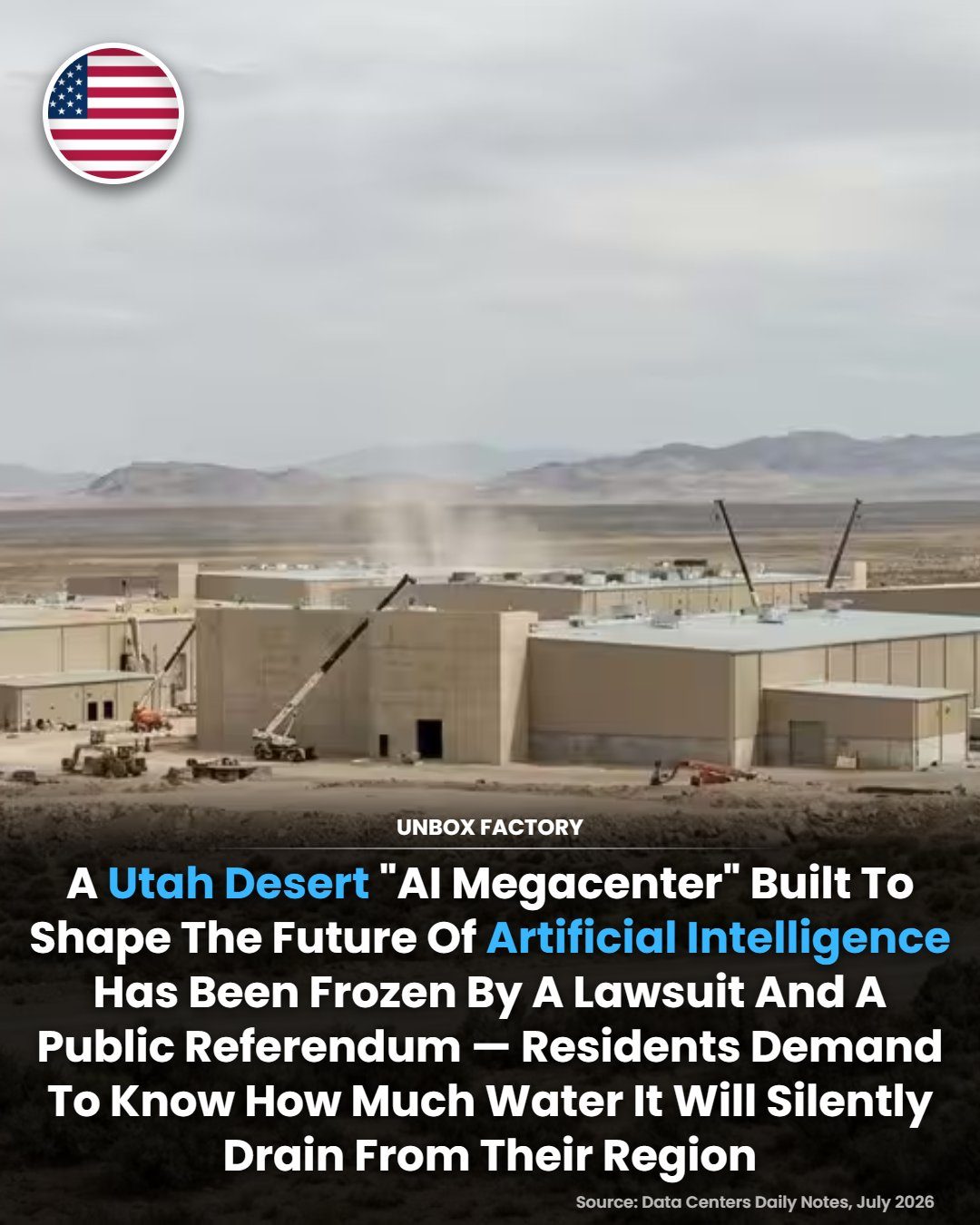
Data Center Controversy in Utah: Water Consumption Concerns and AI Infrastructure
A proposed AI megadata center in Utah has become the focus of intense debate, as residents have successfully halted construction through legal action and a public vote. The controversy centers around water consumption and the environmental impact of such large-scale infrastructure projects.
Context: Why this Matters
In a region already grappling with limited water resources, the proposed AI megadata center in Utah has sparked significant controversy. The project is part of a growing trend nationwide, as local communities grapple with the environmental and resource demands of large-scale AI infrastructure.
The Concept of AI Megacents
The proposed project is a hyperscale AI campus, designed to push the boundaries of artificial intelligence development. These facilities are not only essential for training complex AI models but also for processing vast amounts of data. Such centers can require anywhere from hundreds of megawatts to more than 1 gigawatt of electricity and consume millions of gallons of water each day for cooling.
The Role of Water in Data Centers
Water is a critical resource for data centers, primarily used for cooling the servers that process vast amounts of data. The cooling systems in these facilities often rely on water to dissipate heat, ensuring that the servers operate efficiently and without overheating.
Environmental Impact of Large-Scale Infrastructure
The environmental impact of large-scale infrastructure projects like data centers extends beyond water consumption. These facilities also have significant electricity demands, contributing to carbon emissions if powered by fossil fuels. Additionally, the construction and operation of these centers can lead to habitat destruction and other ecological disturbances.
Concerns from the Community
Groundwater Resources Under Pressure
Residents of Utah have expressed deep concern about the potential strain the data center could place on the region's already limited groundwater resources. The desert landscape of Utah is one of the driest in America, making water a particularly precious commodity. The fear is that the large-scale water consumption of the data center could exacerbate existing water scarcity issues, affecting both human and natural ecosystems.
Legal Action and Public Referendum
To address these concerns, community members have taken legal action and pushed for a public referendum. The lawsuit and referendum have successfully paused the construction of the AI megacenter, allowing for a more thorough evaluation of the project's environmental and resource impacts.
The Need for Transparency
The controversy in Utah reflects a growing nationwide trend. Local communities are increasingly demanding greater transparency from developers regarding water use, electricity demand, and environmental impacts. This trend underscores the need for more open and informed decision-making processes when it comes to large-scale infrastructure projects.
Practical Tips for Community Engagement
Engage Early and Often
For developers and local officials, engaging with the community early and often is crucial. This means holding public meetings, providing detailed information, and listening to community concerns. Transparent communication can help build trust and foster a collaborative approach to addressing potential issues.
Conduct Comprehensive Impact Assessments
Before approving a large-scale infrastructure project, it's essential to conduct comprehensive environmental and resource impact assessments. These assessments should consider long-term effects, including water consumption, electricity demand, and ecological disruptions.
Implement Sustainable Practices
Developers should explore sustainable practices to mitigate the environmental impact of data centers. This could include using renewable energy sources, implementing water-efficient cooling systems, and adopting other eco-friendly technologies. Such practices can help reduce the strain on local resources and minimize environmental harm.
Important Takeaways
The controversy surrounding the proposed AI megadata center in Utah highlights several critical points:
- Water consumption and environmental impacts are significant concerns for large AI infrastructure projects.
- Engaging with the community and ensuring transparency is essential for addressing these concerns.
- Comprehensive impact assessments and sustainable practices are necessary to mitigate the environmental and resource demands of such projects.
- The trend of local communities demanding greater transparency is likely to continue and shape future infrastructure developments.
Conclusion
The debate over the AI megadata center in Utah underscores the complex interplay between technological advancement, resource management, and environmental sustainability. As AI infrastructure projects continue to expand, it is crucial for developers, local officials, and community members to work together to address these challenges. By prioritizing transparency, conducting comprehensive assessments, and implementing sustainable practices, it is possible to balance the benefits of technological progress with the need for environmental stewardship.
Watch the Reel
Questions readers ask
What prompted the halt in construction of the AI megadata center in Utah?
The halt was prompted by legal action and a public vote driven by resident concerns over the immense water consumption required by the center, and its environmental impact.
How much water does an AI data center typically consume?
AI data centers, especially hyperscale ones, can consume vast amounts of water. This is primarily for cooling the servers and other equipment, as well as for power generation if the center uses water-cooled plants. Water consumption can be estimated in millions of gallons annually, depending on the size and efficiency of the facility.
What are the main environmental concerns surrounding the Utah AI data center?
The primary environmental concerns include the strain on Utah's limited water resources and the overall ecological footprint of the project, including increased power demand, potential for water pollution, and disruption of natural habitats.
What role have Utah residents played in the controversy?
Utah residents have been vocal in their opposition, raising awareness about the water consumption and environmental impact. They have also taken legal action and participated in a public referendum to halt the construction of the data center.
Are there alternatives to water-cooled data centers for AI infrastructure?
Yes, there are alternatives such as air-cooled systems, liquid immersion cooling, and even the use of renewable energy sources. These methods, however, may also present challenges in terms of energy consumption, efficiency, and cost.
What other regions are facing similar controversies regarding AI data centers and water usage?
Several regions across the United States and globally that experience water scarcity or drought issues are also grappling with similar controversies. Some of these regions include Arizona, Nevada, and parts of California. These areas are considering the balance between technological advancement and sustainable resource management.
What potential solutions might address the issues raised by the Utah data center controversy?
Potential solutions could include implementing more efficient cooling technologies, utilizing renewable energy sources, and exploring alternative water sources such as recycled water or rainwater harvesting. Additionally, local governments can enforce stricter regulations on water usage for large-scale projects.
Related deep dives
Similar reads based on topic and creator.




Recent articles
Fresh deep dives from the latest Reels we unpacked.




Comments
Be the first to comment.