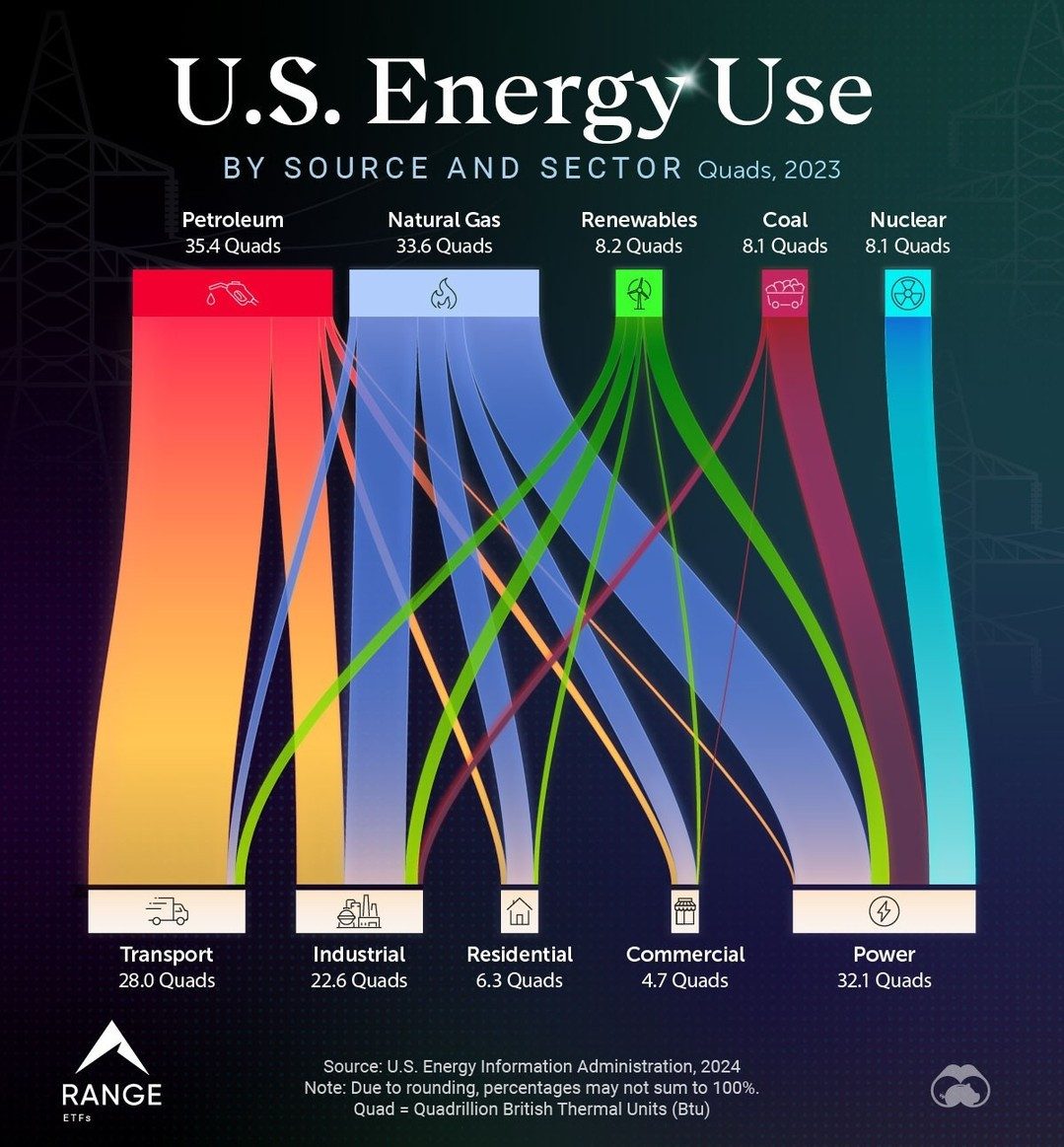
U.S. Energy Use in 2023
The U.S. energy landscape is a dynamic tapestry of various energy sources fueling different sectors of the economy. In 2023, energy consumption hit a staggering 93.6 quadrillion British thermal units (Btu), highlighting the relentless demand for energy across industries, transport, and residential sectors.
Context: Energy Consumption Trends
Energy consumption has held steady over the past decade, with no signs of slowing down. This stability underscores the critical role that reliable energy sources play in powering the nation. The demand comes from diverse sectors, each with unique energy needs.
Sector-Specific Energy Consumption
Understanding how energy is distributed across various sectors is crucial for making informed decisions about energy policy and infrastructure. The latest data from 2023 provides an in-depth look at energy consumption by source and sector.
Energy Sources
Petroleum and natural gas dominate, accounting for a substantial portion of the energy consumed in 2023. Petroleum contributed 35.4 quadrillion Btu, while natural gas provided 33.6 quadrillion Btu. Renewable sources, including wind, solar, and hydroelectricity, accounted for 8.2 quadrillion Btu. Coal, once a dominant source, provided 8.1 quadrillion Btu, and nuclear energy supplied 32.1 quadrillion Btu.
Sector Breakdown
The energy distribution across sectors is diverse. The power sector, which includes electricity generation, consumed the most energy at 28.0 quadrillion Btu. The industrial sector followed closely with 22.6 quadrillion Btu, highlighting the importance of energy in manufacturing and industrial processes. The transport sector, which includes all forms of transportation from cars to planes, used 22.6 quadrillion Btu. Residential and commercial sectors consumed 6.3 and 4.7 quadrillion Btu, respectively.
Petroleum: The Backbone of Energy
Petroleum is a cornerstone of the U.S. energy sector. It fuels transportation, powers industrial processes, and plays a vital role in the residential and commercial sectors.
Transportation
The transport sector relies heavily on petroleum. Gasoline and diesel are primary fuels for cars, trucks, and airplanes. The transportation sector's energy use totaled 28.0 quadrillion Btu in 2023. As a result, the U.S. continues to invest in infrastructure and technology to improve fuel efficiency and reduce emissions.
Industrial Applications
Industrial processes, from manufacturing to agriculture, depend on petroleum. The industrial sector consumed 22.6 quadrillion Btu in 2023. This energy is used for powering machinery, heating, and as a raw material in various products.
Natural Gas: A Versatile Energy Source
Natural gas is another key energy source. Its versatility makes it suitable for various applications, from heating homes to generating electricity. Its affordability and environmental advantages over coal have made it a popular choice for many.
Electricity Generation
Natural gas is crucial for electricity production. In the power sector, natural gas provided 33.6 quadrillion Btu in 2023. This highlights its role in meeting the nation's electricity needs while supporting cleaner energy goals.
Residential and Commercial Use
Residential and commercial sectors also rely on natural gas for heating and cooking. The residential sector consumed 6.3 quadrillion Btu, while the commercial sector used 4.7 quadrillion Btu. Its affordability and clean-burning properties make it a preferred choice.
Renewable Energy: Growing but Not Yet Dominant
Renewable energy sources like wind, solar, and hydroelectricity are growing but still contribute a smaller portion of the total energy consumption. The renewable energy sector provided 8.2 quadrillion Btu in 2023, a modest but significant share.
Technological Advancements
Advancements in technology are driving the growth of renewable energy. Solar and wind power are becoming more efficient and cost-effective, making them attractive options for both residential and commercial use. The government and private sectors are investing heavily in renewable energy infrastructure to increase its share.
Future Prospects
The future of renewable energy looks promising. As technology improves and costs decrease, renewable energy sources are expected to play a more significant role in the U.S. energy landscape. Policies and incentives are being implemented to encourage the adoption of renewable energy across all sectors.
Nuclear Power: A Reliable Source
Nuclear power provides a stable and significant portion of the nation's energy. In 2023, nuclear energy contributed 32.1 quadrillion Btu, highlighting its reliability and efficiency.
Advantages of Nuclear Energy
Nuclear power offers several advantages, including low greenhouse gas emissions and high energy output. Despite safety concerns, nuclear energy remains a crucial part of the energy mix, providing a stable and reliable source of electricity.
Challenges and Future
The challenges of nuclear energy, such as waste management and safety, continue to be addressed. Innovations in reactor design and safety protocols are aimed at making nuclear energy more accessible and safer. As the technology evolves, nuclear power is expected to maintain its role in the energy sector.
Practical Tips for Energy Efficiency
Understanding energy consumption patterns can help individuals and businesses make informed decisions about energy use. Here are some practical tips for improving energy efficiency:
Home Energy Efficiency
- Insulation and Sealing: Ensure your home is well-insulated and sealed to reduce energy loss.
- Energy-Efficient Appliances: Replace old appliances with energy-efficient models.
- Smart Thermostats: Use programmable thermostats to manage heating and cooling efficiently.
Industrial Energy Efficiency
- Energy Audits: Conduct regular energy audits to identify areas for improvement.
- Advanced Equipment: Invest in energy-efficient machinery and equipment.
- Process Optimization: Optimize production processes to reduce energy waste.
Transportation Efficiency
- Fuel-Efficient Vehicles: Choose fuel-efficient or electric vehicles.
- Regular Maintenance: Regularly maintain your vehicle to ensure optimal fuel efficiency.
- Public Transportation: Use public transportation or carpooling to reduce energy consumption.
Commercial Energy Efficiency
- Energy-Efficient Lighting: Switch to LED lighting to reduce energy consumption.
- Energy Management Systems: Implement energy management systems to monitor and control energy use.
- Renewable Energy: Invest in renewable energy sources like solar panels to power your business.
Important Takeaways
Energy consumption in the U.S. is a complex web of various sources and sectors, each playing a crucial role in powering the nation. Petroleum and natural gas dominate, but renewable energy and nuclear power are growing in importance. Understanding these dynamics can help inform policy decisions and promote energy efficiency. By adopting practical tips for energy efficiency, individuals, businesses, and industries can contribute to a more sustainable energy future.
Conclusion
The U.S. energy landscape is diverse and dynamic, with petroleum, natural gas, renewable energy, and nuclear power playing crucial roles. Understanding how energy is distributed across various sectors can help in making informed decisions about energy policy and infrastructure. By embracing energy-efficient practices and supporting technological advancements, the U.S. can continue to meet its energy needs while moving towards a more sustainable future.
Watch the Reel
Questions readers ask
What was the total U.S. energy consumption in 2023?
In 2023, the United States consumed a total of 93.6 quadrillion British thermal units (Btu) of energy, reflecting the continuous demand across various economic sectors.
Which energy sources were the most used in 2023?
Petroleum and natural gas were the leading energy sources in the U.S. in 2023, highlighting their significance in the energy landscape.
What are the main energy-consuming sectors in the U.S.?
The power, industrial, and transport sectors are the primary consumers of energy in the U.S. Understanding their energy needs is vital for shaping future policies and infrastructure.
How has energy consumption in the U.S. changed over the past decade?
Energy consumption in the U.S. has remained stable over the past decade, underscoring the importance of reliable energy sources in sustaining the economy.
What role does renewable energy play in the 2023 U.S. energy landscape?
While petroleum and natural gas dominate, renewable energy sources are also part of the U.S. energy mix. The specific figures for renewable energy use in 2023 would be crucial to understand its impact on the overall energy consumption.
Related deep dives
Similar reads based on topic and creator.


Recent articles
Fresh deep dives from the latest Reels we unpacked.




Comments
Be the first to comment.