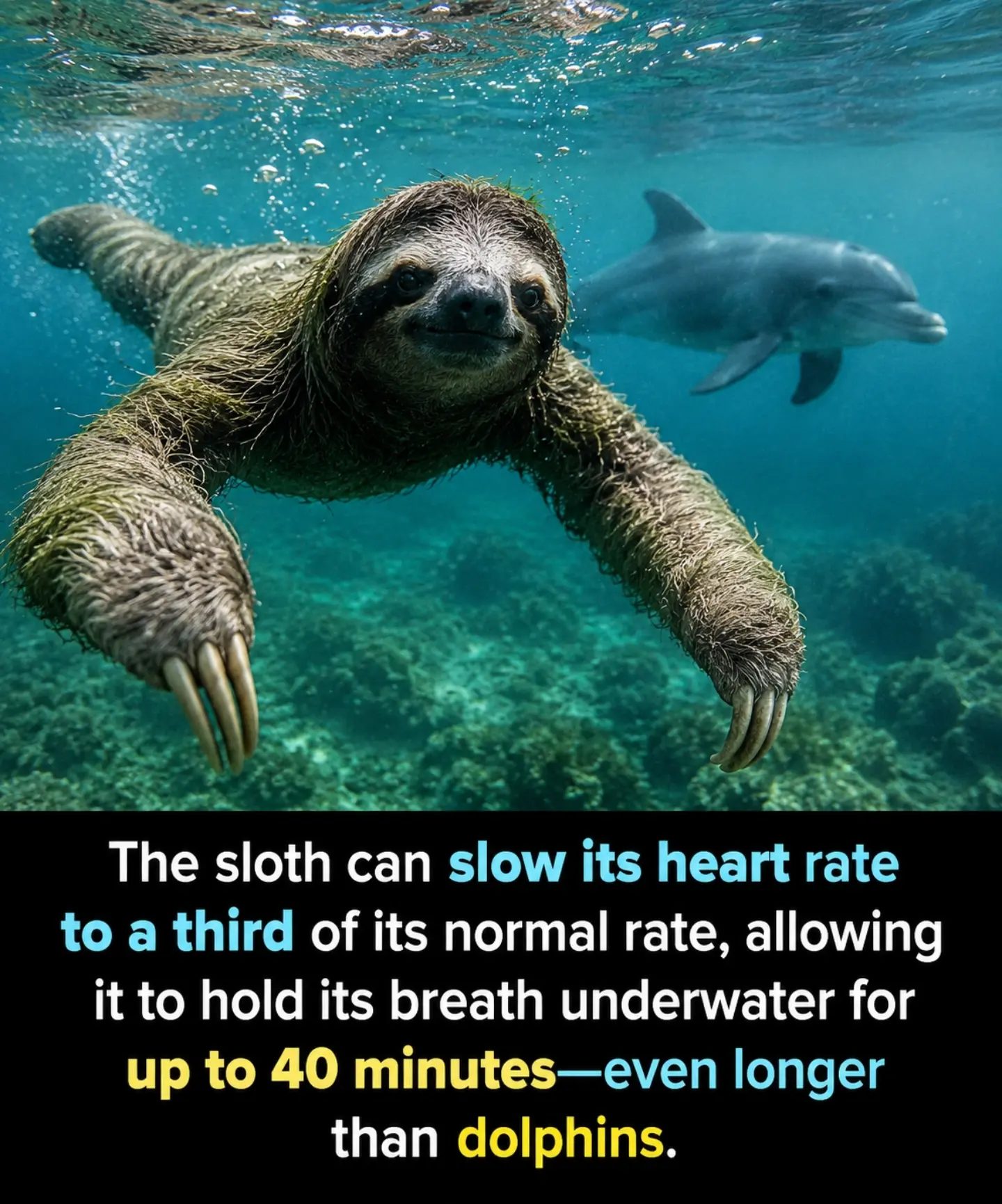
Sloths and Their Remarkable Underwater Skills
The ability of sloths to thrive underwater is a captivating aspect of these unique mammals. Sloths can slow their heart rate to about one-third of its normal rate. This physiological adaptation allows them to hold their breath underwater for up to 40 minutes, a feat that even surpasses the capabilities of dolphins. This underwater prowess is a testament to the extraordinary adaptations that sloths have developed to navigate their environment.
Why This Matters
Understanding the unique abilities of sloths provides a deeper appreciation for the diversity and complexity of the natural world. Sloths are known for their slow movements on land, but their aquatic skills reveal a different side of these creatures. These adaptations are not just fascinating; they are crucial for their survival in the wild and have significant implications in evolutionary biology.
The Sloth's Unique Adaptations
Breath-Holding Ability
One of the most striking adaptations of sloths is their ability to hold their breath for extended periods. This is made possible by their slow metabolism and reduced heart rate. When underwater, a sloth can slow its heart rate to about 30% of its normal rate, allowing it to conserve oxygen and stay submerged for up to 40 minutes. This ability is not just a curiosity but a critical survival trait that helps them avoid predators and conserve energy.
Heart Rate Reduction
Sloths have the unique ability to significantly slow their heart rate, which is a key factor in their prolonged breath-holding capabilities. A typical sloth's heart rate on land is around 27–40 beats per minute. When underwater, they can reduce it to around 8-10 beats per minute. This dramatic reduction allows them to conserve oxygen and remain submerged for extended periods, making them one of the most efficient divers in the animal kingdom.
Metabolic Adaptations
In addition to their heart rate reduction, sloths have a slow metabolism. This means their body uses less energy overall, which is beneficial for conserving oxygen when submerged. Their slow-paced lifestyle on land is not just a behavioral trait but a physiological necessity that supports their underwater abilities. This combination of reduced metabolic rate and heart rate makes sloths exceptionally well-adapted for underwater activities.
Practical Tips for Observing Sloths
While it's rare to see sloths underwater in the wild, there are a few tips for observing them in their natural habitat:
Choosing the Right Environment
Sloths are primarily found in the rainforests of Central and South America. If you're interested in observing them, look for areas with dense forest cover and access to water bodies. National parks and wildlife reserves in countries like Costa Rica and Panama are excellent places to start.
Patience and Observation
Sloths are known for their slow movements, so patience is key. Spend time in areas where sloths are known to frequent, and watch for their distinctive movements. Binoculars can be helpful for spotting them from a distance. If you're fortunate enough to see a sloth underwater, it's a rare and exciting sight.
Important Takeaways
The Importance of Adaptation
The underwater skills of sloths highlight the importance of adaptation in the natural world. These adaptations are not just interesting; they are crucial for the sloth's survival. Understanding these traits can provide valuable insights into evolutionary biology and the mechanisms that drive species' survival.
Conservation Efforts
Sloths face numerous threats, including habitat loss and climate change. Their unique adaptations make them valuable for conservation efforts. By studying their abilities, scientists can better understand how to protect these creatures and their habitats.
Conclusion
The underwater skills of sloths are a testament to the incredible adaptations that exist in the natural world. Their ability to slow their heart rate and hold their breath for extended periods makes them one of the most fascinating creatures on the planet. These adaptations are not just a curiosity but a critical part of their survival strategy. By learning more about these remarkable creatures, we can appreciate the diversity of life on Earth and the importance of preserving it.
Watch the Reel
Questions readers ask
How long can sloths hold their breath underwater?
Sloths can hold their breath underwater for an impressive 40 minutes. This is possible due to their ability to significantly slow their heart rate, which is a crucial adaptation for their underwater survival.
What is the heart rate of sloths underwater?
When sloths are underwater, they can slow their heart rate to approximately one-third of its normal rate. This remarkable physiological change allows them to conserve oxygen and stay submerged for extended periods.
How do sloths' underwater abilities compare to other animals?
Sloths' underwater abilities are quite extraordinary. For instance, while dolphins might be known for their aquatic skills, they can't hold their breath as long as a sloth can.
What are the adaptations that help sloths survive underwater?
One of the key adaptations that help sloths survive underwater is their ability to slow their heart rate significantly. This allows them to conserve oxygen and stay submerged for up to 40 minutes.
What does the heart rate of a sloth do underwater?
The heart rate of a sloth underwater slows to a mere third of the normal rate. This physiological response is a critical factor in their ability to hold their breath for such extended periods.
Why do sloths have such extraordinary underwater abilities?
Sloths have developed these extraordinary underwater abilities as a means of survival. Their slow movements on land make them vulnerable to predators, so their aquatic skills provide an alternative means of navigating their environment.
What can we learn from sloths' underwater abilities?
Sloths' underwater abilities offer insights into the complexity of their biology and the unique adaptations they have developed. This includes their remarkable cardiovascular control and their ability to conserve oxygen.
Related deep dives
Similar reads based on topic and creator.




Recent articles
Fresh deep dives from the latest Reels we unpacked.



Comments
Be the first to comment.