Electric Vehicle Emissions Comparison
The transportation sector is a major contributor to global CO2 emissions. In fact, it accounted for 37% of all CO2 emissions from end-use sectors in 2021, making it the most fossil fuel-dependent sector in the economy. This underscores the importance of understanding how different vehicle types contribute to these emissions. By examining the life cycle emissions of battery electric, hybrid, and internal combustion engine vehicles, we can gain valuable insights into the environmental impact of each type.
Why This Matters
The transportation sector's reliance on fossil fuels is a significant driver of carbon emissions. By comparing the life cycle emissions of different vehicle types, we can better understand the overall impact of each on the environment. This information is crucial for policymakers, automotive manufacturers, and consumers making decisions about future transportation needs. Reducing emissions from the transportation sector is a key component in the broader effort to mitigate climate change.
Main Discussion
Life Cycle Emissions Breakdown
To fully comprehend the environmental impact of vehicles, it's essential to consider their entire life cycle, from production and manufacturing to end-of-life disposal. This life cycle includes several key stages:
Vehicle Production
Production and vehicle manufacturing contribute significantly to the initial emissions of all vehicle types. The production stage for battery electric vehicles (BEVs) and hybrid electric vehicles (HEVs) includes the manufacturing of batteries, which can be energy-intensive. For internal combustion engine vehicles (ICEVs), the production process involves the assembly of various components, some of which are metallic and require a significant amount of energy to extract and process.
Fuel/Electricity Production
This stage measures the emissions associated with the production of fuel for ICEVs and electricity for BEVs and HEVs. For ICEVs, this includes the extraction, refining, and distribution of petroleum products. For electric vehicles, it involves the generation of electricity, which can vary widely depending on the energy mix of the region.
Tailpipe Emissions
Tailpipe emissions refer to the gases released directly from the vehicle's exhaust. This is a significant factor for ICEVs, which burn fossil fuels and emit a variety of pollutants, including CO2. For electric vehicles, there are no tailpipe emissions, but the emissions associated with their use phase depend on the electricity source.
Maintenance
Regular maintenance is another factor that contributes to a vehicle's overall emissions. This includes servicing, repairs, and the disposal of waste materials. While maintenance emissions are generally lower for electric vehicles compared to ICEVs, they still must be considered in the overall life cycle analysis.
End-of-Life
The end-of-life stage involves the disposal or recycling of the vehicle. This can include the recycling of materials and the release of emissions associated with the disposal process. For electric vehicles, this stage can also involve the recycling of batteries, which can provide emission credits through reduced resource extraction.
Emissions by Vehicle Type
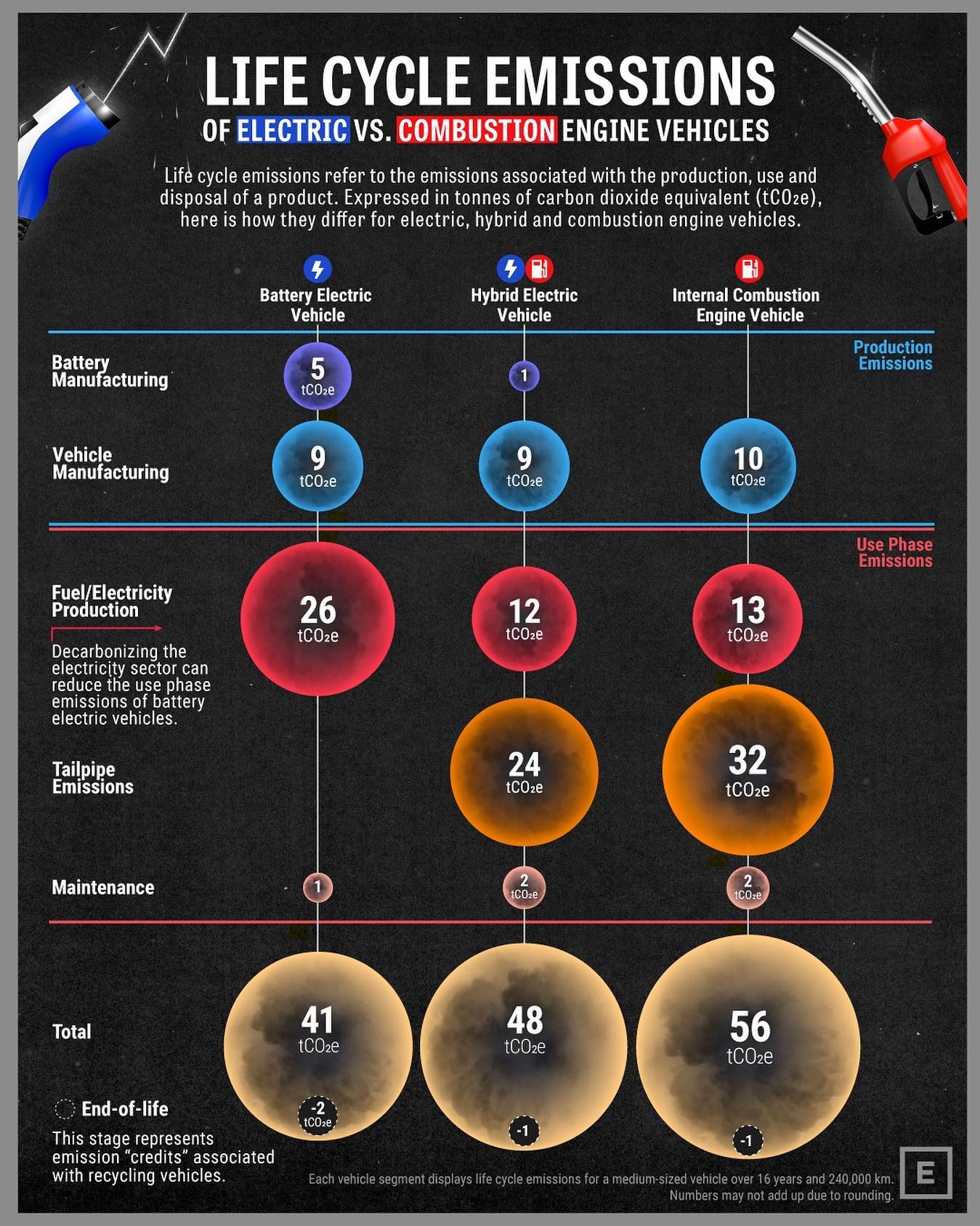
Comparing the life cycle emissions of different vehicle types helps to identify which types have the lowest overall environmental impact. Using the Polestar and Rivian’s Pathway Report, we can visualize these differences in an infographic.
Battery Electric Vehicle (BEV)
BEVs have the highest production emissions due to the energy-intensive manufacturing of batteries. This stage generates around 9 tCO₂e. However, the use phase for BEVs is significantly lower, with emissions from fuel/electricity production ranging from 1 to 2 tCO₂e, depending on the energy source. Tailpipe emissions for BEVs are zero, but maintenance and end-of-life emissions must be considered.
Hybrid Electric Vehicle (HEV)
Hybrid electric vehicles, which combine an internal combustion engine with an electric motor, have a slightly different emissions profile. The production emissions for HEVs are around 9 tCO₂e, similar to BEVs. However, the use phase is higher, with fuel emissions at 26 tCO₂e. Emissions from fuel/electricity production are 12 tCO₂e, and maintenance and end-of-life emissions are also significant.
Internal Combustion Engine Vehicle (ICEV)
ICEVs have the lowest production emissions at 1 tCO₂e, but their use phase emissions are the highest among the three types. Fuel production and distribution contribute about 13 tCO₂e, while tailpipe emissions are 41 tCO₂e. Maintenance and end-of-life emissions also add up to 56 tCO₂e.
Decarbonizing the Electricity Sector
Decarbonizing the electricity sector can significantly reduce the use phase emissions of electric vehicles. As the electricity grid becomes cleaner, the overall emissions from charging electric vehicles will decrease. This makes electric vehicles an increasingly attractive option for reducing transportation-related emissions over time.
Recycling and Emission Credits
Recycling vehicles can provide emission credits, which can offset some of the emissions from production and end-of-life stages. This is especially true for electric vehicles, where recycling batteries can reduce the need for new resource extraction. Proper disposal and recycling practices are essential for maximizing these emission credits.
Practical Tips
When considering the environmental impact of different vehicle types, several practical tips can help in making informed decisions:
-
Evaluate Energy Sources: For electric vehicles, the emissions from fuel/electricity production can vary widely depending on the energy mix of your region. Consider the source of electricity in your area when evaluating the overall emissions of an electric vehicle.
-
Maintain Your Vehicle: Regular maintenance is essential for all vehicle types. Proper maintenance can extend the lifespan of your vehicle and reduce the emissions associated with repairs and servicing.
-
Disposal and Recycling: When it comes time to dispose of your vehicle, consider recycling as much of the vehicle as possible. This not only reduces waste but can also provide emission credits.
-
Consider the Life Cycle: When purchasing a new vehicle, consider the overall life cycle emissions, not just the tailpipe emissions. Electric vehicles may have higher production emissions, but their lower use phase emissions can make them a more environmentally friendly option in the long run.
Important Takeaways
-
Life cycle emissions for internal combustion vehicles are significantly higher than for electric and hybrid vehicles, with emissions from fuel production and tailpipe emissions being the largest contributors.
-
Electric vehicles have higher production emissions due to battery manufacturing, but decarbonizing the electricity sector can reduce their overall emissions.
-
Proper disposal and recycling practices can provide emission credits, which can offset some of the emissions from production and end-of-life stages.
-
Both electric and hybrid vehicles offer significant advantages in terms of reducing greenhouse gas emissions, especially when considering the entire life cycle and decarbonization efforts.
Conclusion
Understanding the life cycle emissions of different vehicle types is essential for making informed decisions about transportation and its environmental impact. While internal combustion engine vehicles have the highest overall emissions, electric vehicles offer a promising path forward, especially as the electricity sector becomes cleaner. By considering the entire life cycle of a vehicle and focusing on recycling, maintenance, and energy sources, we can work towards a more sustainable future. The path to reducing emissions from the transportation sector is complex, but with the right information and practices, significant progress can be made.
Watch the Reel
Questions readers ask
What are life cycle emissions and why are they important when comparing electric, hybrid, and gas cars?
Life cycle emissions refer to the total greenhouse gas emissions associated with a vehicle from its production, through its use, to its disposal. This includes emissions from manufacturing, fuel production (or electricity for electric cars), tailpipe emissions, and end-of-life processing. Life cycle emissions are important because they provide a comprehensive view of a vehicle's environmental impact, helping consumers and policymakers make more informed decisions.
How do battery electric vehicle (BEV) emissions compare to those of internal combustion engine (ICE) vehicles?
Battery electric vehicles (BEVs) generally have lower life cycle emissions than internal combustion engine (ICE) vehicles. This is primarily due to the absence of tailpipe emissions and the lower emissions associated with electricity generation compared to gasoline production. However, the emissions from BEVs can vary depending on the source of electricity in a given region.
What factors influence the emissions of hybrid cars compared to other vehicle types?
Hybrid cars typically have lower emissions than conventional gas cars due to their reduced reliance on gasoline and lower tailpipe emissions. However, their emissions can be higher than BEVs due to the use of both an internal combustion engine and an electric motor. The exact emissions of a hybrid car depend on factors such as the efficiency of the internal combustion engine, the size of the battery, and the source of electricity for charging.
Can electric cars reduce overall transportation sector emissions?
Yes, electric cars can significantly reduce overall transportation sector emissions, especially if the electricity used to power them comes from low-carbon sources. By eliminating tailpipe emissions and reducing reliance on gasoline, electric cars help lower greenhouse gas emissions from the transportation sector, contributing to a cleaner and more efficient environment.
How do electricity emissions factor into the life cycle emissions of electric cars?
Electricity emissions are a crucial factor in the life cycle emissions of electric cars. The emissions from generating the electricity used to power electric cars can vary significantly depending on the energy mix of a region. For instance, regions relying heavily on coal for electricity generation will see higher emissions from electric cars. Conversely, regions with a higher share of renewable energy sources will have lower emissions.
What are the benefits of comparing gas car vs. electric car emissions?
Comparing gas car vs. electric car emissions can help consumers and policymakers understand the environmental impact of each type of vehicle. By examining the life cycle emissions, including manufacturing, fuel production, and tailpipe emissions, individuals can make more informed decisions about their vehicle choices. Additionally, policymakers can use this information to shape regulations and incentives that promote lower-emission transportation options.
Why should I consider vehicle life cycle emissions when trying to lower my carbon footprint?
Considering vehicle life cycle emissions is essential for accurately assessing a vehicle's environmental impact. By evaluating emissions from production, use, and disposal, you can make more informed decisions about which vehicle types are best. For instance, while electric cars produce zero tailpipe emissions, their overall impact depends on the emissions from electricity production. Understanding these nuances helps in choosing vehicles that contribute to lower carbon emissions overall.
Related deep dives
Similar reads based on topic and creator.


Recent articles
Fresh deep dives from the latest Reels we unpacked.




Comments
Be the first to comment.