The Detmold Child: A Fascinating Glimpse into Ancient Peruvian Culture
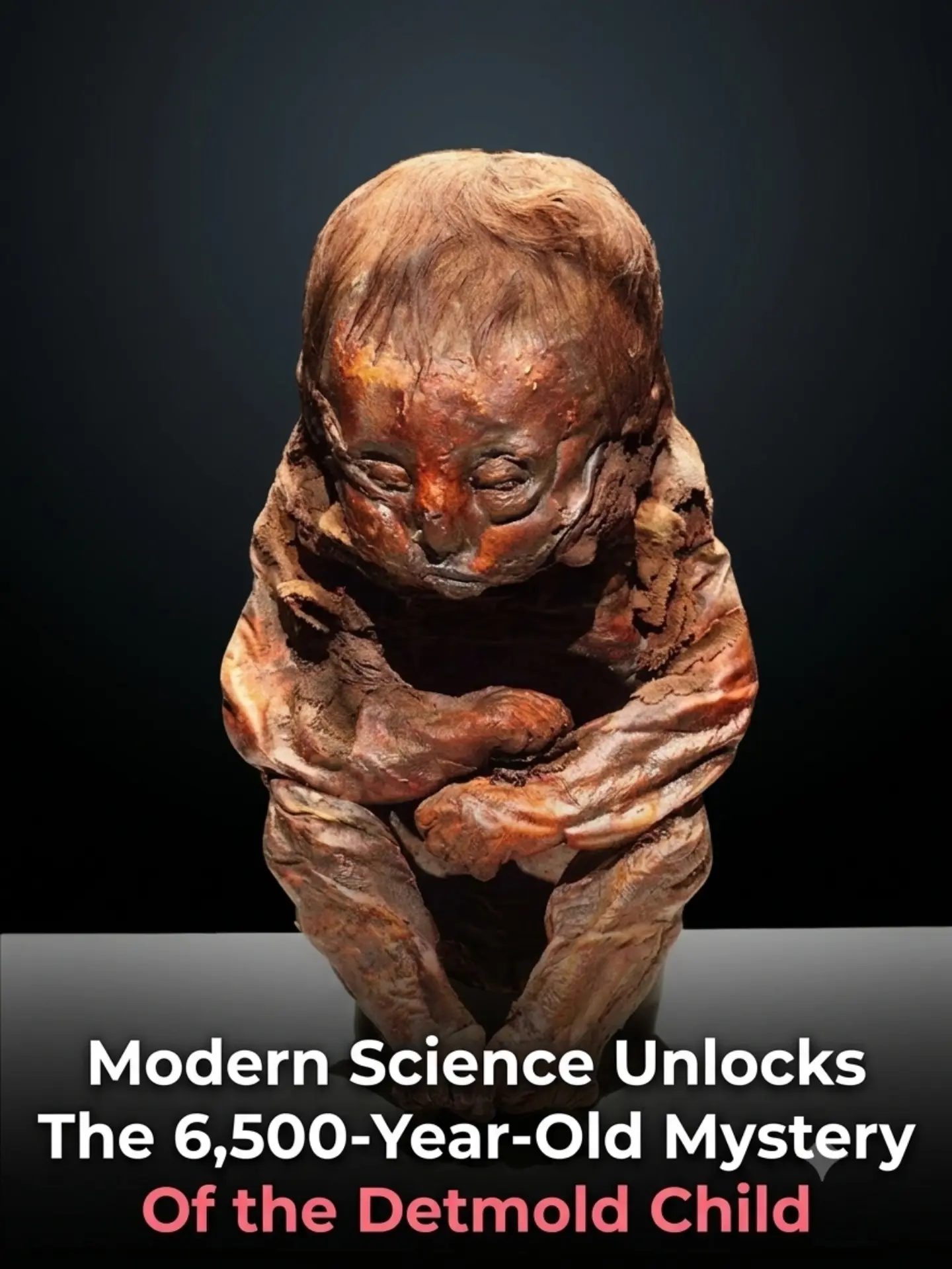
The Detmold Child is a 6,500 year-old Peruvian mummy that offers a unique look into the lives of ancient South Americans. In the context of archaeological history, the preservation of this infant mummy is truly remarkable. It was discovered in a traditional burial posture with arms folded and legs hunched. The infant was found wearing a small bone pendant around its neck, a unique artifact that provides insight into the cultural practices of the time.
The mummy is currently housed at the Lippisches Landesmuseum in Detmold, Germany. Originally, it was part of the Ethnological Museum of Witzenhausen but was transferred in 1987 due to severe mold damage. The recent conservation efforts have allowed for a deeper understanding of the mummy's cultural and archaeological significance.
Context / Why This Matters
The Detmold Child is not only a scientific marvel but also a cultural treasure. It represents a piece of ancient Peruvian history that has been remarkably preserved. The insights gained from studying this mummy provide a unique look into the lives of ancient people, their burial practices, and health conditions.
Main Discussion
The Mummy's Journey
The Detmold Child's journey from Peru to Germany is a testament to the global interest in ancient artifacts. Originally discovered in Peru, the mummy was first held by the Ethnological Museum of Witzenhausen. However, due to mold damage, it was transferred to the Lippisches Landesmuseum in Detmold for professional conservation in 1987. This move ensured the preservation of the mummy and allowed for further scientific study.
The Artifacts
One of the most intriguing aspects of the Detmold Child is the small, flat, rectangular bone pendant found around its neck. This artifact provides valuable insights into the cultural practices of the ancient Peruvian people. The pendant's presence suggests that it may have held symbolic or spiritual significance, possibly related to burial rituals.
Medical Analysis and Findings
In 2010, the German Mummy Project, in collaboration with the North Rhine-Westphalia Heart and Diabetes Centre (HDZ NRW), conducted high-resolution CT scans on the Detmold Child. These scans revealed a wealth of information about the infant's health and cause of death.
The CT scans estimated the child's age at death to be between 8 and 10 months. The primary cause of death was found to be a rare congenital heart defect, Hypoplastic Left Heart Syndrome (HLHS). This condition, where the left side of the heart fails to develop completely, is fatal in early infancy without modern medical intervention. In addition, the infant suffered from severe Vitamin D deficiency and turricephaly, an abnormal, conically-shaped skull. The final blow was likely a pulmonary infection, possibly tuberculosis or pneumonia, which combined with the congenital heart defect to cause the infant's death.
Exhibitions
The Detmold Child has been featured in significant exhibitions, including the three-year U.S. touring exhibition, Mummies of the World. These exhibitions have allowed the public to learn more about the mummy and its historical significance. The exhibitions also provide an opportunity for further study and research on the mummy.
Practical Tips
While the Detmold Child provides valuable insights into ancient Peruvian culture, it also raises questions about how modern medical advances can help understand historical artifacts. CT scans, for example, have proven to be a valuable tool in studying mummies, revealing details that would otherwise remain hidden. This technology can be applied to other mummies and ancient artifacts to uncover more information about past civilizations.
Important Takeaways
The Detmold Child is a unique artifact that offers valuable insights into ancient Peruvian culture and medical history. The mummy's remarkable preservation, the artifacts found with it, and the medical findings from the CT scans all contribute to our understanding of the past. The Detmold Child serves as a reminder of the importance of preserving historical artifacts and the value of modern technology in studying them.
Conclusion
The Detmold Child is more than just a mummy; it is a window into the past, offering a glimpse into the lives, practices, and health conditions of ancient Peruvian people. The insights gained from studying this mummy have contributed to our understanding of ancient cultures and the development of modern medical technology. As we continue to study the Detmold Child, we can expect to uncover even more fascinating details about this ancient child and the world they lived in.
Watch the Reel
Questions readers ask
Where was the Detmold Child mummy discovered and what is its age?
The Detmold Child mummy was discovered in Peru and is approximately 6,500 years old. It provides a fascinating glimpse into the lives of ancient South Americans from that era.
What is the significance of the bone pendant found with the Detmold Child mummy?
The bone pendant found around the neck of the Detmold Child is a unique artifact that offers insights into the cultural practices and beliefs of ancient Peruvians. It is a distinctive element that helps researchers understand the rituals and customs of the time.
Why was the Detmold Child mummy transferred to the Lippisches Landesmuseum in Germany?
The mummy was originally housed at the Ethnological Museum of Witzenhausen but was transferred to the Lippisches Landesmuseum in 1987 due to severe mold damage. The move was crucial for preserving the artifact and enabling further research and conservation.
What is the significance of the Detmold Child's burial posture?
The burial posture of the Detmold Child, with arms folded and legs hunched, is characteristic of ancient Peruvian burial practices. This posture provides archaeologists with valuable information about the cultural and funerary traditions of the time.
How is modern technology aiding in the study of the Detmold Child mummy?
Modern technology, such as heart scans, has allowed researchers to conduct non-invasive examinations of the mummy. These scans have provided insights into the health conditions and potential causes of death of the ancient infant, enhancing our understanding of ancient Peruvian health and life.
Related deep dives
Similar reads based on topic and creator.



Recent articles
Fresh deep dives from the latest Reels we unpacked.




Comments
Be the first to comment.