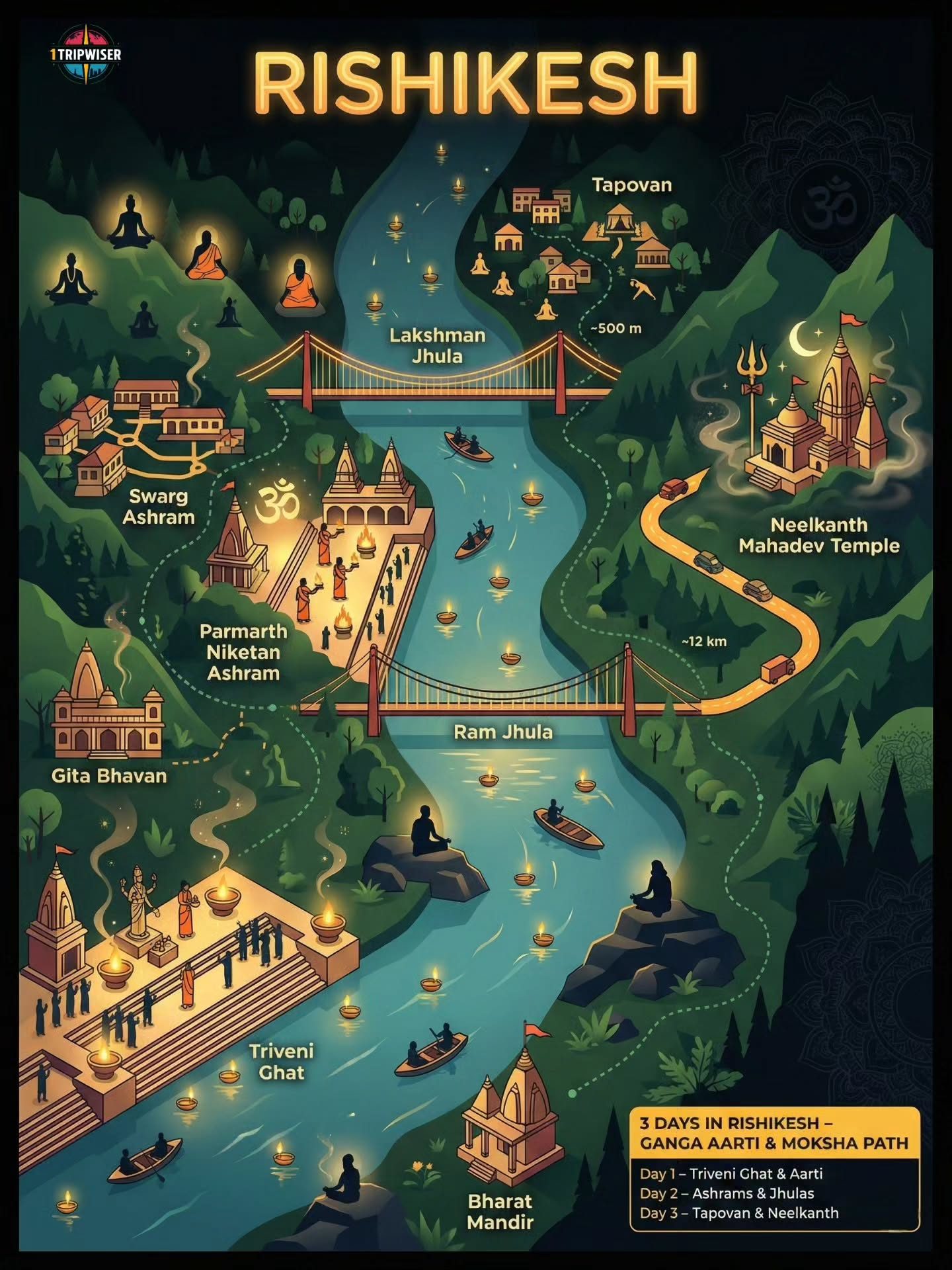
Rishikesh Travel Guide
Rishikesh, nestled in the foothills of the Himalayas, is a spiritual haven known for its ancient temples, ashrams, and the sacred Ganga River. This travel guide, curated by 1TRIPWISER, outlines a comprehensive 3-day itinerary to help you make the most of your visit. Whether you're a yoga enthusiast, a spiritual seeker, or an adventure lover, Rishikesh has something for everyone.
Why this matters
Rishikesh, often referred to as the "Yoga Capital of the World," is more than just a tourist destination. It is a place where ancient traditions meet modern spirituality. Understanding key locations and activities can enrich your experience, allowing you to connect with the local culture and find inner peace. This guide ensures you don't miss out on the essential sights and experiences that make Rishikesh unique.
Main discussion
Day 1: Triveni Ghat and Aarti
Your first day in Rishikesh should begin with a visit to Triveni Ghat, one of the most sacred sites in the city. This is where the Ganga Aarti, a mesmerizing fire ritual, takes place every evening. The ceremony involves priests offering their prayers to the holy river with chants, music, and a spectacle of lights. The serenity and spirituality of this event are unmatched.
Highlights of Day 1:
- Triveni Ghat: The confluence of three sacred rivers—Ganga, Yamuna, and Saraswati. It's a place of immense spiritual significance.
- Ganga Aarti: A daily ritual where priests perform a fire ceremony, accompanied by chants and music. Watching the Aarti is a deeply moving experience.
Day 2: Ashrams and Jhulas
On the second day, explore some of Rishikesh's most famous ashrams and bridges, or "jhulas." These places are not just landmarks but centers of spiritual learning and practice.
Key Locations on Day 2:
- Lakshman Jhula: A historic suspension bridge that spans the Ganga River, offering stunning views and a vibrant market below.
- Ram Jhula: Another iconic bridge, slightly longer than Lakshman Jhula, with a bustling market and a variety of shops and cafes.
- Swarg Ashram: Known for its peaceful atmosphere, it’s a great place for meditation and yoga.
- Parmarth Niketan Ashram: One of the largest ashrams in Rishikesh, offering yoga classes, meditation, and spiritual discourses.
- Gita Bhavan: A serene ashram dedicated to the study of the Bhagavad Gita, featuring a beautiful temple and gardens.
Day 3: Tapovan and Neelkanth
For your final day, venture into the more serene and less crowded areas of Rishikesh. Tapovan and Neelkanth Mahadev Temple are perfect for those seeking tranquility and natural beauty.
Highlights of Day 3:
- Tapovan: A scenic spot along the Ganga River, known for its beautiful landscapes and peaceful environment. It’s an ideal place for hiking and yoga.
- Neelkanth Mahadev Temple: Located on a hilltop, this temple is dedicated to Lord Shiva and offers panoramic views of the surrounding mountains and valleys. The climb is steep but rewarding, both spiritually and visually.
Other Notable Locations
- Bharat Mandir: One of the oldest temples in Rishikesh, located near Ram Jhula, it's a significant religious site.
- Swarg Ashram: Known for its peaceful and serene environment, Swarg Ashram is a great place for spiritual rejuvenation and meditation.
Practical tips
Best Time to Visit
The best time to visit Rishikesh is during the cooler months, from October to March, when the weather is pleasant and ideal for outdoor activities. Avoid the monsoon season (July to September) due to heavy rainfall and potential flooding.
Accommodation
Rishikesh offers a range of accommodations, from budget-friendly hostels to luxurious resorts. Staying in ashrams can also be a great option for an immersive spiritual experience. Popular areas to stay include Lakshman Jhula and Ram Jhula, which are centrally located and offer easy access to key attractions.
Getting Around
Rishikesh is relatively small and easy to navigate. Auto-rickshaws and taxis are readily available and affordable. Walking is also a great way to explore, especially around the jhulas and ashrams.
Local Cuisine
Don't miss out on trying local delicacies like Aloo Paratha, Dal Baati, and Chana Masala. Street food in Rishikesh is delicious and often healthier than in other parts of India. Be sure to try some of the local chai and lassi for a refreshing break.
Important takeaways
Rishikesh is a spiritual and cultural hub that offers a unique blend of ancient traditions and modern amenities. Whether you’re interested in yoga, meditation, or simply exploring the scenic beauty, this 3-day itinerary ensures you experience the best of what Rishikesh has to offer.
Conclusion
Rishikesh is a place of profound spiritual significance and breathtaking natural beauty. By following this 3-day itinerary, you'll get a comprehensive experience of the city, from its sacred Ghats and ashrams to its vibrant markets and serene landscapes. Plan your trip, pack your bags, and get ready for an unforgettable journey in the heart of India.
Watch the Reel
Questions readers ask
What is the best time to visit Rishikesh for a spiritual experience?
The best time to visit Rishikesh for a spiritual experience is between February and March, or September and November. During these periods, the weather is pleasant, and the region hosts various festivals and events, enhancing the overall experience.
What are some must-visit temples in Rishikesh?
Some must-visit temples in Rishikesh include the Neelkanth Mahadev Temple, known for its stunning architecture and serene surroundings, and the Parmarth Niketan Temple, famous for its Ganga Aarti ceremony at Triveni Ghat. These temples offer a deep dive into Rishikesh's spiritual and cultural heritage.
What is the Ganga Aarti and why is it significant?
The Ganga Aarti is a sacred fire ceremony performed daily at Triveni Ghat, where devotees offer prayers to the Ganga River. It is significant as it symbolizes the worship of the river, which is considered holy in Hindu culture. The ceremony includes chanting, music, and the lighting of oil lamps, creating a mesmerizing experience.
What can I expect at the Lakshman Jhula market?
The Lakshman Jhula market is a vibrant hub offering a mix of local crafts, clothing, and spiritual items. You can expect a bustling atmosphere with numerous shops and street vendors. It's an excellent place to find souvenirs, try local cuisine, and immerse yourself in the local culture.
Which ashrams in Rishikesh are popular for visitors?
Some popular ashrams in Rishikesh include the Sivananda Ashram, which is known for its yoga and meditation retreats, and the Parmarth Niketan Ashram, which offers various spiritual programs and courses. These ashrams provide a peaceful environment for those seeking a deeper spiritual connection.
What are some adventure activities available in Rishikesh?
Rishikesh is famous for adventure activities such as white-water rafting in the Ganga River, bungee jumping, and trekking in the nearby Himalayan trails. These activities offer an adrenaline rush and a unique way to explore the natural beauty of the region.
Related deep dives
Similar reads based on topic and creator.




Recent articles
Fresh deep dives from the latest Reels we unpacked.




Comments
Be the first to comment.