Energy Source Preferences in the U.S.
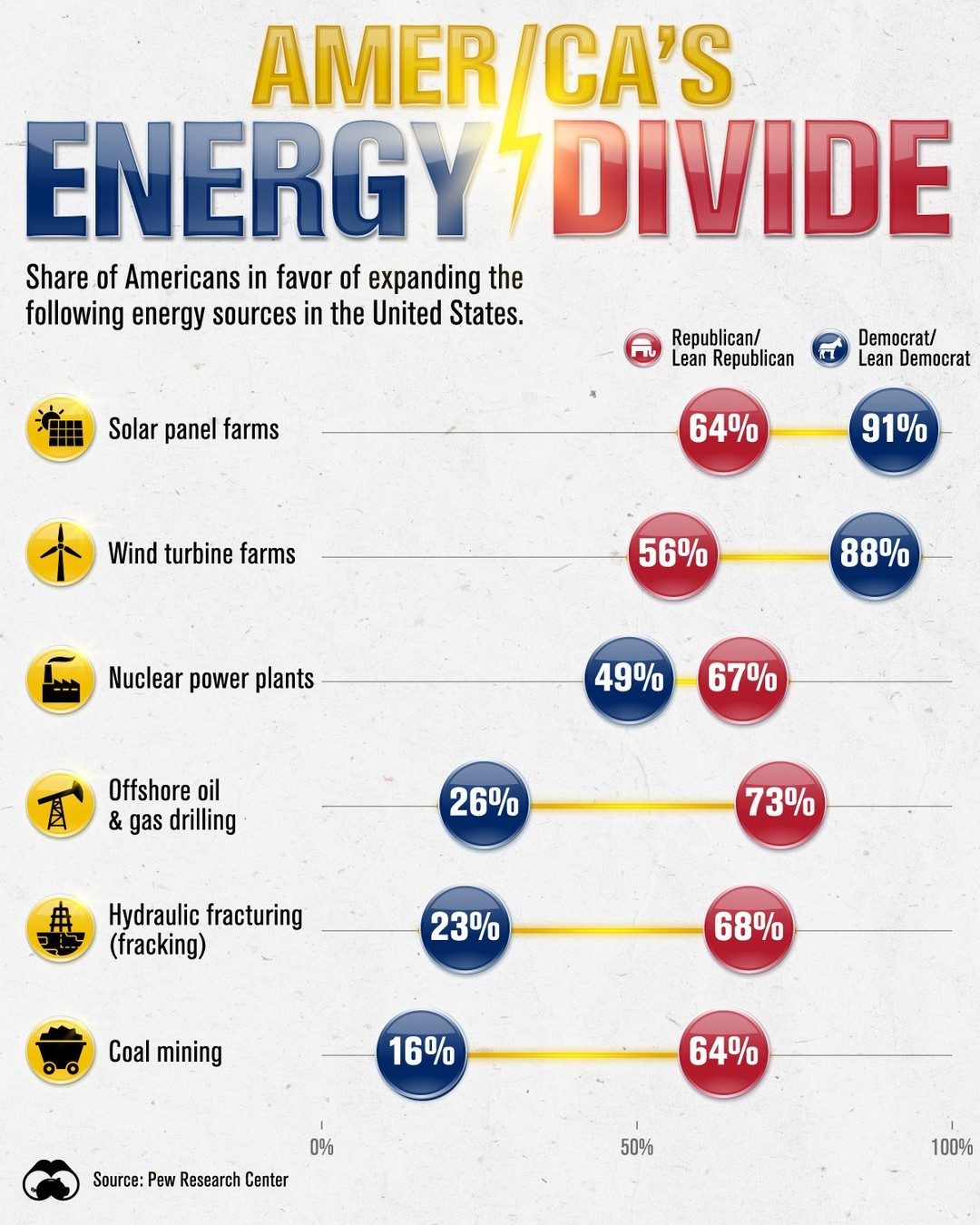
The support for various energy sources in the United States is deeply divided along partisan lines, with distinct preferences emerging between Republicans and Democrats. Nuclear energy stands out as the only energy source with relatively modest differences in support between the two parties, while other sources reveal significant divides.
Context: Why This Matters
Understanding the political divide surrounding energy sources is crucial for policymakers and energy stakeholders. These divisions can significantly influence legislative decisions, funding priorities, and public opinion on energy policy. The data from the Pew Research Center provides valuable insights into how Americans view the expansion of different energy sources, highlighting both areas of consensus and contention.
How Republicans and Democrats View Energy Sources
Renewable Energy
Renewable energy sources like solar and wind power enjoy strong support, particularly among Democrats. Nearly 91% of Democrats favor the expansion of solar panel farms, and 88% support wind turbine farms. For Republicans, the numbers are considerably lower, but still substantial, at 64% for solar and 56% for wind. This data underscores the bipartisan appeal of renewable energy, though Democrats are notably more enthusiastic about its expansion.
Nuclear Energy
Nuclear energy is unique in that it has the smallest partisan divide among all energy sources. About 67% of Republicans and 49% of Democrats support its expansion. Nuclear energy has long been a contentious issue, but the relatively closer support percentages suggest it is seen as a viable option by many in both parties, especially given its potential for providing stable, low-emission power.
Fossil Fuels
The most significant divide is evident in support for fossil fuels. Republicans are far more likely to support the expansion of fossil fuel sources. Offshore oil and gas drilling is favored by 73% of Republicans, compared to 26% of Democrats. Similarly, hydraulic fracturing (fracking) is supported by 68% of Republicans and 23% of Democrats. Coal mining also reveals a stark contrast, with 64% of Democrats in favor and only 16% of Republicans supporting it.
Factors Influencing Energy Source Preferences
Several factors contribute to the differing views on energy sources. Environmental concerns, economic implications, and historical perceptions of energy sources all play a role. Democrats often prioritize environmental impact and sustainability, leading to stronger support for renewables. Republicans, on the other hand, frequently emphasize economic benefits and energy independence, which aligns with their support for fossil fuels.
Practical Tips for Energy Proponents
For those advocating for specific energy sources, understanding these preferences is crucial. Here are some practical tips:
-
Frame the Message: Tailor your messaging to resonate with each party's priorities. For instance, emphasize the economic benefits and job creation potential of renewable energy when speaking to Republicans, while highlighting the environmental advantages when addressing Democrats.
-
Highlight Bipartisan Support: When possible, emphasize the areas of consensus. For example, nuclear energy, which has relatively high support from both parties, can be a focal point for bipartisan cooperation.
-
Engage Across Party Lines: Foster dialogue and partnerships that bridge the partisan divide. Engaging with both Republicans and Democrats in policy discussions can help build broader support for energy initiatives.
-
Use Data and Expertise: Leverage credible data, such as that from the Pew Research Center, to back up your arguments. Transparent and well-researched information can help sway opinions and build consensus.
Important Takeaways
-
Renewables are Popular Across the Board: Despite the partisan divide, both Republicans and Democrats show substantial support for renewable energy sources like solar and wind.
-
Nuclear Energy Bridges the Gap: Nuclear energy stands out as a potential area for bipartisan collaboration, with relatively high and consistent support from both parties.
-
Fossil Fuels Reveal Deepest Divides: The expansion of fossil fuel sources is a contentious issue, with Republicans generally favoring it more than Democrats.
Conclusion
The energy landscape in the United States is complex and deeply influenced by political leanings. Understanding these preferences is essential for anyone involved in energy policy or advocacy. Renewable energy sources, such as solar and wind, have strong support from Democrats, while Republicans tend to favor fossil fuels. Nuclear energy, however, provides an intriguing middle ground with relatively bipartisan support. By recognizing and emphasizing these differences and commonalities, stakeholders can foster a more nuanced and productive conversation around energy expansion.
Watch the Reel
Questions readers ask
Why do energy preferences differ between Republicans and Democrats in the U.S.?
Energy preferences differ due to underlying political ideologies and priorities. Republicans tend to favor fossil fuels for economic reasons, while Democrats often prioritize renewable energy for environmental concerns. This divide is crucial for shaping energy policies.
Which energy source has the most bipartisan support in the U.S.?
Nuclear energy enjoys the most bipartisan support. Both Republicans and Democrats show relatively similar levels of backing for this energy source, making it a rare point of agreement in the political energy debate.
How do Republicans and Democrats differ in their support for solar and wind energy?
Republicans generally show lower support for solar and wind energy compared to Democrats. This partisan divide is significant, with Democrats more likely to advocate for the expansion of these renewable sources due to their environmental benefits.
What are the main reasons behind Republican support for fossil fuels?
Republicans often support fossil fuels due to perceived job creation, economic benefits, and concerns about the reliability of energy supply. These factors contribute to their preference for maintaining and expanding fossil fuel infrastructure.
How might the partisan divide on energy impact policy decisions?
The divide can influence legislative outcomes, funding allocations, and public discourse on energy policy. For instance, it can affect regulations, subsidies, and investments in different energy sectors, potentially slowing progress on issues where there is no consensus.
What insights can be gained from understanding partisan energy views?
Understanding these views helps in predicting political dynamics around energy policy, such as which initiatives might gain traction or face resistance. It also aids in crafting more effective communication strategies for energy stakeholders and policymakers.
Why is the political divide on energy sources significant for energy stakeholders?
For energy stakeholders, understanding this divide is essential for navigating regulatory environments, engaging with policymakers, and anticipating public support. It can guide strategies for advocacy, investment, and partnership-building, ensuring alignment with political realities.
Related deep dives
Similar reads based on topic and creator.


Recent articles
Fresh deep dives from the latest Reels we unpacked.




Comments
Be the first to comment.