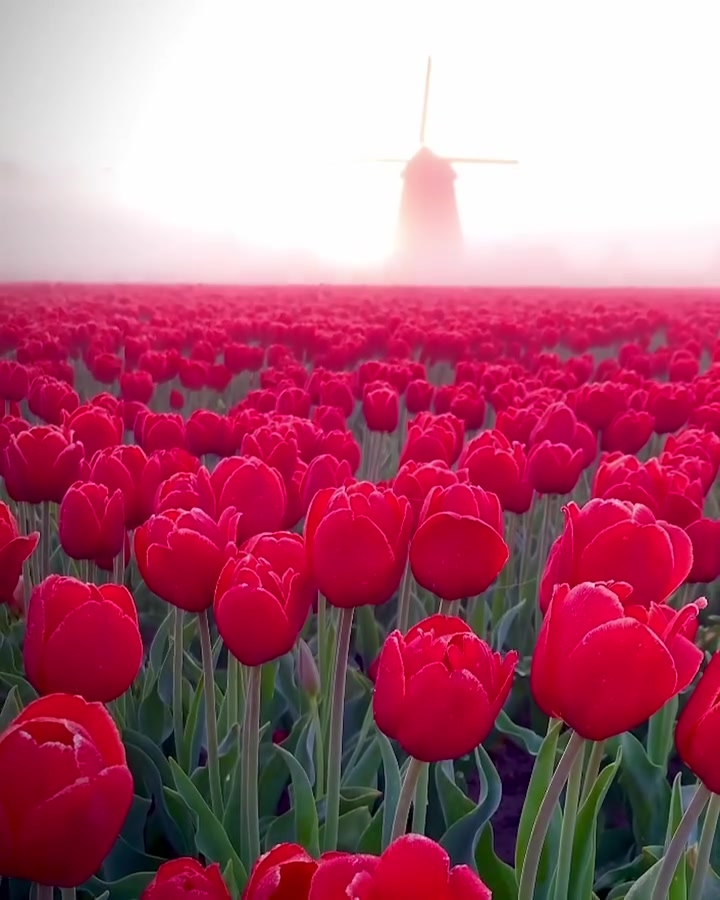
An ocean of red tulips and the Dutch landmark you see at the bottom To Dutchmen, tulips are the world's greatest emblem of their homeland. But there's another giant symbol of their country: windmills. This picture is not a painting, but a vision of the vibrant Dutch fields. The camera draws us across the field, but don't take off your eyes: there's a hefty visual connection waiting for you.
The Windmill in the Bulk of Tulips
The film portrays a large, red tulip field. As a Dutch national symbol, the windmill rests in the background. The scene unfold in a setting of soft, hazy lighting, giving the scene a dreamy and picturesque atmosphere. The camera focuses on the tulips in the foreground, gradually revealing the windmill as the view expands. The windmill in the background. Rows of red tulips stretch as far as the eye can see, creating a mesmerizing contrast with the green grass and the blue sky. Moreover, the tulip field itself is the center of attention, showcasing vibrant red flowers that stand out against the lush green grass. The Dutch countryside is one of the most picturesque. A traditional windmill painted with bright colors stands gracefully in the distance, its blades turning slowly in the breeze. In this dreamy setting, the tulips are the true stars of the show. Furthermore, the tulips. Their vivid red color and delicate petals create a captivating visual spectacle. Moreover, the red tulip flowers add a vibrant contrast to the scene, making the windmill stand out even more.
A Dutch love affair with red flowers
Dutch culture is a big fan of flowers. Tulips have been part of Dutch history, and are a popular flower in the country to this day. But why focus on red ones specifically? Red Tulips have become particularly iconic in the region, symbolizing love, passion, and even royalty. However, it's their beauty that has made them the quintessential Dutch flower. Tulips. For the people of the Netherlands, tulips are more than just flowers. They are a cultural heritage that has captivated the nation. The Netherlands is the world's largest producer and exporter of tulips. The Dutch tulip industry is a multi-billion dollar enterprise. Furthermore, 12 million cut flowers are exported daily, mainly in the form of potted flowers. Approximately 4,400 hectares, or 49 percent of the world's total production, of flowers are cultivated in the country. As a result, the dutch have been growing it since the 17th century. But why red tulips in particular? As a symbol of love and passion, the red tulip has been a favorite in the Netherlands for many years. The red tulip has long been linked to romance and passion, making it a popular choice for Valentine's Day and other special occasions.
The windmill's location
The windmill in this picture is a classic example of a traditional Dutch windmill. The landscape it's in is beautiful. It has a rich cultural history. But they're distinctive in their own way, at least in the windmill's color and design. Tulip fields are a common sight in the Netherlands, but this particular scene is a unique blend of nature and history. Furthermore, the Dutch windmill is famous for its iconic silhouette and vibrant colors. They are also known for their unique design and functionality. However, the windmill's location is particularly special. The tulip field that surrounds the windmill is a visual treat on its own. With rows upon rows of vibrant red tulips stretching out in every direction, it's a feast for the eyes. The windmill’s traditional Dutch design adds an element of cultural heritage to the scene, while the soft, hazy lighting creates a dreamy and tranquil ambiance. The juxtaposition of the serene tulip field and the majestic windmill creates a timeless image that epitomizes the beauty of the Dutch countryside, and more, it's unique.
The Dutch tradition of windmills
The traditional Dutch windmill is a symbol of the country's rich history and engineering prowess. But these windmills have a deeper significance. Windmills have been a part of Dutch landscape for centuries. Before electricity, windmills powered water pumps. They also ground grain to make flour. Finally, the design of Dutch windmills is distinct. It features a tall, slender tower with a wooden cap that rotates to face the wind. A series of blades or sails attached to a horizontal axis rotate with the wind, converting it into mechanical energy. This mechanical energy can then be harnessed for a variety of uses, such as grinding grain, pumping water, or even generating electricity. The most iconic look, however, is the sails, their blades with a windmill that come in a variety of designs.
The Dutch tradition of the tulip festival
The Dutch cultural tradition surrounding tulips has evolved into the annual tulip festival.All of it started in the 17th century. With a rich history, these festivals are a must-see. These festivals celebrate the beauty and cultural significance of tulips. They also feature parades and exhibitions of tulip varieties, as well as traditional Dutch foods and crafts. The Bloemencorso Bollenstreek is the world's largest flower parade. It takes place annually in the Netherlands. Moreover, the parade features vibrant floats adorned with millions of tulips, daffodils, and other spring flowers. Over 60 flower floats compete in the parade, often representing various cities and regions. The festival culminates in a show of tulips in public spaces. All of it are surrounded by tulip fields, visitors can enjoy the beauty of these vibrant flowers.
For Northern Lights Chasers
The windmill describes a dreamy, picturesque atmosphere, perfect for northern lights enthusiasts. But the windmill's surroundings will blow your eyes. The red tulip field creates a stunning visual contrast. Its vibrant colors and the serene beauty of the Dutch countryside further enhance this effect. When the windmill and tulips are combined, the end result is a vibe. Visiting this setting is a unique experience. It offers a blend of natural beauty and cultural heritage. The vivid red flowers of the tulip field. And the iconic silhouette of the traditional Dutch windmill both contribute to the dreamy, picturesque atmosphere. The soft, hazy lighting adds to the overall ambiance. It creates a serene and tranquil atmosphere, making it an ideal setting for a romantic getaway or a peaceful retreat.
Watch the Reel
Questions readers ask
What makes the combination of tulip fields and windmills so iconic in Dutch landscapes?
The combination of tulip fields and windmills is iconic because it represents a perfect blend of nature and Dutch cultural heritage. Tulips, particularly red ones, are a symbol of love and passion, while windmills are a traditional landmark that has been part of the Dutch landscape for centuries. Together, they create a picturesque scene that embodies the charm of the Dutch countryside.
How does the lighting in the scene contribute to its dreamy atmosphere?
The soft, hazy lighting in the scene creates a dreamy and picturesque atmosphere by enhancing the vibrant colors of the red tulips and the green grass. This lighting effect makes the windmill in the background stand out, adding to the overall visual appeal. It also gives the scene a romantic and serene feel, making it a quintessential Dutch landscape.
Are there specific reasons why red tulips are favored over other colors in Dutch culture?
Red tulips are favored in Dutch culture because they symbolize love, passion, and even royalty. These flowers have a rich history in the Netherlands, where they've been cultivated since the 17th century. Additionally, red tulips are often associated with special occasions like Valentine's Day, making them a popular choice for celebrations and romantic gestures.
What is the significance of the windmill in the Dutch landscape?
The windmill is a significant symbol of Dutch heritage. It has been a part of the landscape for centuries, often used for tasks like grinding grain or pumping water. In the context of this scene, the windmill adds a historical and cultural dimension, contrasting beautifully with the vibrant tulip field and creating a iconic Dutch landscape.
How do the tulip fields and windmill contribute to the Dutch economy?
Tulip fields and windmills both play significant roles in the Dutch economy. The Netherlands is the world's largest producer and exporter of tulips, with the industry generating billions of dollars annually. Windmills, while less directly tied to economic output, are a major tourist attraction, drawing visitors from around the world who come to see the picturesque landscapes and rich cultural heritage they represent.
Can I visit a similar tulip field with a windmill in the Netherlands?
Yes, you can definitely visit similar landscapes in the Netherlands. The Keukenhof Gardens, for example, offer vast fields of tulips, and there are many windmills scattered throughout the countryside. Many of these areas are easily accessible to tourists, providing an authentic experience of the iconic Dutch landscape.
Related deep dives
Similar reads based on topic and creator.



Recent articles
Fresh deep dives from the latest Reels we unpacked.

Comments
Be the first to comment.