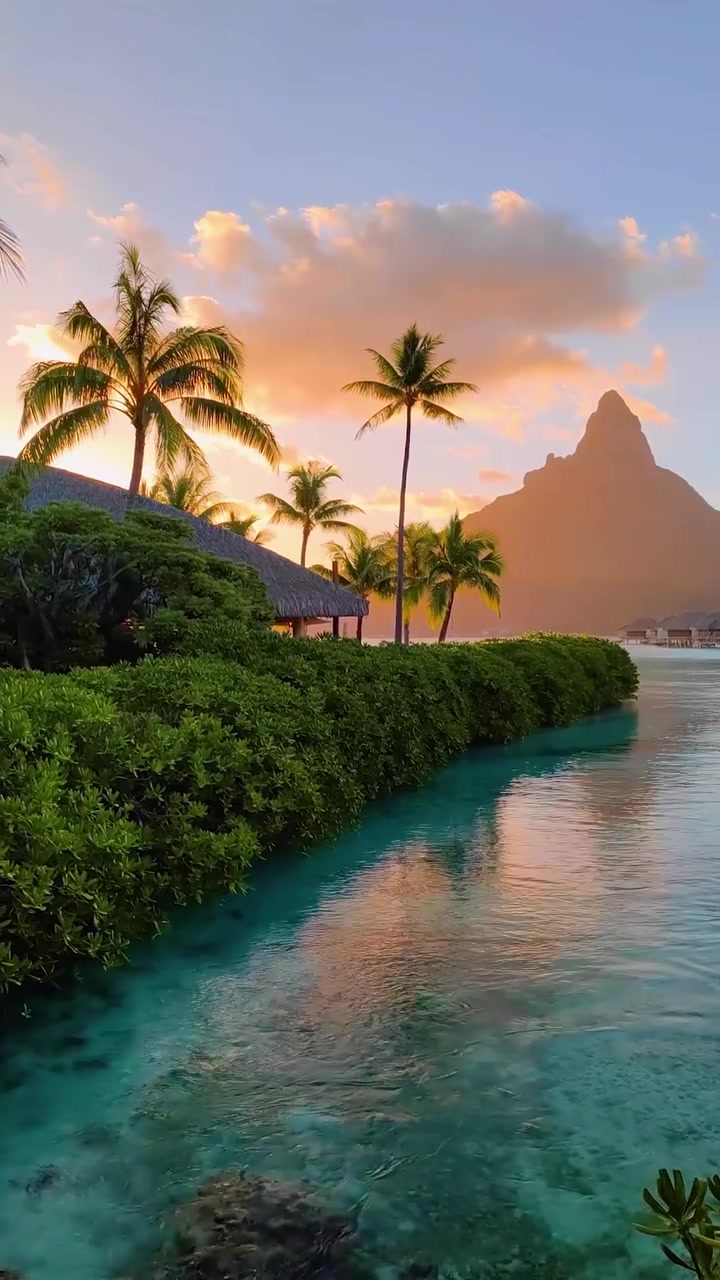
A vibrant tropical landscape sunset paints the sky with a spectrum of colors across a sea of turquoise waters. A stillness in nature gives way to a serene atmosphere. In the foreground of the beautiful frame are palm trees and a profusion of lush vegetation. The Silent serenity of the scene is punctuated by a mountain peak that looms in the background — a sentinel standing against the sunset.
The Beauty of a Tropical Sunset
At dusk, tropical locations reveal their true colors. This panoramic landscape is a pristine sun fading from the sky over a placid turquoise water, with a gentle contrast between the land, the sea, and the sky. This sunset scene is made more dramatic with the silhouetted mountains serving as a focal point, set against the backdrop of a kaleidoscope of colors that characterize a sunset. Lush greenery is another key component of the tropical twilight. This greenery could be part of a forest, a thicket, or even the vegetation of a tropical resort. The contrast between the lush greenery, the vibrant sky, and the mirror-like water creates a vibrant and picturesque scene. Sunsets are also a daily occurrence in tropical locations. The tropics — the broad band of the earth's surface surrounding the equator — enjoy shorter and more consistent periods of daylight, which makes late afternoon a more predictable timeframe for this kind of spectacle.
The Promise of Escapism
The serene atmosphere of the world's sunsets offers a moment of escapism — a visual promise for travel, a respite from the everyday. The viewer might want to recreate a similar experience. In a world of work and routine, such a brief glimpse of a horizon glowing in amber and gold is something to look forward to. Sunsets are a universal experience that call to mind a blend of fulfillment, gratitude, and a sense of closure. They are seen as a moment of reflection and meditation, marking the conclusion of the day. The allure of tropical sunsets is a mantra for the travel industry. Themes like serenity, relaxation, and adventure, which are universally appealing are natural attractions that attract viewers to tropicalscapes.
The Colors and Light of Sunset
The sun sinks below the horizon in a kaleidoscope of colors. The result is a palette of colors ranging from orange and red to pink and purple, which paints the sky in a vibrant display. The angle of the sun creates long shadows and creates a reflective surface on the water. The shapes, angles, and colors complement each other in a tropical sunsets landscape. The mountain peak and the reflection of the vibrant sky on the water frame the scene. The tropical greenery in the middle ground provides a green base, while the mountain peak adds height and depth. The silhouettes of hillside ridges, trees, and other landscape features emerge as the sun sinks across the horizon. The natural world provides a spectacular display. The scene changes dramatically, and the colors shift in intensity as the sun sets below the horizon.
Making Rainbows
As the sun disappears behind the horizon, the colors in the sky merge to form a rainbow — a brief yet dramatic display as the last light of the day is refracted through the atmosphere, splitting the light into its composite colors of red, orange, yellow, green, blue, indigo, and violet. The resulting arc of spectral hues dips into the horizon, casting a final magical display upon the water. The refraction of light responsible for the rainbow is only visible for a short moment. Its appearance is a fleeting phenomenon, making it a highly sought-after moment to capture in a sunset scene.
The Sky and the Sea
The horizon merges the sky and the sea. At sunrise or dusk, the world shifts seamlessly into one vast canvas. Tropical sunsets combine the calmness of water with the drama of the sky. The sky and the sea are both essential elements in a tropical sunset. They work together to create a serene atmosphere. The colors and reflections that appear on the water are shared, and the mirror-like surface of the sea reflects the vibrant sky. The mood conveyed by the tropical sunset is a peaceful one. From the darkest blues to the brightest golds, the sky and sea create a visual contrast that holds the viewer's interest.
How to Capture the Perfect Sunset
To capture a tropical sunset like a pro, start by planning your trip around the sunset in the desired location. Consider packing a camera and tripod for high-quality photos.
- Value of positioning: Location is key. Whether at the beach or at the top of a hill or on a boat, the vantage point has a significant impact on the composition of the scene. Additionally, choose a spot that has vegetation as a visual complement to the colors in the sky.
- Equipment: Here are some tips for your equipment:
- A camera with manual settings
- A tripod for long exposures and stability
- A lens hood to prevent lens flare
- A circular polarizer filter to enhance the sky and reduce glare
- A remote shutter release to avoid camera shake
- Technique: Choose a low ISO to capture the fine details. The aperture should be chosen based on the desired depth of field. If you want to capture the entire scene, you'll need to use a fast shutter speed. A shorter shutter speed can be used to record movement, which can create interesting effects.
- Looking for a moment: Watch the sun and predict its movement. Choose a location that gives you a clear view of the horizon and the sun.
The Magic of the Moment
The value of a tropical sunset is in the experience it provides. It's an opportunity to pause and appreciate the beauty of nature. It's a moment to unwind and reflect, to escape the pressures of everyday life, and to connect with the world around you.
Watch the Reel
Questions readers ask
What makes tropical sunsets so visually striking?
Tropical sunsets are visually striking due to the vibrant colors that paint the sky, the contrast between lush greenery, the mirror-like water, and the silhouetted mountains or other landscape features. The long shadows and reflective surfaces on the water add to the dramatic effect, creating a scene that is both serene and exhilarating. The consistent periods of daylight in tropical locations make these sunsets a daily occurrence, adding to their allure.
How does the angle of the sun affect the landscape during a tropical sunset?
The angle of the sun during a tropical sunset creates long shadows and a reflective surface on the water. This enhances the contrast and depth of the scene, making the landscape features like mountains, trees, and other elements stand out dramatically against the vibrant sky. This interplay of light and shadow adds a dynamic quality to the overall aesthetic.
Are tropical sunsets always at the same time every day?
Tropical sunsets occur at a consistent time each day, thanks to the shorter and more predictable periods of daylight in the tropics. This makes late afternoon a reliable timeframe for capturing or experiencing these beautiful moments. The daily occurrence adds to the reliability and appeal of these sunsets for both locals and tourists.
How can I best capture the colors of a tropical sunset in a photograph?
To capture the vibrant colors of a tropical sunset, consider using a wide-angle lens to include as much of the scene as possible. Focus on the interplay between the silhouetted mountains, the reflective water, and the lush greenery. Timing is crucial; shoot just as the sun dips below the horizon to capture the kaleidoscope of colors. Additionally, using a tripod can help stabilize your camera for long exposures, ensuring you capture the full spectrum of colors.
What are some common themes associated with tropical sunsets?
Tropical sunsets are often associated with themes of serenity, relaxation, and adventure. They evoke a sense of escapism, offering a moment of reflection and meditation. These themes are universally appealing and are often used in the travel industry to attract viewers to tropical landscapes, promising a respite from everyday routines.
What causes the rainbow effect during a tropical sunset?
The rainbow effect during a tropical sunset is caused by the refraction of the last light of the day through the atmosphere. As the sun disappears behind the horizon, the colors in the sky merge and create a brief yet dramatic display. This phenomenon adds an extra layer of beauty to the already vibrant sunset scene, making it a memorable experience.
Can I see sunsets like these in locations outside the tropics?
While sunsets in non-tropical regions can be beautiful, the unique combination of vibrant colors, lush greenery, and reflective water is more commonly found in tropical landscapes. The consistent periods of daylight in the tropics also make these sunsets more predictable. However, you can still find stunning sunsets in other regions, but the specific characteristics and atmosphere might differ.
Related deep dives
Similar reads based on topic and creator.



Recent articles
Fresh deep dives from the latest Reels we unpacked.



Comments
Be the first to comment.