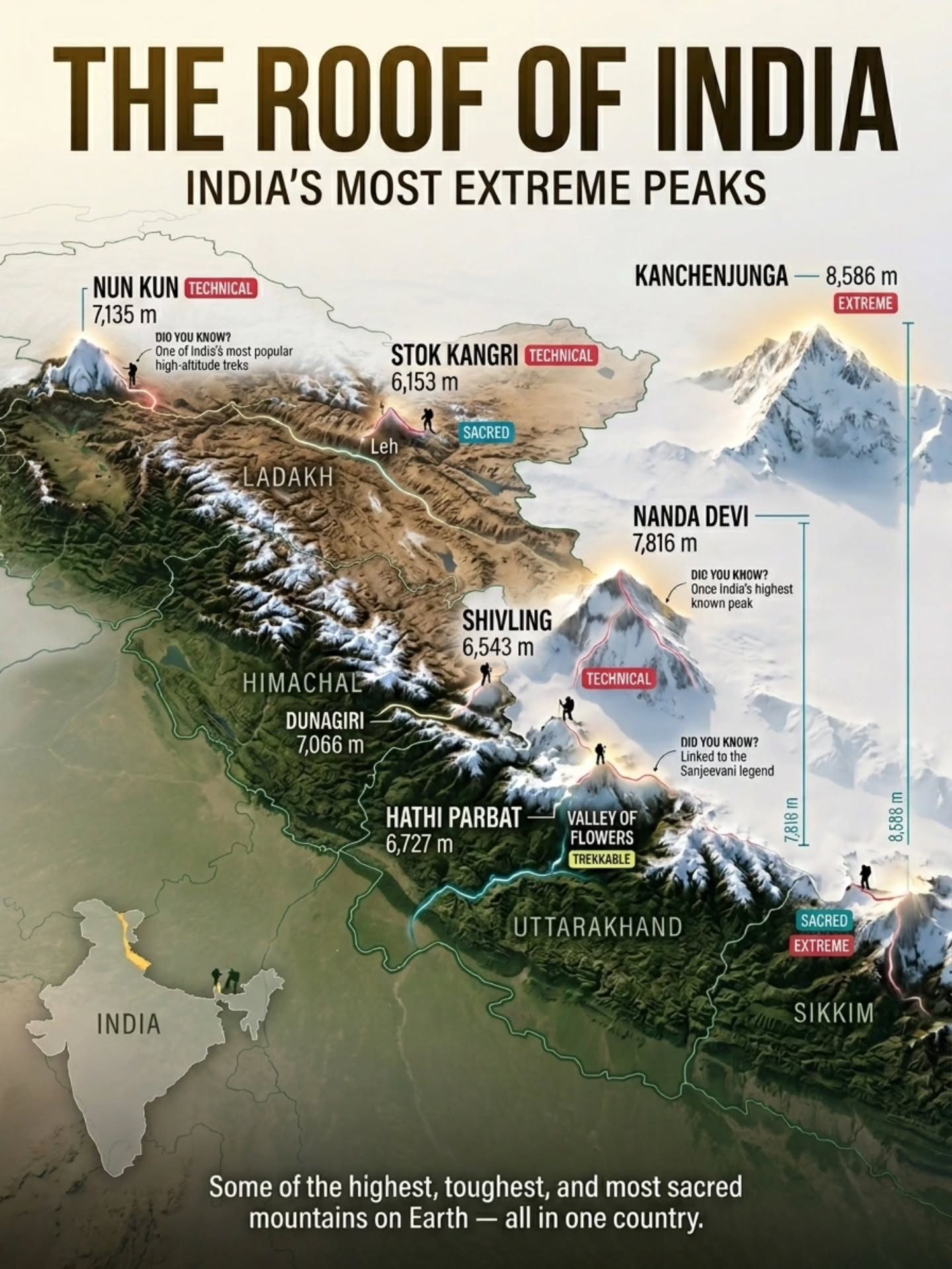
Indian Mountain Peaks
India is home to some of the world's most impressive and challenging mountain peaks. These peaks not only offer breathtaking views but also present significant challenges for climbers and trekkers. Let's explore some of the highest, toughest, and most sacred mountains in India.
Context / Why This Matters
Mountain climbing and trekking are popular activities in India, attracting adventurers from around the world. The country's diverse landscape offers a range of challenges, from trekkable peaks to extreme climbs. Understanding the nature of these mountains, their altitudes, and the challenges they present is essential for anyone considering a high-altitude adventure in India.
Main Discussion
The Roof of India
India's mountain ranges are often referred to as the "Roof of India," a fitting description given the majestic and formidable peaks that dominate the landscape. These mountains are not just geographical features; they hold deep cultural and religious significance for many communities in the region.
Notable Peaks
Kanchenjunga
Kanchenjunga, standing at 8,586 meters, is the third highest peak in the world. Located in the Himalayas, it is situated on the border between India and Nepal. This mountain is considered one of the most sacred peaks in the world, and it is revered by both Indians and Nepalese. Climbing Kanchenjunga is an extreme challenge, requiring advanced mountaineering skills and extensive preparation.
Nanda Devi
Nanda Devi, with an altitude of 7,816 meters, is another iconic peak in the Indian Himalayas. It was once considered the highest peak in India until Kanchenjunga and other peaks were surveyed more accurately. Nanda Devi is deeply embedded in Hindu mythology, particularly the Sanjeevani legend, where it is believed to be the abode of the goddess Parvati. The mountain is also known for its technical climbing conditions, making it a formidable challenge for even the most experienced climbers.
Nun Kun
Nun Kun, at 7,135 meters, is a twin-peak massif located in the Ladakh region. Both peaks are considered technical climbs, requiring advanced mountaineering skills. Nun Kun is known for its steep slopes and challenging weather conditions, making it a popular destination for experienced climbers and mountaineers.
Stok Kangri
Stok Kangri, also located in Ladakh, is another technical peak standing at 6,153 meters. It is one of India’s most popular high-altitude treks, offering a challenging but rewarding experience. The trek to Stok Kangri often takes climbers through Ladakh's stunning landscapes, providing a unique blend of adventure and natural beauty.
Shivling
Shivling, at 6,543 meters, is a technical peak located in the Garhwal Himalayas. It is known for its distinct pyramid-like shape and challenging climbing conditions. Shivling is a popular destination for experienced climbers looking for a technical challenge.
Valley of Flowers
The Valley of Flowers, situated in Uttarakhand, is a trekkable but extreme destination. This high-altitude valley is famous for its stunning meadows filled with endemic alpine flowers and diverse flora. While it is a popular trekking destination, the extreme conditions and high altitude make it a challenging adventure.
Sacred and Cultural Significance
Many of India's highest peaks hold deep cultural and religious significance. For instance, Nanda Devi is linked to the Sanjeevani legend, where it is believed that the mountain holds the power to revive the dead. This sacred significance adds a layer of reverence and respect for these peaks, making them more than just geographical landmarks.
Practical Tips
Preparation
For anyone considering a climb or trek in these regions, thorough preparation is essential. This includes physical training, acquiring the necessary mountaineering skills, and gathering the right equipment.
Guides and Permits
Hiring experienced local guides and obtaining the necessary permits are crucial steps. Local guides not only know the terrain but also understand the cultural nuances and best practices for respecting these sacred peaks.
Weather Conditions
The weather in these high-altitude regions can be unpredictable and harsh. It is essential to monitor weather conditions and plan your expedition accordingly. Always be prepared for sudden changes in temperature, wind, and precipitation.
Important Takeaways
India's mountain peaks offer a unique blend of natural beauty, cultural significance, and challenging adventures. Whether you are an experienced climber or a first-time trekker, these mountains provide an unforgettable experience. However, the journey requires careful planning, respect for local customs, and a deep understanding of the challenges posed by these formidable peaks.
Conclusion
The mountain peaks of India are more than just geographical features; they are symbols of strength, resilience, and spiritual significance. From the sacred Nanda Devi to the extreme Kanchenjunga, these peaks offer a range of challenges and rewards for adventurers. Whether you are a seasoned climber or a curious traveler, the mountains of India promise an adventure like no other. Embrace the challenge, respect the local customs, and prepare thoroughly for a journey that will leave you with memories to last a lifetime.
Watch the Reel
Questions readers ask
What makes Kanchenjunga and Nanda Devi significant in Indian culture?
Kanchenjunga and Nanda Devi are considered sacred peaks in India, holding profound spiritual and cultural significance. These mountains are revered by local communities, and their climbs are often approached with deep respect for the cultural beliefs associated with them.
What are the main challenges of climbing the toughest peaks in India?
The toughest peaks in India present challenges such as extreme altitudes, technical climbing routes, and unpredictable weather conditions. Additionally, the cultural significance of these mountains means that climbers must be respectful of local traditions and often require permits to ascend.
Which is the highest peak in India that can be climbed by trekkers?
While several high peaks exist in India, the Kailash Mansarovar trek is popular among trekkers. The trek involves climbing the Mansarovar Lake and circumambulating Kailash Parvat. This region is known for its cultural and religious significance, drawing pilgrims and adventurers alike.
What permits are required for climbing sacred peaks in India?
Climbing sacred peaks in India, such as Kanchenjunga and Nanda Devi, often requires special permits from local authorities. These permits help regulate the number of climbers and ensure the protection of the cultural and environmental integrity of these sites. Additionally, many peaks have restrictions or require special permissions to respect their sacred status.
Are there any Indian mountain legends associated with these peaks?
Yes, many Indian mountain peaks are surrounded by legends and myths. For example, Kanchenjunga is believed to be the abode of gods, and Nanda Devi is associated with the local goddess. These legends add to the allure and mystique of climbing these peaks, making the experience even more profound for many adventurers.
What equipment is necessary for extreme mountain climbing in India?
Extreme mountain climbing in India requires specialized equipment, including crampons, ice axes, and proper mountaineering boots. Additionally, appropriate clothing for high altitudes and unpredictable weather, as well as oxygen supplies, are essential. Training and experience in technical climbing are also crucial for tackling these peaks.
Related deep dives
Similar reads based on topic and creator.




Recent articles
Fresh deep dives from the latest Reels we unpacked.




Comments
Be the first to comment.