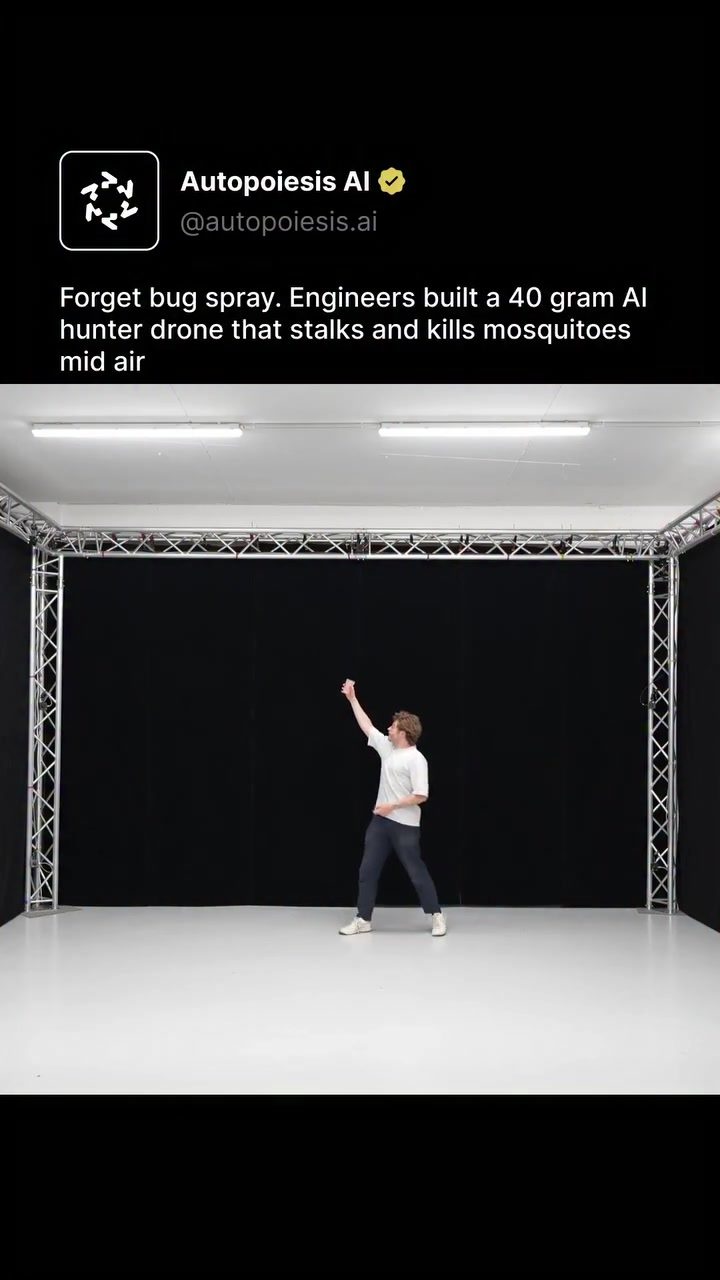
The Future of Mosquito Control: Drones Hunting with Sound
The burgeoning field of mosquito control is witnessing a revolutionary shift with the introduction of AI-driven drones. Tornyol, a Y Combinator-backed startup, has engineered a 40-gram drone that employs advanced acoustic technology to stalk and eliminate mosquitoes. This technology, which uses sound instead of cameras, offers a new front in the battle against these pesky and disease-carrying insects.
Context / Why This Matters
Mosquitoes are more than just a nuisance; they are responsible for transmitting deadly diseases such as malaria, dengue, Zika, and West Nile virus. Traditional methods of mosquito control, such as insecticides and larvicides, have their limitations and can have unintended environmental impacts. The development of AI-driven mosquito control drones presents a novel, environmentally friendly, and potentially more effective solution.
The implications of this technology extend beyond public health. By reducing the need for chemical pesticides, these drones could contribute to a healthier ecosystem. Moreover, the efficiency of this approach could dramatically lower the cost of mosquito control, making it more accessible for communities worldwide.
Main Discussion
The Technology Behind the Drone
Tornyol's drone is equipped with a sophisticated array of microphones and ultrasonic sensors that detect the unique wingbeat patterns of mosquitoes. This approach is similar to the technology used in car park assist systems, which use sound waves to detect obstacles. The drone's phased array sonar system, comprising hundreds of microphones, constructs a 3D acoustic map of its surroundings. This acoustic picture allows the drone to track mosquitoes up to about 3 meters away, even in complete darkness.
Once a mosquito is detected, the drone uses its AI capabilities to predict the insect's flight path and intercept it mid-air. The kill mechanism is straightforward: the spinning propellers or prop guards make contact with the mosquito, effectively eliminating it. This method avoids the need for any sci-fi disintegration beams, relying instead on the physical impact of the drone's components.
Autonomous Operation and Initial Success
Tornyol has already demonstrated the drone's capabilities by autonomously chasing and striking a moth, marking their first successful air-to-air kill. This demonstration underscores the potential of the drone's AI and acoustic tracking systems. The company estimates that just 10 of these drones could clear mosquitoes from a full square kilometer, significantly reducing control costs by roughly 100 times compared to traditional methods. This cost-efficiency is a major selling point for communities and health organizations battling mosquito-borne diseases.
The Phased Array Sonar System
The phased array sonar system is a critical component of the drone's effectiveness. This system uses a network of microphones to create a detailed acoustic map of the environment. By analyzing the unique wingbeat patterns of mosquitoes, the drone can differentiate between different types of insects and focus on its target. The 3D acoustic picture allows the drone to navigate and track its prey with precision, even in low-visibility conditions.
The Future of Mosquito Control
The introduction of AI mosquito control drones represents a significant leap forward in public health technology. By leveraging advanced acoustic technology and AI, these drones offer a more efficient, environmentally friendly, and cost-effective solution to mosquito control. The success of Tornyol's drone demonstrates the potential of this approach, and it joins a growing field of tech-based mosquito control methods, including sterile insect releases and larvicide drones.
This trend points to a future where public health tools look more like robotics than pesticides. As technology continues to evolve, we can expect to see even more innovative solutions to age-old health challenges. Autonomous drones, equipped with sophisticated sensors and AI, could become a standard tool in the fight against mosquito-borne diseases, improving public health outcomes globally.
Practical Tips
Understanding the Technology
For those interested in the technology behind these drones, it's important to understand the principles of acoustic mapping and AI-driven tracking. The phased array sonar system relies on the reflection and analysis of sound waves to create a detailed map of the environment. This technology is not new but has been adapted and refined for use in mosquito control.
Potential Applications
Beyond mosquito control, the technology used in these drones has potential applications in other fields. For example, the acoustic tracking system could be adapted for use in wildlife conservation, where it could help track and monitor endangered species. The AI-driven navigation and tracking capabilities also have potential uses in agriculture, where drones could be used to monitor and control pest populations in crops.
Staying Informed
As this technology advances, it's important to stay informed about the latest developments. Keeping up with the latest research and innovations in AI and acoustic technology can provide valuable insights into the future of mosquito control and other related fields. Following industry leaders and researchers in these areas can help you stay ahead of the curve.
Important Takeaways
The development of AI mosquito control drones represents a significant advancement in public health technology. By leveraging acoustic technology and AI, these drones offer a more efficient, environmentally friendly, and cost-effective solution to mosquito control. The success of Tornyol's drone demonstrates the potential of this approach, and it joins a growing field of tech-based mosquito control methods. As technology continues to evolve, we can expect to see even more innovative solutions to age-old health challenges. Autonomous drones, equipped with sophisticated sensors and AI, could become a standard tool in the fight against mosquito-borne diseases, improving public health outcomes globally.
Conclusion
The introduction of AI mosquito control drones is a game-changer in the field of public health. By using sound instead of cameras, these drones offer a unique and effective solution to mosquito control. The technology behind these drones, including the phased array sonar system and AI-driven tracking, demonstrates the potential of advanced acoustic technology in various applications. As we look to the future, it's clear that robotics and AI will play an increasingly important role in public health, offering innovative solutions to longstanding challenges. The development of AI mosquito control drones is just the beginning of a new era in public health technology, and it's an exciting time to be part of this rapidly evolving field.
Watch the Reel
Questions readers ask
How does Tornyol's mosquito hunting drone work?
Tornyol's mosquito hunting drone uses advanced acoustic technology to detect and eliminate mosquitoes. By employing sound rather than cameras, the drone can pinpoint the location of mosquitoes with great precision, ensuring effective pest control. The drone's AI capabilities enable it to distinguish mosquito sounds from other ambient noises, making it a highly efficient tool for mosquito elimination.
What makes Tornyol's drone an environmentally friendly option for pest control?
Tornyol's drone offers several environmental benefits. It eliminates the need for chemical insecticides and larvicides, which can have unintended environmental impacts. By using sound detection, the drone targets mosquitoes specifically, reducing the risk of harming other beneficial insects and wildlife.
How does the size of the drone (40-gram) contribute to its effectiveness?
The compact size of Tornyol's 40-gram drone makes it highly maneuverable and capable of navigating through various environments with ease. This allows it to access areas where larger drones or traditional pest control methods might struggle, such as dense vegetation or hard-to-reach spaces, ensuring comprehensive mosquito control.
What diseases can be mitigated by using Tornyol's mosquito hunting drone?
By effectively eliminating mosquitoes, Tornyol's drone can help mitigate the spread of several deadly diseases. These include malaria, dengue, Zika, and West Nile virus, all of which are transmitted by mosquitoes. Reducing mosquito populations can significantly lower the risk of these diseases in affected areas.
How does Tornyol's drone compare to traditional mosquito control methods?
Traditional methods like insecticides and larvicides often have broader environmental impacts and can be less precise. Tornyol's drone, on the other hand, offers precision pest control by specifically targeting mosquitoes using sound detection. This targeted approach minimizes environmental risks and enhances the effectiveness of pest control efforts.
What role does AI play in Tornyol's mosquito hunting drone?
AI is integral to the functionality of Tornyol's drone. It allows the drone to process and analyze sound data in real-time, distinguishing mosquito sounds from other noises. This enables the drone to accurately locate and eliminate mosquitoes, making it a powerful tool in the fight against these disease-carrying pests.
Can Tornyol's drone be used in urban and rural settings?
Yes, Tornyol's drone is designed to be versatile and can be used in both urban and rural settings. Its compact size and advanced sound detection capabilities make it effective in various environments, from densely populated cities to remote rural areas. This versatility ensures comprehensive mosquito control across different landscapes.
Related deep dives
Similar reads based on topic and creator.


Recent articles
Fresh deep dives from the latest Reels we unpacked.




Comments
Be the first to comment.