U.S. Wildfire Hazard Zones
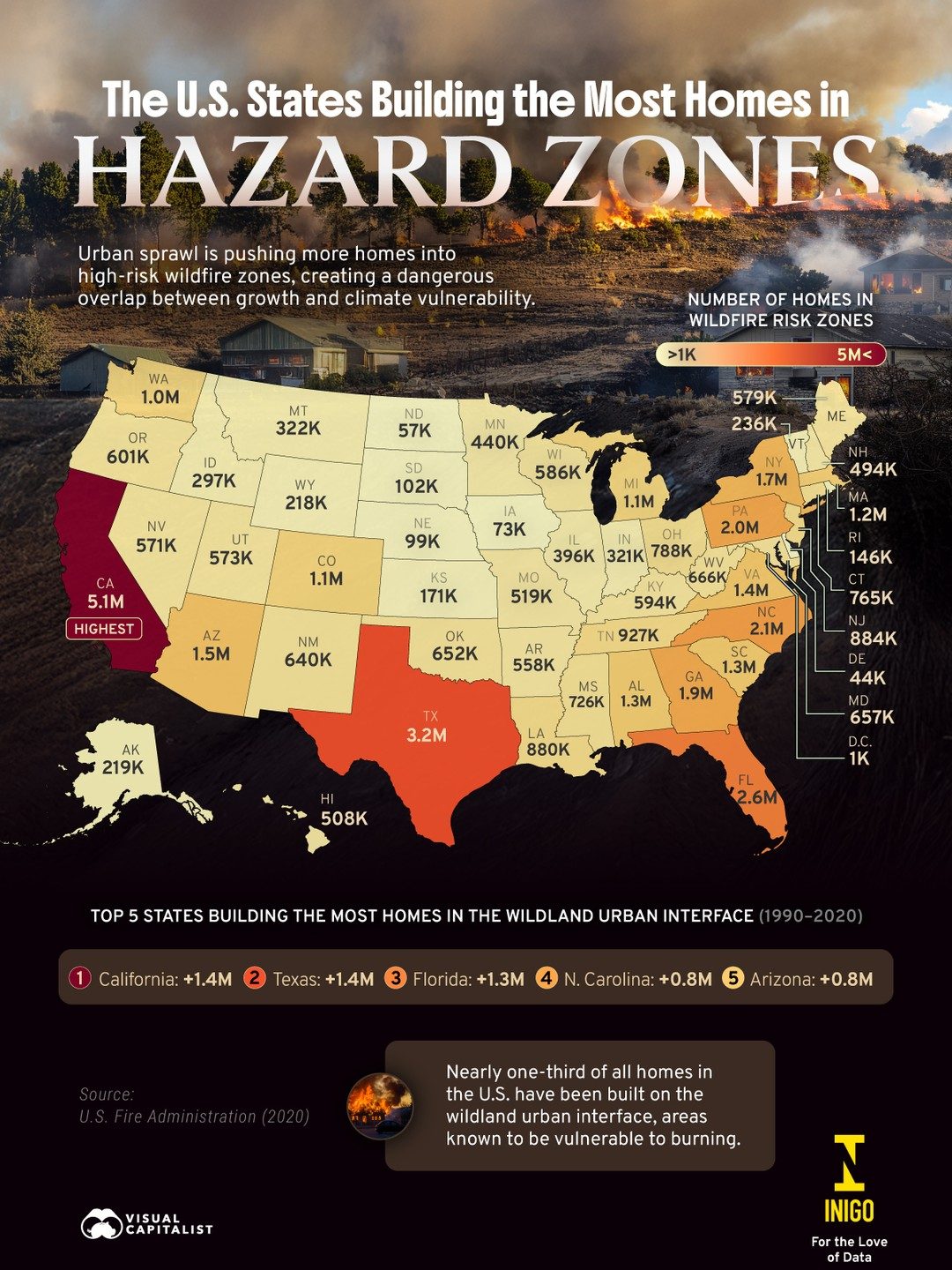
As urban sprawl expands, so does the number of homes in wildfire hazard zones. This trend poses significant risks to property and communities, as highlighted in recent data from the U.S. Fire Administration. Understanding the scope and impact of this issue is crucial for risk management and long-term planning.
Why This Matters
The increasing overlap between urban development and wildfire-prone areas creates a dangerous scenario. More homes in these zones means higher potential for property loss, increased insurance costs, and greater challenges for emergency services. The data from the U.S. Fire Administration underscores the urgency of addressing this issue, as it reveals a sharp rise in the number of homes at risk.
The Scope of the Problem
States at High Risk
According to the data, several states stand out for having the highest number of homes in wildfire risk zones. California, Texas, and Florida top the list, each with over a million homes in vulnerable areas.
Top 5 States with the Most Homes in Wildfire Risk Zones:
- California: Over 2.6 million homes in wildfire risk zones.
- Texas: Over 1.4 million homes in wildfire risk zones.
- Florida: Over 1.3 million homes in wildfire risk zones.
- North Carolina: Over 880,000 homes in wildfire risk zones.
- Arizona: Over 573,000 homes in wildfire risk zones.
The Growth of Urban Development in Fire-Prone Areas
The data also highlights the rapid increase in new home construction within the wildland urban interface. This term refers to areas where urban development intersects with wildland vegetation, creating a high risk for wildfires. The top 5 states building the most homes in these areas from 1990 to 2020 are:
- California: Added over 1.4 million new homes.
- Texas: Added over 1.4 million new homes.
- Florida: Added over 1.3 million new homes.
- North Carolina: Added over 880,000 new homes.
- Arizona: Added over 573,000 new homes.
These statistics illustrate a growing trend of urban sprawl into areas that are inherently susceptible to wildfires. Factors such as climate change, which exacerbate wildfire conditions, compound this risk.
Practical Tips for Homeowners and Communities
Living in or near wildfire-prone areas requires proactive measures to mitigate risks. Here are some practical tips:
Homeowners:
- Fire-Resistant Materials: Use fire-resistant materials for roofing and siding.
- Defensible Space: Create a defensible space around your home by clearing away dead vegetation and maintaining a buffer zone.
- Landscaping: Plant fire-resistant plants and maintain a well-trimmed landscape.
- Educate: Educate yourself and your family on what to do in case of a wildfire. Have an evacuation plan and emergency supply kit ready.
Communities:
- Community Planning: Engage in community planning to ensure that new developments consider wildfire risk.
- Prevention Programs: Participate in local fire prevention programs and volunteer firefighting efforts.
- Public Awareness: Raise awareness about wildfire prevention and response through local initiatives and campaigns.
- Insurance: Look into insurance options that cover wildfire damage and ensure your community is prepared for potential losses.
Important Takeaways
- Urban Sprawl and Wildfires: The expansion of urban areas into wildfire-prone zones is a growing concern, with significant implications for property loss and community safety.
- High-Risk States: California, Texas, and Florida are at the forefront with the highest number of homes in wildfire risk zones.
- Prevention and Preparedness: Taking proactive measures at both the individual and community levels can significantly reduce the risk and impact of wildfires.
Conclusion
The data clearly shows that urban sprawl into wildfire hazard zones is a pressing issue. Homeowners, communities, and policymakers must work together to mitigate these risks. By understanding the scope of the problem, taking proactive measures, and planning for the future, we can better protect our homes and communities from the growing threat of wildfires.
Watch the Reel
Questions readers ask
Which states have the most homes in wildfire hazard zones?
California, Texas, and Florida top the list of states with the highest number of homes in wildfire hazard zones. This is due to a combination of factors, including the prevalence of wildland-urban interfaces and the impacts of climate change.
What is the wildland-urban interface and why is it important in understanding wildfires?
The wildland-urban interface (WUI) refers to areas where human development meets wildland vegetation. This interface is crucial in understanding wildfires because it represents the zones where homes and infrastructure are at the highest risk of damage from wildfires.
How does climate change impact the number of homes in wildfire zones?
Climate change exacerbates wildfire risks by increasing temperatures, extending dry seasons, and increasing the frequency and intensity of wildfires. These conditions make it more likely that homes in wildfire-prone areas will be threatened.
What are some strategies for wildfire mitigation in high-risk areas?
Effective wildfire mitigation strategies include implementing fire-resistant building materials, creating defensible space around homes, and enforcing strict land-use regulations. Additionally, investing in improved emergency response systems and public awareness campaigns can help reduce risks.
Why does urban development in wildfire-prone areas pose a challenge for emergency services?
When urban development occurs in wildfire-prone areas, emergency services face increased challenges. These challenges include navigating difficult terrains, managing limited resources, and ensuring the safety of a larger number of people and properties.
What are the economic impacts of building homes in wildfire hazard zones?
Building homes in wildfire hazard zones can lead to increased costs for homeowners and communities. Property loss, higher insurance premiums, and the need for enhanced safety measures all contribute to the economic burden.
How can homeowners protect their properties in wildfire-prone areas?
Homeowners in wildfire-prone areas can take several steps to protect their properties, including removing dead vegetation, installing fire-resistant roofing and siding, and ensuring that gutters are clear of debris. Additionally, creating a defensible space around the home can help reduce the risk of fire spread.
Related deep dives
Similar reads based on topic and creator.


Recent articles
Fresh deep dives from the latest Reels we unpacked.




Comments
Be the first to comment.