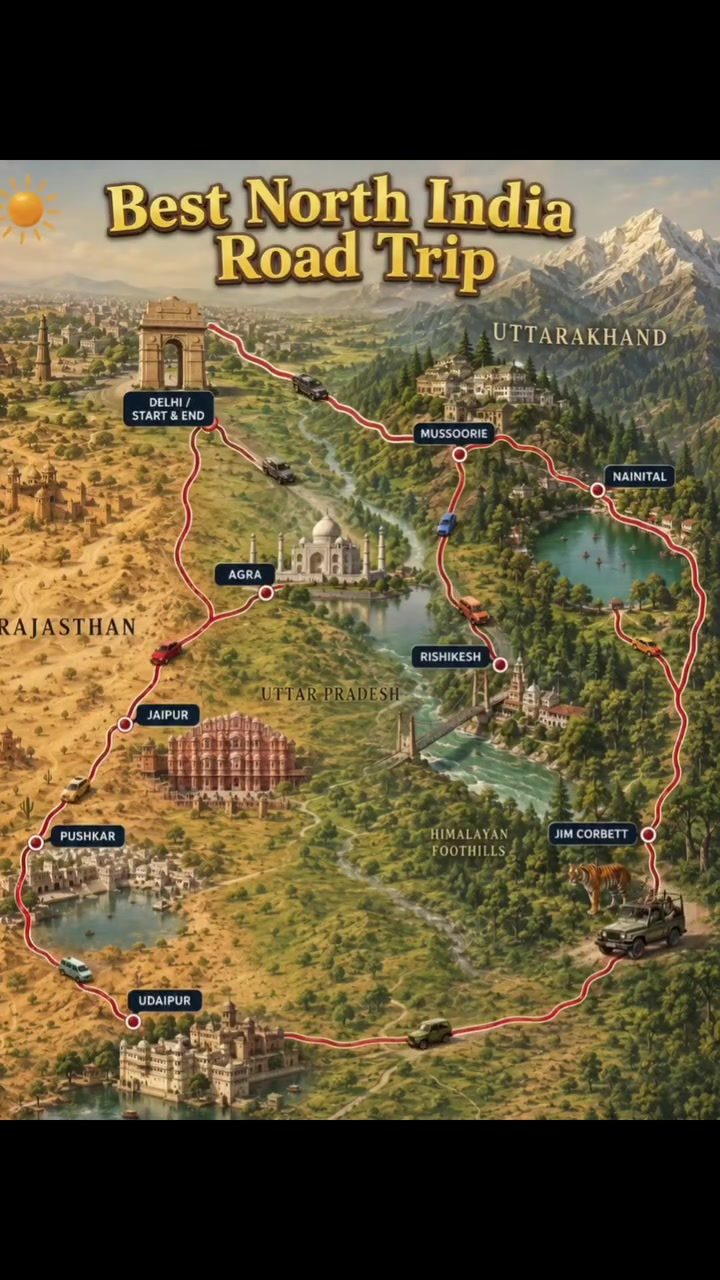
North India Road Trip Map
North India is a land of vibrant cultures, historic sites, and breathtaking landscapes, making it an ideal destination for a road trip. This itinerary takes you through some of the most iconic cities and regions, from the bustling capital of Delhi to the serene foothills of the Himalayas.
Context / Why this matters
A road trip through North India offers a unique blend of historical significance, natural beauty, and cultural richness. This region is home to some of the most famous landmarks in the world, including the Taj Mahal in Agra and the palaces of Jaipur. Beyond the popular tourist spots, the journey also takes you through lush landscapes and tranquil hill stations, providing a well-rounded experience.
Popular Destinations on the North India Road Trip
A well-planned road trip often starts and ends in Delhi, the bustling capital that serves as a gateway to this incredible journey.
Delhi
Delhi is a city that seamlessly blends the old with the new. From the historic Red Fort and Jama Masjid to the modern metropolis of Connaught Place and India Gate, Delhi offers a rich tapestry of experiences. It's a great place to start your journey, allowing you to acclimate to the local culture and climate before venturing further.
Agra
Agra is synonymous with the Taj Mahal, one of the Seven Wonders of the World. This magnificent white marble mausoleum is a testament to love and architectural brilliance. In Agra, you'll also find the Agra Fort and Fatehpur Sikri, both UNESCO World Heritage Sites.
Jaipur
Known as the "Pink City," Jaipur is the capital of Rajasthan and is famous for its palaces, forts, and vibrant markets. The City Palace, Hawa Mahal, and Amber Fort are must-visits. The city's rich cultural heritage and the warmth of its people make it a memorable stop on your journey.
Udaipur
Udaipur, the "City of Lakes," is a romantic and picturesque destination. The City Palace, Lake Pichola, and the beautiful gardens and temples around the city make it a paradise for history and nature enthusiasts. The city's serene lakes and tranquil surroundings provide a refreshing contrast to the bustling streets of Jaipur and Delhi.
Rishikesh
Rishikesh is a spiritual haven nestled in the foothills of the Himalayas. Known as the "Yoga Capital of the World," it attracts visitors from all over the globe seeking inner peace and spiritual enlightenment. The Beas and Ganges rivers flow through the city, offering opportunities for rafting, meditation, and yoga.
Mussoorie
Mussoorie, often referred to as the "Queen of the Hills," is a beautiful hill station in Uttarakhand. Known for its scenic beauty, colonial architecture, and pleasant climate, it offers a relaxing break from the hustle and bustle of city life. The Mall Road, Kempty Falls, and the scenic views from Gun Hill are highlights of a visit to Mussoorie.
Nainital
Nainital is another gem in the crown of Uttarakhand's hill stations. Known for its beautiful lake, Naini Lake, the city offers breathtaking views of the mountains and a serene atmosphere. Boat rides on the lake, shopping in the local markets, and visiting the Naini Devi Temple are popular activities.
Jim Corbett
Jim Corbett National Park is a paradise for wildlife enthusiasts. Known for its tiger population, the park offers a thrilling safari experience. The rocky terrain, rivers, and dense forests provide a unique landscape and a home to a variety of flora and fauna. The park is also the first national park in India and has a rich history.
Why the Pink Line Matters
The pink line on the map symbolizes the suggested itinerary. This route ensures that you experience a diverse range of cultures, landscapes, and historical sites. It's designed to maximize your travel experience by connecting key destinations efficiently.
Practical Tips
Best Time to Visit
The best time to embark on a North India road trip is between October and March. The weather is pleasant, and the skies are clear, making it ideal for sightseeing and outdoor activities. However, if you plan to visit the hill stations, the summer months (April to June) can also be a good time due to the cooler temperatures.
Mode of Transport
A self-driven car or a rented SUV is ideal for a road trip through North India. This mode of transport offers flexibility and the freedom to explore at your own pace. Ensure your vehicle is well-maintained and equipped with essentials like a spare tire, first-aid kit, and emergency supplies.
Accommodation
North India offers a range of accommodation options, from luxury hotels to budget-friendly hostels. Staying in heritage hotels or homestays can provide a more immersive experience, allowing you to connect with local cultures and traditions. Ensure you book your accommodations in advance, especially during peak travel seasons.
Packing Essentials
Pack light but smart. Include comfortable clothing, sturdy footwear, a hat, and sunscreen for the hotter regions. For the hill stations, pack warm clothes, a waterproof jacket, and a pair of hiking boots. Carry a water bottle, snacks, and a basic medical kit. Don't forget your camera and travel documents.
Local Cuisine
North Indian cuisine is a delightful mix of flavors and spices. From the street food of Delhi to the royal feasts of Rajasthan, each region has its unique culinary delights. Try dishes like butter chicken, biryani, and kebabs in Delhi. In Rajasthan, don’t miss out on dal baati churma and mirchi vada. Udaipur is famous for its laal maas (spicy mutton curry) and khichdi. In the hill stations, relish local delicacies like aaloo paratha and momos.
Safety Tips
Road safety is paramount. Follow traffic rules, stay alert, and avoid driving at night, especially in remote areas. Keep emergency contact numbers handy and inform someone about your travel plans. Always carry a copy of your identification and travel documents.
Important Takeaways
A North India road trip offers a comprehensive experience of the region's rich cultural heritage, historical landmarks, and natural beauty. The itinerary, marked by the pink line, ensures that you cover key destinations efficiently, making the most of your journey. With proper planning and preparation, this road trip can be one of the most memorable experiences of your life.
Conclusion
The North India road trip map highlights the best of what this region offers, from the bustling streets of Delhi to the serene lakes of Udaipur and the rugged terrains of Jim Corbett. This journey is not just about sightseeing; it's about immersing yourself in the local culture, indulging in delicious cuisine, and experiencing the diversity of the landscapes. Whether you're a history buff, a nature lover, or an adventure seeker, this road trip promises an unforgettable experience.
Watch the Reel
Questions readers ask
What is the best time to undertake a North India road trip?
The ideal time for a North India road trip is during the winter months, from October to March. The weather is pleasant, with cool temperatures and clear skies, making it perfect for sightseeing and outdoor activities. Summer months can be extremely hot, while monsoons may cause road closures and landslides.
How many days are recommended for a comprehensive North India road trip?
A comprehensive road trip covering major destinations like Delhi, Agra, Jaipur, Udaipur, Rishikesh, and Mussoorie typically requires 14-21 days. This duration allows for a comfortable pace, including travel time and exploration of each destination without rushing.
What are the must-see attractions in Agra besides the Taj Mahal?
While the Taj Mahal is the star attraction, Agra Fort and Fatehpur Sikri are also UNESCO World Heritage Sites that offer a rich historical experience. Additionally, the tomb of I'timād-ud-Daulah, known as the 'Baby Taj,' is a beautiful Mughal-era structure worth visiting.
Which routes are the most scenic for a road trip in North India?
The Delhi to Agra road trip via the Taj Expressway offers a smooth and quick journey. For a more scenic experience, consider the routes from Delhi to Rishikesh via Haridwar, and from Delhi to Mussoorie via Dehradun. These routes pass through picturesque landscapes and small towns.
Is it safe to travel to Jim Corbett National Park by road?
Yes, it is generally safe to travel to Jim Corbett National Park by road. The roads are well-maintained, and the journey from Delhi or other major cities is straightforward. However, it's advisable to travel during daylight hours and stay alert for wildlife, especially if you're driving through the park's outskirts.
Related deep dives
Similar reads based on topic and creator.




Recent articles
Fresh deep dives from the latest Reels we unpacked.




Comments
Be the first to comment.