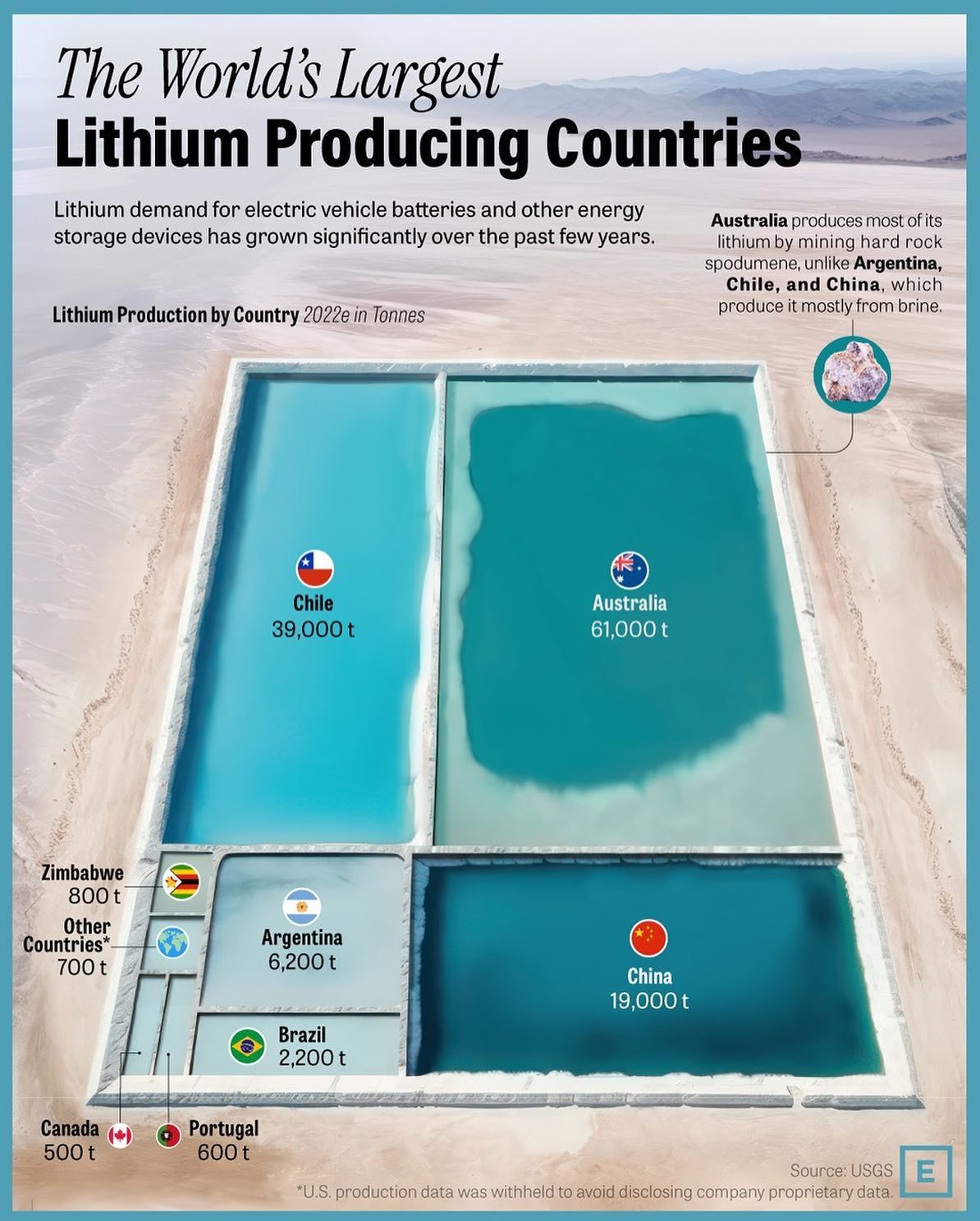
Lithium Production by Country
Lithium has become a critical material in recent years, driven largely by the surge in electric vehicles and other clean technologies that depend on lithium batteries. Understanding the global production landscape of lithium is essential for grasping the dynamics of this vital industry.
Why This Matters
The demand for lithium has skyrocketed due to its essential role in powering electric vehicles (EVs) and various energy storage solutions. As the world transitions towards cleaner energy sources, the importance of lithium continues to grow. This transition is not just about reducing carbon emissions; it's also about ensuring a stable and sustainable supply of energy for future generations.
The Global Lithium Production Landscape
Top Producing Countries
The global landscape of lithium production is dominated by a few key countries, each contributing significantly to the world's supply. Here's a breakdown of the top producers:
-
Australia: Leading the pack, Australia produced 61,000 tonnes of lithium in 2022. The country's vast mineral resources and advanced mining technologies make it a powerhouse in this sector. Australia's lithium production is primarily from hard-rock pegmatite deposits, which are rich in spodumene, a key lithium-bearing mineral.
-
Chile: As the second-largest producer, Chile contributed 39,000 tonnes in 2022. Chile's lithium production is mainly from brine deposits, particularly in the Salar de Atacama, one of the world's largest salt flats. This method involves extracting lithium from saline waters through evaporation and chemical processes.
-
Argentina: Argentina produced 19,000 tonnes in 2022, making it a significant player in the global lithium market. Like Chile, Argentina's lithium is primarily sourced from brine deposits, with the Salar de Hombre Muerto and Salar de Olacapato being key locations.
-
China: With 6,200 tonnes produced in 2022, China is another major producer. China's lithium production is diverse, including both hard-rock and brine deposits. The country's production is also bolstered by its robust manufacturing capabilities, which allow for efficient processing and refining of lithium.
-
Canada: Canada produced 500 tonnes in 2022. The country's lithium production is primarily from hard-rock deposits, with significant reserves in Quebec and Ontario. Canada's production is expected to grow as new mining projects come online.
-
Portugal, Zimbabwe, and Brazil: These countries produced 600, 500, and 800 tonnes respectively. While their production volumes are smaller compared to the top producers, they still play a role in meeting global demand.
Other Contributors
In addition to these major producers, many other countries contribute to global lithium production, collectively adding up to 800 tonnes in 2022. These countries, though smaller in scale, are crucial for diversifying the global supply chain and ensuring market stability.
The Role of Lithium in Clean Technology
Electric Vehicles
The boom in electric vehicles has been a significant driver of lithium demand. Lithium-ion batteries, which power most EVs, require lithium as a key component. The growing adoption of EVs, driven by environmental concerns and government policies, is expected to continue pushing lithium demand higher.
Energy Storage
Beyond EVs, lithium is also critical for energy storage solutions. As renewable energy sources like solar and wind become more prevalent, there is a growing need for efficient and reliable energy storage systems. Lithium-ion batteries are often the go-to choice for these applications, making lithium essential for grid stability and energy security.
Practical Tips for Investors and Industry Players
Diversify Your Supply Chain
Given the strategic importance of lithium, it is crucial for companies to diversify their supply chains. Relying on a single source can be risky, as geopolitical tensions, regulatory changes, and environmental issues can disrupt supply.
Invest in Exploration and Development
Investing in exploration and development projects can help secure future supply. Many countries, particularly in South America and Africa, have significant untapped lithium reserves. Supporting local development can create long-term supply stability and economic benefits.
Innovate and Optimize
Innovation in mining and processing technologies can improve efficiency and reduce environmental impact. For example, advances in direct lithium extraction (DLE) from brine deposits can make the process faster, cheaper, and more environmentally friendly.
Important Takeaways
- Growing Demand: Lithium demand is driven by the boom in electric vehicles and energy storage technologies.
- Top Producers: Australia, Chile, Argentina, China, Canada, Portugal, Zimbabwe, and Brazil are the leading producers.
- Diversification: Diversifying supply chains and investing in exploration and development can help ensure a stable supply.
- Innovation: Technological advancements in mining and processing can optimize production and reduce environmental impact.
Conclusion
Lithium's importance in the global energy landscape is undisputed. As the demand for clean technologies continues to rise, understanding the dynamics of lithium production is crucial. By recognizing the key players, the role of lithium in various applications, and the strategies for ensuring a stable supply, stakeholders can navigate this critical market more effectively. Whether you are an investor, industry player, or simply interested in the future of clean energy, staying informed about lithium production is essential for making strategic decisions.
Watch the Reel
Questions readers ask
Which countries were the top lithium producers in 2022?
In 2022, the top lithium-producing countries were Australia, Chile, China, Argentina, and the United States. These nations accounted for the majority of the world's lithium output, with Australia and Chile being the leading producers.
Why is lithium important for electric vehicle batteries?
Lithium is crucial for electric vehicle batteries due to its high energy density and lightweight properties. It enables EVs to travel longer distances on a single charge, making it a key component in the development of efficient and sustainable transportation.
How does lithium production contribute to energy storage technology?
Lithium plays a significant role in energy storage technology by being a key component in lithium-ion batteries. These batteries are used in various energy storage solutions, from small-scale consumer electronics to large-scale grid storage systems, helping to balance supply and demand in the power grid and support the integration of renewable energy sources.
What is the significance of lithium reserves in producing countries?
Lithium reserves in producing countries are significant as they indicate the potential for future production and supply stability. Countries with substantial reserves, such as Chile and Argentina, are well-positioned to meet the growing demand for lithium in electric vehicles and energy storage technologies.
How has lithium output growth been impacted by the demand for electric vehicles?
The demand for electric vehicles has driven significant growth in lithium output. As more countries and automakers invest in EV production, the need for lithium has increased, prompting lithium-producing countries to expand their capacity to meet this rising demand.
What makes Australia and Chile the largest lithium producers in the world?
Australia and Chile are the largest lithium producers due to their extensive lithium reserves and well-established mining operations. Australia is known for its hard rock lithium deposits, while Chile is renowned for its brine-based lithium extraction methods, which are cost-effective and efficient.
How does the global lithium production landscape influence the transition to cleaner energy sources?
The global lithium production landscape is pivotal in the transition to cleaner energy sources. By providing the necessary materials for electric vehicle batteries and energy storage technologies, lithium-producing countries support the reduction of carbon emissions and the development of a more sustainable energy infrastructure.
Related deep dives
Similar reads based on topic and creator.


Recent articles
Fresh deep dives from the latest Reels we unpacked.




Comments
Be the first to comment.