Global Risks in 2023: An Overview of the Top Threats Facing the World
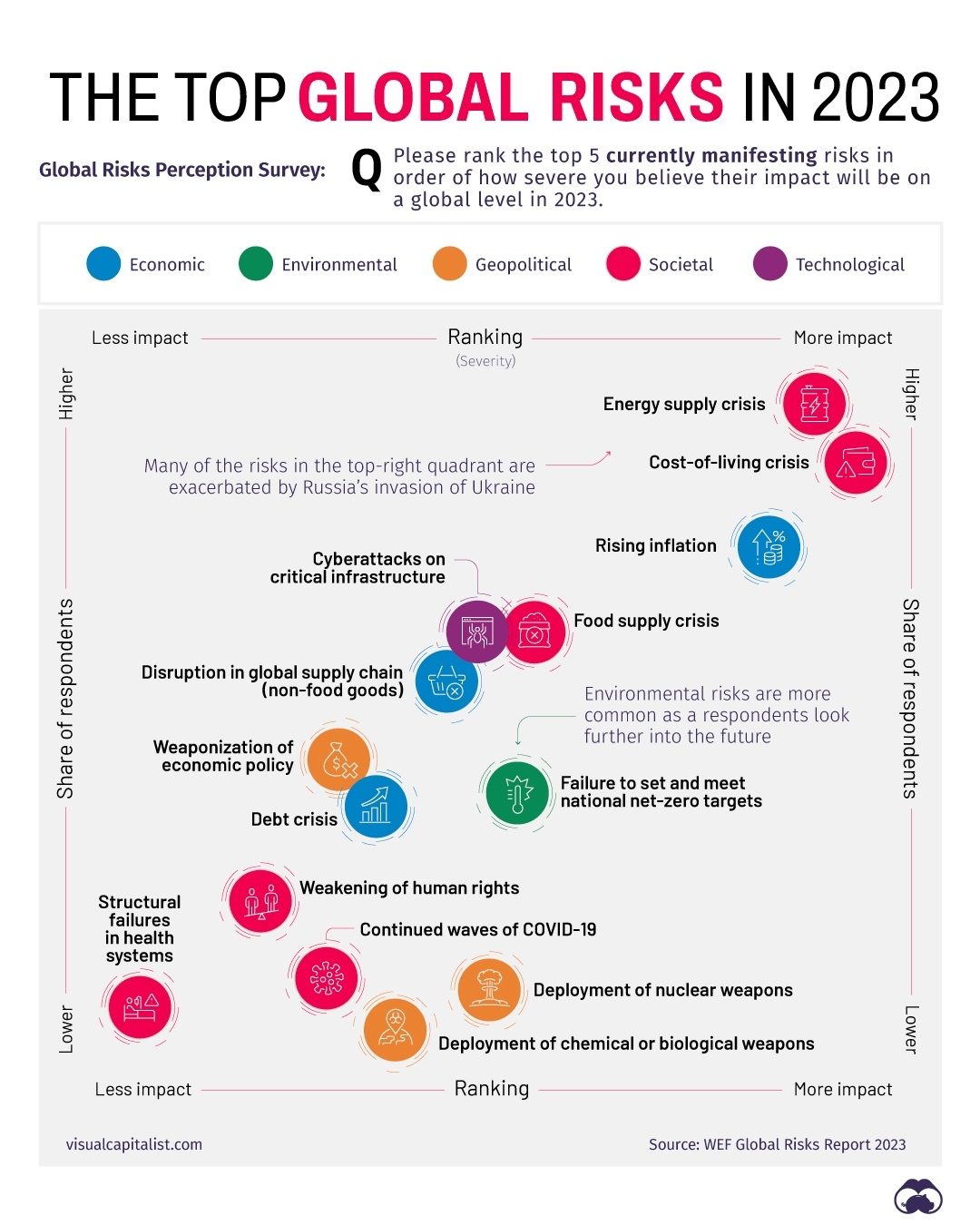
The landscape of global risks is constantly shifting, with events like last year’s invasion of Ukraine dramatically altering perceptions of the most pressing threats facing humanity. The Global Risks Report, an annual publication by the World Economic Forum, provides a comprehensive overview of these risks, categorized into five main areas: economic, environmental, geopolitical, societal, and technological. This article delves into the key findings of the 2023 report, highlighting the most significant risks and their potential impacts.
Why This Matters
Understanding the global risks landscape is crucial for policymakers, businesses, and individuals alike. These risks can have far-reaching consequences, affecting everything from economic stability to environmental sustainability and societal cohesion. By identifying and addressing these risks, we can better prepare for and mitigate their impacts, ensuring a more resilient and secure future.
Main Discussion
Economic Risks
Economic instability poses significant threats to global stability. The report highlights several key economic risks:
- Energy Supply Crisis: Disruptions in energy supply can have cascading effects on economies worldwide, leading to increased costs and reduced productivity.
- Cost-of-Living Crisis: Rising prices for essential goods and services can erode purchasing power, leading to social unrest and economic instability.
- Disruption in Global Supply Chain (Non-Food Goods): Interruptions in the supply chain for non-food goods can disrupt manufacturing, retail, and other sectors, leading to shortages and increased prices.
- Weaponization of Economic Policy: Economic policies can be used as weapons, imposing sanctions, tariffs, or other trade barriers that destabilize economies.
- Debt Crisis: High levels of debt, both public and private, can lead to financial instability, especially in the face of economic downturns or other shocks.
- Structural Failures in Systems: Flaws in economic systems, such as regulatory failures or inadequate infrastructure, can exacerbate risks and hinder economic growth.
Environmental Risks
Environmental risks are more prevalent as we look further into the future. The report identifies several critical environmental threats:
- Failure to Set and Meet National Net-Zero Targets: Inaction on climate change can lead to severe environmental degradation, affecting ecosystems, food security, and human health.
- Deployment of Nuclear Weapons: The use of nuclear weapons presents an existential threat to humanity, with long-lasting environmental and humanitarian consequences.
Geopolitical Risks
Geopolitical tensions can destabilize regions and lead to conflicts, affecting global stability:
- Deployment of Chemical or Biological Weapons: The use of these weapons poses significant threats to public health and security, as well as potential environmental damage.
- Continued Waves of COVID-19: The ongoing pandemic and the potential for future waves present significant health and economic risks, exacerbated by geopolitical tensions.
Societal Risks
Societal risks impact the well-being and cohesion of communities:
- Weakening of Human Rights: Erosion of human rights can lead to increased social unrest, political instability, and economic inequality.
Technological Risks
Technological advancements bring both opportunities and challenges:
- Cyberattacks on Critical Infrastructure: Attacks on critical infrastructure, such as energy grids, transportation systems, and communication networks, can cause widespread disruption and damage.
Practical Tips
For Policymakers
- Invest in Resilience: Develop strategies to increase economic, environmental, and societal resilience, ensuring that systems can withstand and recover from shocks.
- Support Sustainable Development: Implement policies that promote sustainable development, such as renewable energy, green technologies, and climate adaptation measures.
For Businesses
- Diversify Supply Chains: Diversify supply chains to reduce dependence on single sources, mitigating the impact of disruptions.
- Enhance Cybersecurity: Invest in robust cybersecurity measures to protect against cyberattacks and ensure the continuity of critical operations.
- Promote Sustainable Practices: Adopt sustainable practices to reduce environmental impact and contribute to a more resilient future.
For Individuals
- Stay Informed: Keep abreast of global risks and their potential impacts, staying informed through reliable sources of information.
- Prepare and Adapt: Develop personal and household preparedness plans, such as emergency kits and evacuation plans, to better cope with potential risks.
Important Takeaways
- The landscape of global risks is complex and ever-changing, requiring continuous assessment and adaptation.
- Economic, environmental, geopolitical, societal, and technological risks are interlinked, and addressing one often necessitates considering the others.
- Effective risk management involves proactive measures, such as investing in resilience, promoting sustainable development, and enhancing cybersecurity.
- Collaboration among policymakers, businesses, and individuals is essential to navigate the global risks landscape and build a more resilient future.
Conclusion
The Global Risks Report 2023 provides a comprehensive overview of the most pressing global risks, highlighting the need for proactive measures to address these challenges. By understanding and mitigating these risks, we can create a more resilient and secure world, ensuring a sustainable future for all. Stay informed, prepare, and adapt to the evolving landscape of global risks, and together, we can navigate the complexities and uncertainties of our interconnected world.
Watch the Reel
Questions readers ask
What are the main categories of global risks highlighted in the 2023 Global Risks Report?
The 2023 Global Risks Report outlines five main categories of global risks: economic, environmental, geopolitical, societal, and technological. Each category encompasses various threats that could significantly impact societies and economies worldwide.
How does economic instability rank among the top global risks in 2023?
Economic instability is a prominent concern in the 2023 global risks landscape. Factors such as inflation, market volatility, and potential financial crises contribute to this instability, which can disrupt businesses and affect individuals' livelihoods.
What are the most pressing environmental risks according to the 2023 report?
The 2023 report highlights climate change as a critical environmental risk, including extreme weather events, rising sea levels, and biodiversity loss. These environmental challenges can exacerbate other global risks, such as food insecurity and economic instability.
How do geopolitical tensions factor into the global risks of 2023?
Geopolitical tensions, exacerbated by events like the invasion of Ukraine, are a significant aspect of global risks in 2023. These tensions can lead to supply chain disruptions, trade barriers, and increased military spending, further destabilizing the global environment.
What societal risks are identified in the 2023 Global Risks Report?
The 2023 report identifies societal risks such as social unrest, income inequality, and public health crises. These risks can erode social cohesion and strain public services, making societies more vulnerable to other global risks.
What technological risks should we be aware of in 2023?
Technological risks in 2023 include cyberattacks, data breaches, and the misuse of emerging technologies. These risks can undermine digital infrastructure, compromise personal and corporate data, and disrupt global supply chains.
How can businesses and individuals prepare for the global risks identified in the 2023 report?
Businesses and individuals can prepare for global risks by staying informed, diversifying investments, and building resilience into their operations. Engaging with policymakers and advocating for robust global governance can also help mitigate these risks.
Related deep dives
Similar reads based on topic and creator.



Recent articles
Fresh deep dives from the latest Reels we unpacked.




Comments
Be the first to comment.