Global Risks 2020-2025: A Comprehensive Overview
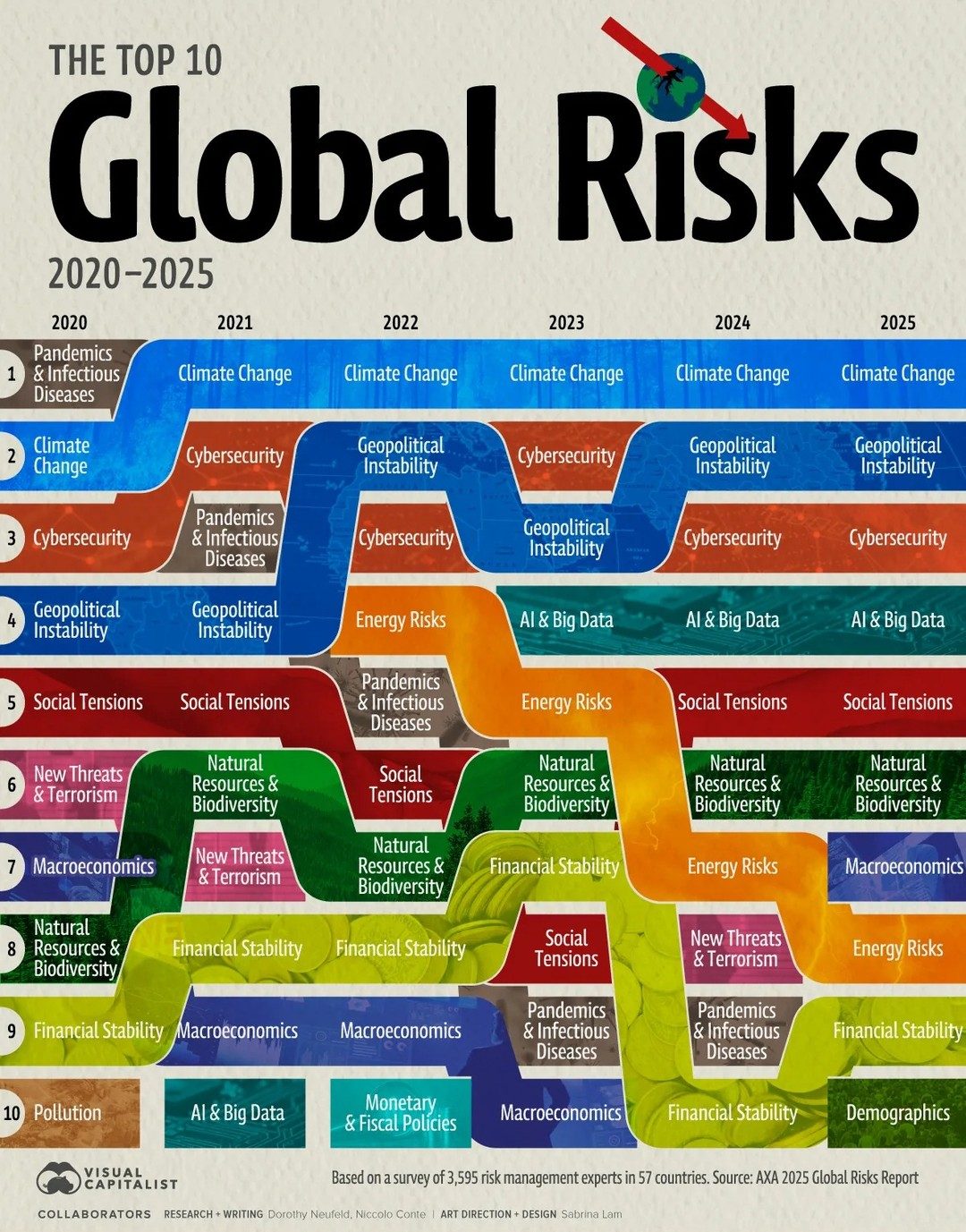
Climate change is the world’s top global risk in 2025, maintaining its position for four consecutive years. The global risk landscape has evolved significantly since 2020, influenced by various factors including rising conflicts, geopolitical fragmentation, rapid advances in artificial intelligence, and worsening extreme weather. This overview is based on a survey of 3,595 risk management experts from 57 countries, as compiled in the AXA 2025 Global Risks Report.
Context / Why This Matters
Understanding the top global risks from 2020 to 2025 is crucial for individuals, organizations, and governments. These risks impact socioeconomic stability, financial systems, and future planning. By identifying and analyzing these risks, stakeholders can develop more robust strategies to mitigate potential threats and capitalize on opportunities.
Main Discussion
The global risk landscape encompasses a multitude of issues, each with its own implications and potential impacts. The following sections delve into the key risks identified in the AXA 2025 Global Risks Report.
Climate Change
Climate change consistently ranks as the top global risk. Rapid environmental degradation, rising sea levels, and extreme weather events pose significant threats to ecosystems, infrastructure, and human health. Mitigating climate change requires comprehensive global efforts, including reducing greenhouse gas emissions, transitioning to renewable energy, and implementing sustainable practices.
Pandemics and Infectious Diseases
The COVID-19 pandemic has highlighted the vulnerability of global health systems to infectious diseases. Pandemics can disrupt supply chains, cripple healthcare systems, and cause widespread economic damage. Future preparedness involves enhancing public health surveillance, developing vaccines and treatments, and ensuring equitable access to medical resources.
Cybersecurity
The digital age brings with it a new set of risks, particularly in cybersecurity. Cyberattacks can compromise sensitive data, disrupt critical infrastructure, and cause financial losses. As technology advances, so does the sophistication of cyber threats. Effective cybersecurity measures, including encryption, regular updates, and comprehensive cyber hygiene, are essential to safeguard against these threats.
Geopolitical Instability
Geopolitical instability arises from shifting power dynamics, conflicts, and territorial disputes. Such instability can lead to economic disruptions, trade instability, and mass migrations. Diplomacy, international cooperation, and conflict resolution mechanisms are crucial in managing and mitigating geopolitical risks.
Social Tensions
Social tensions, often stemming from economic inequality, political polarization, and social injustices, can lead to unrest and conflict. Addressing these tensions requires inclusive policies, equitable distribution of resources, and fostering a sense of community and social cohesion.
Macroeconomics and Financial Stability
Macroeconomic risks, such as economic recessions, inflation, and market volatility, can impact financial stability and global economic growth. Effective monetary and fiscal policies, along with robust financial regulations, are essential to navigate these risks and maintain stability.
Social Issues
Social issues, including poverty, inequality, and social exclusion, can undermine social stability and economic development. Addressing these issues requires comprehensive social policies, investment in education and healthcare, and promoting social inclusion.
Health Risks
Health risks, including pandemics, chronic diseases, and mental health issues, can have a significant impact on society and the economy. Public health interventions, access to healthcare, and preventative measures are critical in addressing these risks.
Practical Tips
Understanding the risks is just the first step. Implementing practical measures can help mitigate their impact. Here are some practical tips for individuals, organizations, and governments.
For Individuals
- Stay Informed: Keep updated on the latest developments in global risks and how they might affect your community or personal life.
- Prepare an Emergency Kit: Ensure you have essential supplies for emergencies, including natural disasters and health crises.
- Invest in Health: Prioritize your health by maintaining a balanced diet, regular exercise, and regular medical check-ups.
For Organizations
- Risk Assessment: Conduct regular risk assessments and update your strategies accordingly.
- Cybersecurity Measures: Implement robust cybersecurity protocols, including encryption, regular updates, and cyber hygiene practices.
- Sustainability Initiatives: Incorporate sustainable practices and reduce your carbon footprint to mitigate climate change risks.
For Governments
- Policy Development: Develop and implement policies to address key risks, such as climate change, health crises, and economic stability.
- International Cooperation: Foster international cooperation and collaboration to tackle global risks effectively.
- Public Health Investment: Invest in public health infrastructure, including surveillance systems, vaccine development, and healthcare access.
Important Takeaways
- Climate Change: It remains the top risk, necessitating immediate and comprehensive action.
- Interconnected Risks: Many global risks are interconnected and require a holistic approach to address them effectively.
- Global Collaboration: Addressing these risks requires global collaboration and cooperation.
- Sustainable Practices: Sustainable practices and responsible governance are essential for mitigating risks and ensuring long-term stability.
Conclusion
The global risk landscape from 2020 to 2025 is a complex web of interconnected challenges, each posing significant threats to global stability. Climate change, pandemics, cybersecurity, geopolitical instability, and social tensions are just a few of the top risks identified. By understanding these risks and implementing practical measures, individuals, organizations, and governments can better prepare for and mitigate their impact.
Watch the Reel
Questions readers ask
What are the top global risks from 2020 to 2025?
The top global risks from 2020 to 2025 include climate change, rising conflicts, geopolitical tensions, and rapid technological advances, with climate change being the most significant threat. These risks have been identified through a survey of over 3,500 risk management experts worldwide.
Why is climate change considered the top global risk in 2025?
Climate change is considered the top global risk in 2025 due to its widespread and severe impacts, including extreme weather events and long-term environmental changes. This has been consistently ranked as the highest global risk for four consecutive years, highlighting its urgency and importance in global risk management.
How have geopolitical tensions influenced the global risk landscape?
Geopolitical tensions have significantly influenced the global risk landscape by increasing instability, fostering conflicts, and disrupting international relations. These tensions can exacerbate other risks, such as climate change and technological advancements, making them more challenging to address effectively.
What role do technological advances play in the global risks from 2020 to 2025?
Rapid technological advances, particularly in artificial intelligence, present both opportunities and challenges. While they can drive innovation and progress, they also introduce new risks, such as job displacement, data privacy concerns, and autonomous weaponry, which need to be carefully managed.
Why is understanding these global risks important for future planning?
Understanding these global risks is crucial for future planning as it helps individuals, organizations, and governments anticipate and mitigate potential threats. By taking into account the impacts of these risks, stakeholders can develop effective strategies to ensure socioeconomic stability and resilience.
How can individuals and organizations prepare for these global risks?
Individuals and organizations can prepare for these global risks by staying informed about the latest developments and trends, implementing robust risk management strategies, and fostering resilience. Engaging in risk assessments, scenario planning, and collaboration with other stakeholders can help create more secure and sustainable futures.
What is the significance of the AXA 2025 Global Risks Report?
The AXA 2025 Global Risks Report provides a comprehensive overview of the global risk landscape, compiling insights from 3,595 risk experts from 57 countries. It serves as a valuable resource for understanding the evolving threats and informing strategies to address them, making it a key tool for global risk assessment.
Related deep dives
Similar reads based on topic and creator.


Recent articles
Fresh deep dives from the latest Reels we unpacked.




Comments
Be the first to comment.