Plastic Waste Contributors
Plastic has become indispensable in modern life, but its widespread use has led to a staggering amount of waste. Over 350 million metric tonnes of plastic waste are generated each year, with a significant portion ending up mismanaged. Mismanaged plastic waste refers to plastic that is dumped or littered without proper waste management practices, contributing to global pollution.
Context: Why this matters
Understanding the contributors to mismanaged plastic waste is crucial. The Meijer et al. study, published in the Science Advances journal, provides valuable insights. Only a fraction of plastic waste is recycled, underscoring the need for better waste management strategies. The study highlights that roughly one-fifth of the total plastic waste is mismanaged, which ends up in the environment, harming ecosystems and wildlife.
Main Discussion
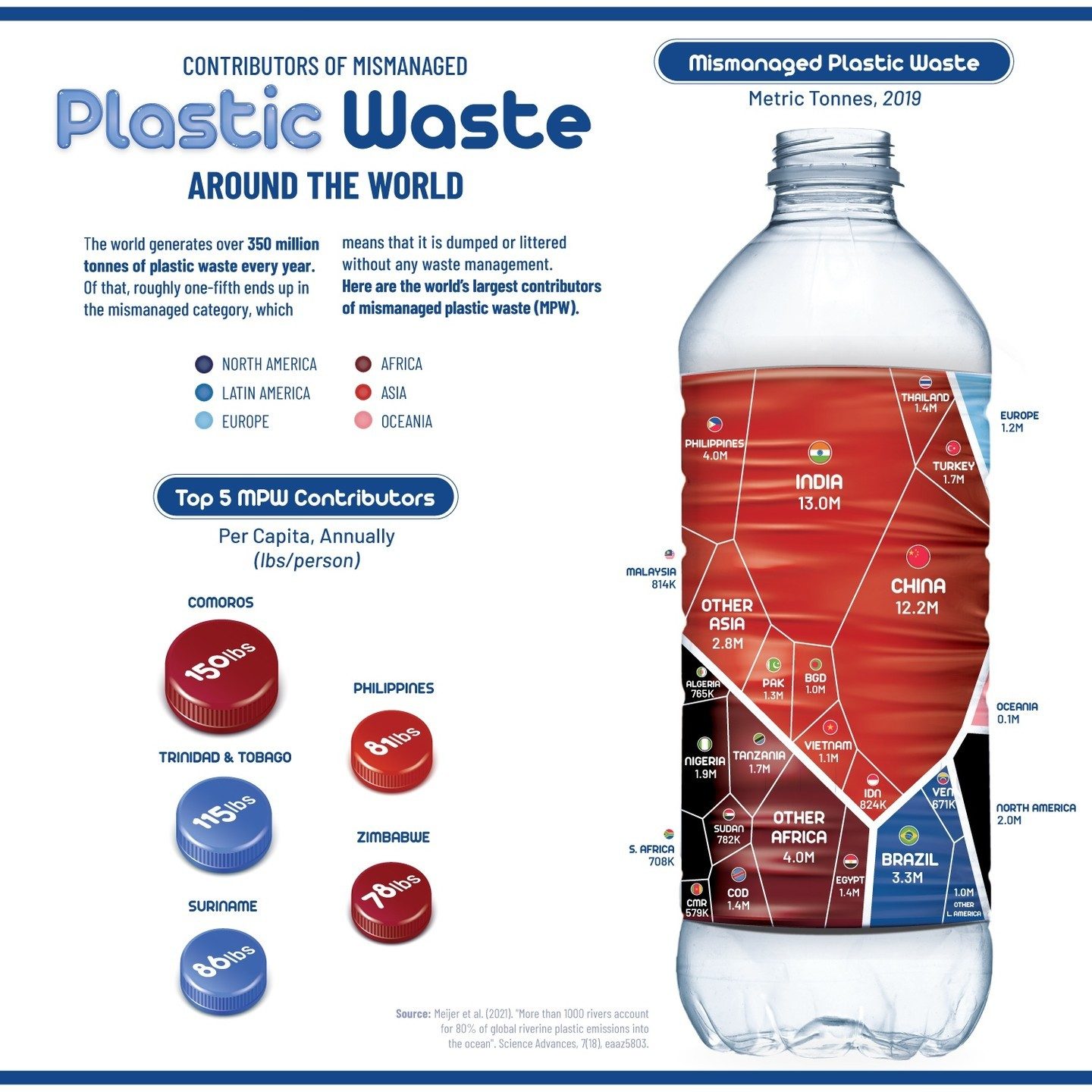
Data from 2019, as visualized in infographics, offers a global view of mismanaged plastic waste. This data separates out which countries and regions contribute the most to this problem, both in terms of total metric tonnes and per capita amounts.
Top Contributors by Total Metric Tonnes
Asia
Asia is a significant contributor to mismanaged plastic waste. The top contributors in this region include:
- India: 13.0 million metric tonnes
- China: 12.2 million metric tonnes
- Malaysia: 1.5 million metric tonnes
These countries generate a substantial amount of plastic waste, which, due to inadequate waste management, ends up in the environment.
Africa
Several African countries are also major contributors to mismanaged plastic waste, with notable mentions being:
- Nigeria
- Tanzania
- Egypt
- South Africa
These countries, along with other African nations, contribute significantly to the global plastic waste problem.
Top Contributors by Per Capita
When examining mismanaged plastic waste on a per capita basis, some smaller countries stand out due to their high per capita amounts. For example:
- Comoros: 150 lbs per person annually
- Philippines: 81 lbs per person annually
- Zimbabwe: 78 lbs per person annually
- Suriname: 86 lbs per person annually
These countries, despite their smaller populations, have high per capita plastic waste generation, indicating challenges in waste management at the individual level.
Other Notable Regions
While Asia and Africa are the primary contributors, other regions also play a role:
- Europe: Contributes 1.2 million metric tonnes, with Turkey being a notable country in this region.
- Brazil: A significant contributor in South America.
These regions, while not as prominent as Asia and Africa, still contribute to the global misaligned plastic waste issue.
The Impact of Riverine Plastic Emissions
The study by Meijer et al. also highlights the impact of riverine plastic emissions. Over 1000 rivers account for 80% of global riverine plastic emissions into the ocean. This underscores the need for targeted interventions along these waterways to reduce plastic pollution in marine environments.
Practical Tips
While the global scale of the problem can be overwhelming, there are practical steps individuals and communities can take to reduce mismanaged plastic waste.
Reduce Plastic Use
One of the most effective ways to reduce plastic waste is to minimize its use. Opt for reusable bags, bottles, and containers. Choose products with less packaging and avoid single-use plastics whenever possible.
Proper Waste Disposal
Ensure that plastic waste is disposed of properly. Use designated recycling bins and follow local recycling guidelines. If recycling is not an option, dispose of plastic waste in landfills to prevent littering and environmental contamination.
Community Initiatives
Support and participate in community clean-up efforts. Organize or join local initiatives to collect and properly dispose of plastic waste from public spaces, parks, and waterways.
Advocacy and Awareness
Raise awareness about the impact of mismanaged plastic waste. Educate friends, family, and community members about the importance of proper waste management. Advocate for policies that promote sustainable waste management practices.
Important Takeaways
Understanding the contributors to mismanaged plastic waste is the first step towards addressing this global issue. Key takeaways include:
- Asia and Africa are the largest contributors to mismanaged plastic waste, both in terms of total metric tonnes and per capita amounts.
- High Per Capita Contributors like Comoros, Philippines, Zimbabwe, and Suriname indicate the need for targeted interventions.
- Riverine Emissions play a significant role in marine plastic pollution, highlighting the need for waterway management.
Everyone has a role to play in reducing plastic waste. By reducing plastic use, properly disposing of waste, participating in community initiatives, and advocating for better waste management, individuals can make a difference.
Conclusion
The global issue of mismanaged plastic waste requires collective effort and informed action. By understanding the contributors and taking practical steps, we can work towards a cleaner, more sustainable future. The data from the Meijer et al. study provides a clear picture of the problem, guiding efforts to reduce plastic waste and improve waste management practices worldwide.
Watch the Reel
Questions readers ask
Which countries are the biggest contributors to mismanaged plastic waste?
According to recent studies, Asia and Africa are the largest contributors to mismanaged plastic waste. Countries like India and China, in particular, top the list of nations that contribute significantly to this global issue.
How much mismanaged plastic waste is generated annually?
Over 350 million metric tons of plastic waste are generated each year, with a substantial portion ending up mismanaged due to improper disposal or littering practices.
What does the term "mismanaged plastic waste" mean?
Mismanaged plastic waste refers to plastic that is discarded or littered without proper waste management. This includes plastic that is dumped in landfills, left on beaches, or otherwise not handled in an environmentally sound manner.
Why is understanding the contributors to mismanaged plastic waste important?
Identifying the primary sources of mismanaged plastic waste is essential for developing effective waste management strategies. It helps in targeting specific regions or countries to implement better recycling and waste disposal practices, thereby reducing environmental pollution.
What are the environmental impacts of mismanaged plastic waste?
Mismanaged plastic waste has severe environmental consequences, including ocean pollution, harm to marine life, and contamination of soil and water. It also contributes to the degradation of ecosystems and poses health risks to both wildlife and humans.
What can be done to reduce mismanaged plastic waste in top contributing countries?
Implementing better waste management strategies, increasing recycling efforts, and promoting public awareness about the importance of proper disposal can help. Additionally, policy changes and technological advancements in waste management can significantly reduce the amount of mismanaged plastic waste.
What are some key findings from the Meijer et al. study on plastic waste mismanagement?
The Meijer et al. study, published in the Science Advances journal, revealed that only a small fraction of plastic waste is recycled. It also highlighted that roughly one-fifth of the total plastic waste is mismanaged, underscoring the urgent need for enhanced waste management practices globally.
Related deep dives
Similar reads based on topic and creator.


Recent articles
Fresh deep dives from the latest Reels we unpacked.




Comments
Be the first to comment.