Global Carbon Emissions
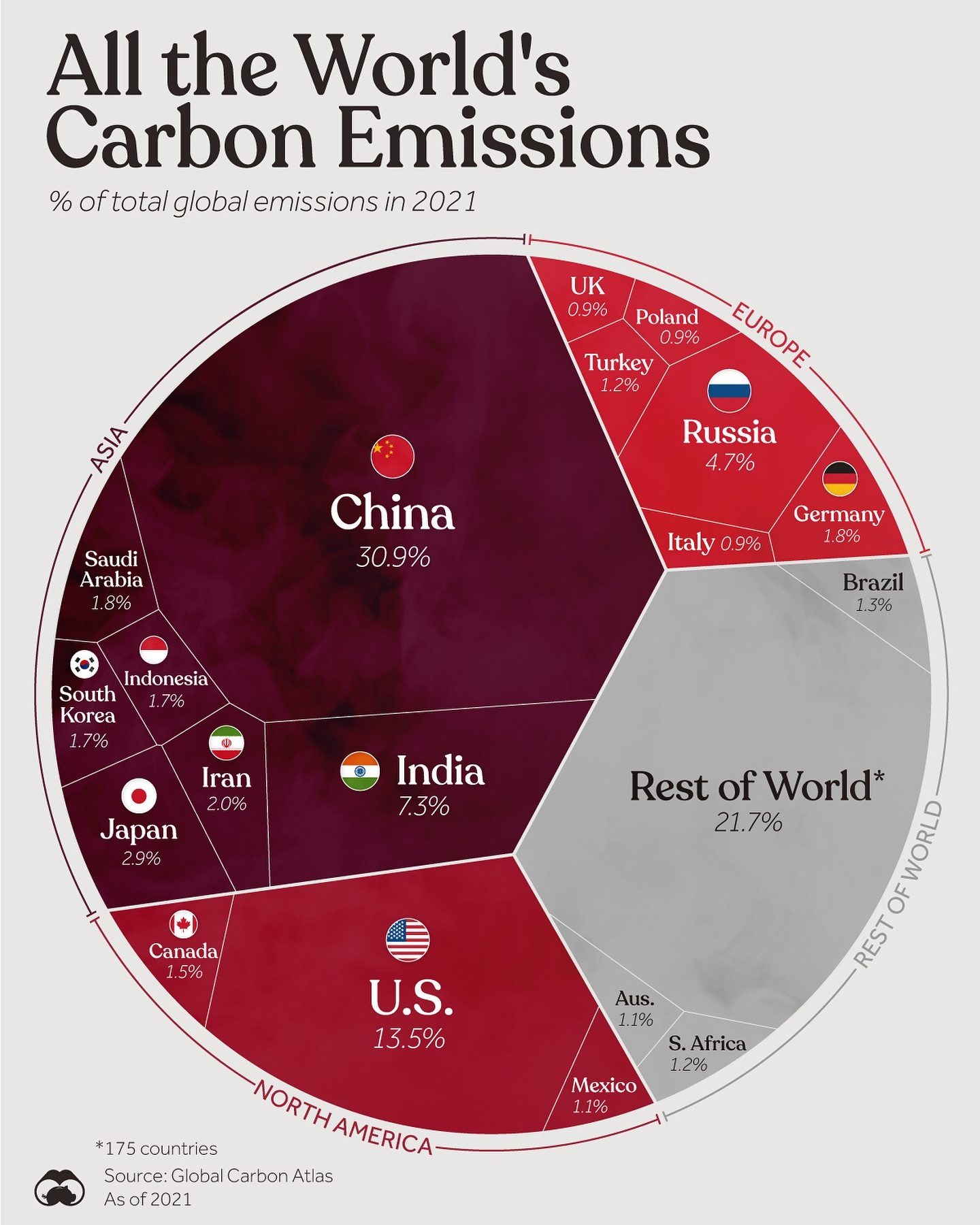
China, India, and the U.S. together account for roughly half of the world's CO₂ emissions. The significance of this distribution lies in the fact that the cumulative emissions from these three countries represent a substantial portion of the global total, making them key players in any discussion about carbon reduction strategies.
Why This Matters
Understanding the breakdown of global carbon emissions by country is crucial for several reasons. It helps identify the major contributors to global warming, sets the stage for international negotiations on climate change, and provides a basis for targeted policy interventions. The data from the Global Carbon Atlas, showcased in the infographic, offers a clear visual representation of where the majority of CO₂ emissions originate, highlighting the need for concerted efforts from the world's largest emitters.
Main Discussion
The Big Three: China, India, and the U.S.
China leads the pack with 30.9% of global emissions, making it the largest contributor. This dominance is largely due to China's rapid industrialization and reliance on coal for energy. However, China has also been actively investing in renewable energy, which shows promise for reducing its carbon footprint in the future.
India follows with 7.3% of global emissions, driven by its growing economy and energy needs. Similar to China, India faces significant economic and energy demands while working towards sustainable development. Efforts to balance economic growth and environmental sustainability are ongoing, particularly through renewable energy initiatives and international collaborations.
The United States contributes 13.5% to global emissions. While the U.S. has significantly reduced its emissions in recent years, it remains one of the world's top emitters due to its historical contribution and overall economic output. Renewable energy and efficiency measures are key areas of focus for the U.S., aligning with broader international climate goals.
Europe's Contribution
Europe collectively accounts for 4.7% of global emissions. This figure is notably lower than that of the major emitters. The lower emissions can be attributed to Europe's proactive stance on climate change, with many countries setting ambitious targets for reducing carbon emissions and transitioning to renewable energy sources. However, the 'Rest of World' category, which represents 21.7% of emissions, includes 175 countries, many of which face significant challenges in managing their carbon output.
Other Major Contributors
Outside the top emitters, countries like Saudi Arabia (1.1%), South Korea (2.9%), Japan (1.5%), and Russia (1.3%) also play a notable role. These countries contribute varying percentages to the global total, underscoring the need for a global approach to carbon reduction. The 'Rest of World' category, representing 21.7% of total emissions, includes countries across Africa, South America, and other regions, highlighting the diverse and widespread nature of carbon emission challenges.
Practical Tips
For countries looking to reduce their carbon footprint, several key strategies can be effective:
-
Invest in Renewable Energy: Transitioning from fossil fuels to renewable energy sources like solar, wind, and hydro power is crucial for reducing emissions. Countries like China and India are already making significant investments in this area, but there is still much work to be done.
-
Improve Energy Efficiency: Enhancing energy efficiency in both residential and industrial sectors can significantly reduce the demand for fossil fuels. This includes upgrading infrastructure, implementing energy-efficient technologies, and promoting sustainable practices.
-
Promote Sustainable Agriculture: Agriculture is a significant contributor to emissions, particularly through livestock and deforestation. Sustainable farming practices, reforestation, and reducing meat consumption can help mitigate these emissions.
-
International Collaboration: Global challenges require global solutions. Collaboration between countries, sharing of best practices, and coordinated international policies are essential for making meaningful progress.
Important Takeaways
- China, India, and the U.S. are the top three contributors to global carbon emissions, with China leading the way.
- Europe's lower emissions reflect its proactive approach to climate change, but challenges remain globally.
- The 'Rest of World' category highlights the widespread nature of carbon emission challenges.
- Effective strategies for reducing emissions include investing in renewable energy, improving energy efficiency, promoting sustainable agriculture, and fostering international collaboration.
Conclusion
Global carbon emissions are a complex issue that requires a multifaceted approach. By understanding the distribution of emissions and focusing on key areas for reduction, countries can work towards a more sustainable future. The data from the Global Carbon Atlas provides a valuable starting point for these efforts, highlighting the need for targeted interventions and international cooperation.
Watch the Reel
Questions readers ask
Which countries are the top contributors to global carbon emissions?
The top three contributors to global carbon emissions are China, India, and the U.S. These countries together account for nearly half of the world's CO₂ emissions, making them crucial in discussions about global warming and climate change policy.
Why is it important to know which countries emit the most CO₂?
Knowing which countries emit the most CO₂ helps identify the major contributors to global warming. This knowledge is essential for setting the stage for international negotiations and targeted policy interventions aimed at reducing greenhouse gas emissions.
What role do China, India, and the U.S. play in climate change policy?
China, India, and the U.S. are key players in climate change policy due to their significant CO₂ emissions. Their efforts toward sustainability and renewable energy are pivotal in international climate negotiations and global warming discussions.
How do China's and India's sustainability efforts impact global warming?
China and India's sustainability efforts greatly influence global warming. As major emitters, their transition to cleaner energy sources and implementation of renewable energy efforts can significantly reduce their carbon footprint and contribute to global CO₂ emission reduction.
What was the significance of the 2021 climate negotiations?
The 2021 climate negotiations were significant as they brought together major emitters to discuss and commit to carbon reduction strategies. These negotiations are crucial for addressing global warming and setting a path for a more sustainable future.
How do the world's top CO₂ emitters contribute to global warming?
The world's top CO₂ emitters, particularly China, India, and the U.S., contribute to global warming by releasing large amounts of greenhouse gases into the atmosphere. Reducing their emissions is essential for mitigating the effects of climate change.
What can be learned from the Global Carbon Atlas data?
The Global Carbon Atlas data provides a clear visual representation of where the majority of CO₂ emissions originate. This information is vital for understanding the breakdown of global carbon emissions by country and identifying the major contributors to global warming.
Related deep dives
Similar reads based on topic and creator.


Recent articles
Fresh deep dives from the latest Reels we unpacked.




Comments
Be the first to comment.