Global CO2 Emissions and the Biggest Polluters
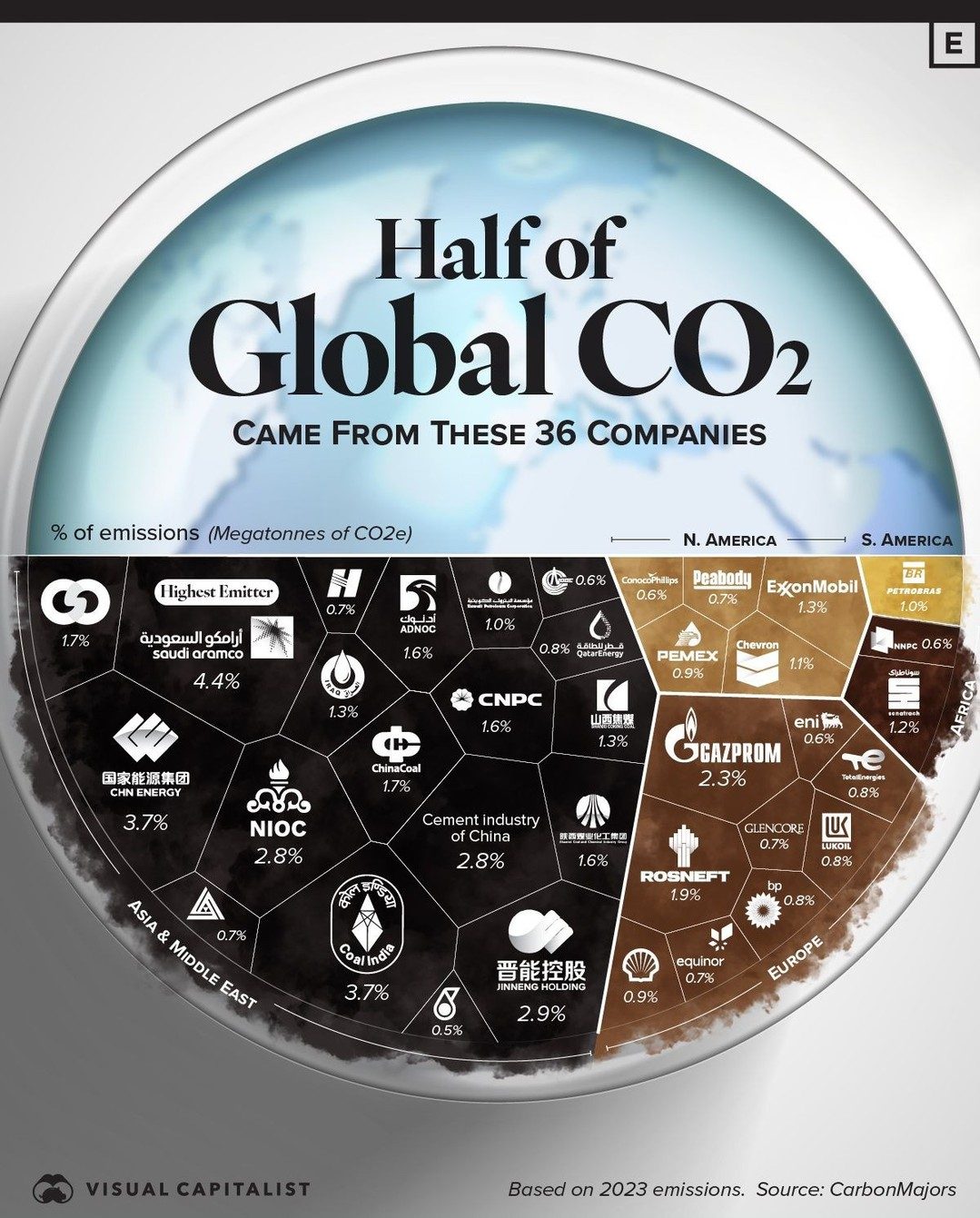
Carbon dioxide (CO2) emissions are a critical factor in understanding climate change. In 2023, a striking revelation surfaced: just 36 companies were responsible for half of the world's CO2 emissions. This group is predominantly made up of coal, cement, and oil producers, with Saudi Aramco at the top of the list. This data, sourced from the Carbon Majors database, sheds light on the significant role these companies play in global emissions.
Why This Matters
Understanding the sources of CO2 emissions is crucial for developing effective strategies to combat climate change. Emissions from fossil fuels and cement production are major contributors to greenhouse gases, which trap heat in the atmosphere and drive global warming. By identifying the key players, we can better target efforts to reduce emissions and promote more sustainable practices.
The Companies Behind the Emissions
Leading the Pack: Saudi Aramco
Saudi Aramco is not only the world's most profitable company but also one of the largest contributors to global CO2 emissions. The oil giant is a major player in the fossil fuel industry, producing a significant portion of the world's crude oil. Its operations, including extraction, refining, and distribution, release substantial amounts of CO2 into the atmosphere.
Coal and Cement Industries
Coal and cement producers are also significant contributors to global CO2 emissions. Coal is a primary source of energy in many regions, particularly for electricity generation, but it is one of the most carbon-intensive fossil fuels. Cement production is another major emitter, as the process of making cement involves high-temperature reactions that release large amounts of CO2.
Other Major Contributors
The remaining companies on the list span across various industries and regions, including North America, South America, Asia, the Middle East, Europe, and Africa. These companies are involved in the production of coal, cement, and oil, and their combined emissions account for a significant portion of global CO2 output. The individual percentages of emissions attributed to these companies vary, but collectively, they highlight the concentrated nature of global emissions.
Detailed Breakdown of Emissions
North America
In North America, coal and oil producers are the primary contributors to CO2 emissions. The region's reliance on fossil fuels for energy and industrial processes makes it a significant emitter. Companies in the United States and Canada are among the top contributors, with emissions ranging from 1.7% to 4.4% of the global total.
South America
South American companies, particularly those in the coal and oil sectors, also play a significant role. The region's emissions are attributed to both domestic consumption and export activities. Major contributors include companies in Brazil, Colombia, and Venezuela, with emissions ranging from 0.7% to 2.9%.
Asia and the Middle East
The Asia and Middle East region is home to some of the world's largest emitters, particularly in the oil and coal sectors. Saudi Aramco, the leading emitter, is based in this region. Other major contributors include companies in China, India, and the United Arab Emirates, with emissions ranging from 1.0% to 3.7%.
Europe
Europe's emissions are primarily attributed to coal and oil producers, as well as cement manufacturing. The region's industrial activities and energy consumption make it a significant emitter. Key contributors include companies in Germany, the United Kingdom, and Poland, with emissions ranging from 0.9% to 2.8%.
Africa
While Africa's overall emissions are lower compared to other regions, the continent still has significant contributors, particularly in the coal and oil sectors. Companies in South Africa, Nigeria, and Egypt are among the top emitters, with emissions ranging from 0.5% to 1.3%.
Practical Tips for Reducing Emissions
Transition to Renewable Energy
One of the most effective ways to reduce CO2 emissions is to transition from fossil fuels to renewable energy sources. Governments and industries can invest in solar, wind, and hydroelectric power to decrease reliance on coal, oil, and natural gas. This transition not only reduces emissions but also creates new economic opportunities and jobs in the renewable energy sector.
Improve Energy Efficiency
Improving energy efficiency is another crucial step in reducing CO2 emissions. Both individuals and industries can adopt practices that minimize energy waste. For example, using energy-efficient appliances, improving insulation in buildings, and optimizing industrial processes can significantly reduce energy consumption and, consequently, emissions.
Promote Sustainable Practices
Promoting sustainable practices in various industries can also help reduce emissions. For example, the cement industry can adopt technologies that capture and store CO2 emissions, while the oil and gas industry can invest in carbon capture and storage (CCS) technologies. These practices not only reduce emissions but also contribute to a more sustainable future.
Important Takeaways
The data from the Carbon Majors database highlights the concentrated nature of global CO2 emissions, with just 36 companies responsible for half of the world's emissions. This information underscores the need for targeted efforts to reduce emissions from these key players. By transitioning to renewable energy, improving energy efficiency, and promoting sustainable practices, we can make significant strides in combating climate change.
Conclusion
The 36 companies responsible for half of the world's CO2 emissions in 2023 reflect the global impact of the fossil fuel and cement industries. Understanding the sources of these emissions is a crucial step in developing effective strategies to reduce them. By focusing on the key contributors and promoting sustainable practices, we can work towards a more sustainable future.
Watch the Reel
Questions readers ask
Which companies are the top contributors to global CO2 emissions in 2023?
In 2023, Saudi Aramco was the highest emitter followed by other major oil and coal companies. The top 36 companies, including major players in the cement industry, are responsible for approximately 50% of the world's CO2 emissions.
What sectors are primarily responsible for the high CO2 emissions in 2023?
The sectors predominantly responsible for the high CO2 emissions in 2023 are the coal, oil, and cement industries. These industries are significant contributors to global CO2 emissions, with a substantial portion coming from the top 36 emitting companies.
How does identifying major polluters help in combating climate change?
Identifying the major polluters is crucial for developing targeted strategies to reduce emissions. By focusing on the top 36 companies, efforts can be concentrated on sectors and specific companies that have the most significant impact on global CO2 emissions.
What is the significance of the Carbon Majors database in understanding global CO2 emissions?
The Carbon Majors database provides comprehensive data on the largest contributors to global CO2 emissions. It helps in understanding the impact of major companies and sectors, thereby facilitating more informed decisions and policies aimed at reducing emissions.
Why are fossil fuel and cement industries major contributors to global CO2 emissions?
Fossil fuel and cement industries are major contributors to CO2 emissions because they release large amounts of carbon dioxide into the atmosphere, primarily through the burning of coal, oil, and natural gas, as well as through the chemical processes in cement production. These emissions trap heat and drive global warming.
What role do companies like Saudi Aramco play in global CO2 emissions?
Companies like Saudi Aramco are significant contributors to global CO2 emissions due to their extensive operations in the oil and gas sector. They produce and supply a large portion of the world's fossil fuels, which, when burned, release substantial amounts of carbon dioxide into the atmosphere.
How can identifying the biggest polluters help in developing climate strategies?
Identifying the biggest polluters can guide the development of climate strategies by highlighting the sectors and companies that need the most significant reductions in emissions. This targeted approach can optimize efforts to mitigate climate change and achieve more effective results.
Related deep dives
Similar reads based on topic and creator.


Recent articles
Fresh deep dives from the latest Reels we unpacked.




Comments
Be the first to comment.