Natural Gas Reserves: A Global Overview
Natural gas, a vital fuel source for countless industries and economies worldwide, has its distribution significantly influenced by the size of a country's proven reserves. These reserves are crucial for energy security and economic stability. Let's delve into the top countries with the largest proven natural gas reserves.
Why This Matters
The distribution of natural gas reserves is a key factor in global energy politics and economics. Countries with substantial reserves often hold significant sway in international energy markets. Understanding which nations possess the largest reserves can provide insights into future energy trends, geopolitical dynamics, and potential areas for investment and development.
Top Countries with the Largest Proven Natural Gas Reserves
Russia
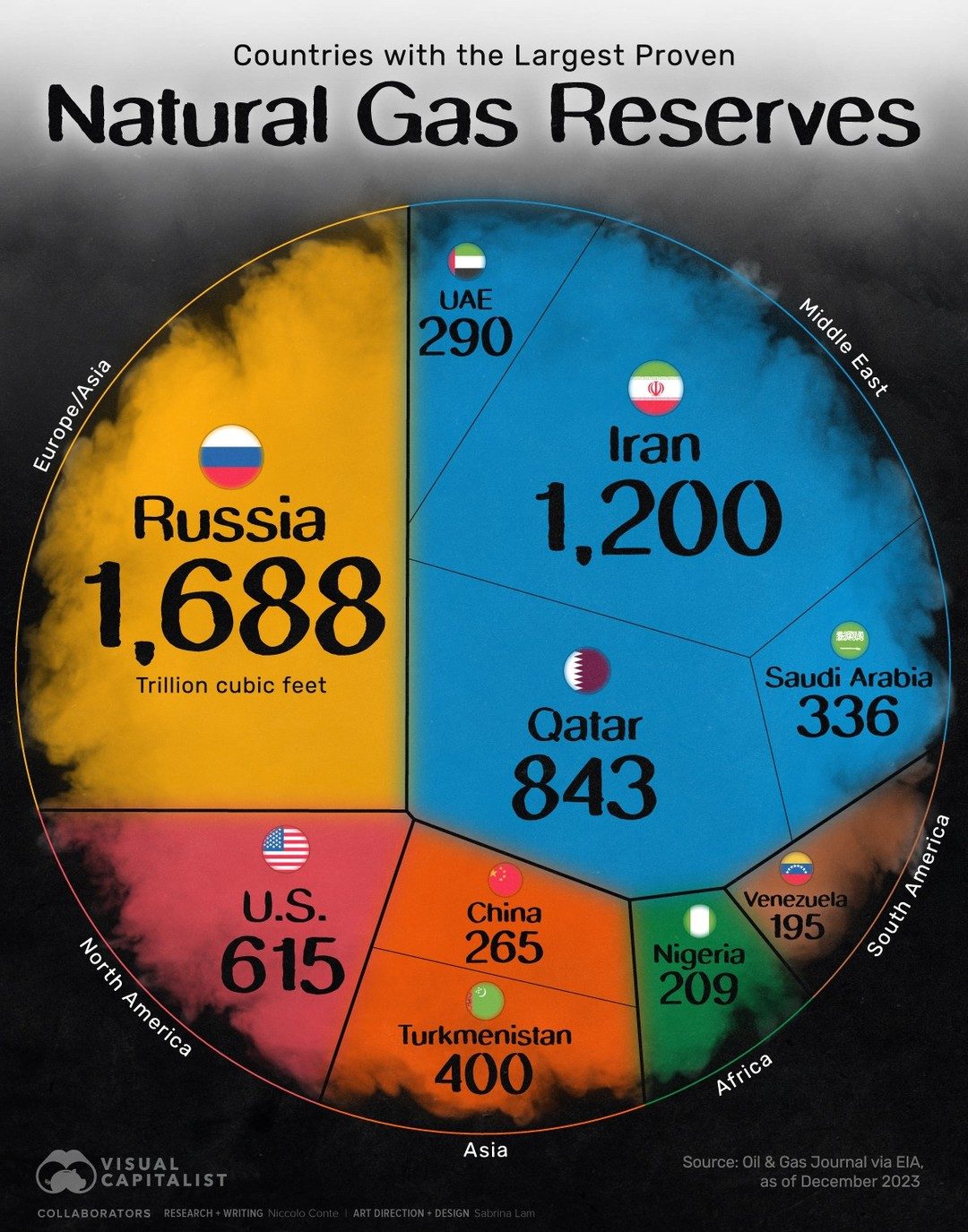
Leading the pack is Russia, with an impressive 1,688 trillion cubic feet of proven natural gas reserves. This substantial reserve places Russia at the forefront of global natural gas production and export. The country's vast reserves are a critical component of its energy strategy, influencing both domestic policy and international relations.
Iran
Following closely is Iran, with 1,200 trillion cubic feet of proven natural gas reserves. While Iran holds the second-largest reserves, geopolitical challenges and sanctions have hindered its ability to fully exploit these resources. Nevertheless, Iran's reserves present a significant potential for future energy development and export.
Qatar
Qatar, a small but powerful player in the global energy market, holds 843 trillion cubic feet of proven natural gas reserves. The country has strategically leveraged its reserves to become a major exporter of liquefied natural gas (LNG), positioning itself as a key supplier to global markets.
Saudi Arabia
Saudi Arabia, known for its vast oil reserves, also possesses significant natural gas reserves, totaling 336 trillion cubic feet. While natural gas is often overshadowed by oil in Saudi Arabia, it plays a crucial role in meeting domestic energy demand and supporting industrial development.
China
China, the world's largest consumer of energy, has 265 trillion cubic feet of proven natural gas reserves. As the country continues to grow economically, its demand for natural gas is expected to rise, making domestic reserves an essential component of its energy security strategy.
The United States
The United States holds 615 trillion cubic feet of proven natural gas reserves. The country's reserves are strategically important, supporting domestic energy production and reducing reliance on imports. The U.S. is also a significant player in the global natural gas market, exporting LNG to various countries.
Other Notable Countries
Several other countries also boast substantial natural gas reserves. Venezuela, with 195 trillion cubic feet, has significant untapped potential. Nigeria, with 209 trillion cubic feet, and Turkmenistan, with 400 trillion cubic feet, are also key players in the global energy landscape. The United Arab Emirates (UAE) holds 290 trillion cubic feet, further enhancing its role in the Middle Eastern energy sector.
Regional Distribution
The distribution of natural gas reserves is not uniform across the globe. The Middle East, North America, and Europe/Asia are prominent regions with significant reserves. These regions play pivotal roles in global energy dynamics, influencing pricing, supply, and demand patterns.
Practical Tips for Understanding Natural Gas Reserves
Stay Informed
Keeping abreast of the latest developments in global natural gas reserves is essential. Regularly reviewing reports from organizations such as the Oil & Gas Journal and the Energy Information Administration (EIA) can provide valuable insights into emerging trends and shifts in the energy landscape.
Consider Geopolitical Factors
The geopolitical context is a critical factor in understanding natural gas reserves. Political stability, international relations, and regulatory environments can significantly impact a country's ability to exploit its reserves effectively.
Evaluate Future Projections
Future projections of natural gas demand and supply are crucial for strategic planning. Analyzing trends in energy consumption, technological advancements, and environmental policies can help predict how natural gas reserves will be utilized in the coming decades.
Important Takeaways
- Russia leads the world with 1,688 trillion cubic feet of proven natural gas reserves.
- Iran, with 1,200 trillion cubic feet, and Qatar, with 843 trillion cubic feet, are also major players.
- The United States, with 615 trillion cubic feet, and Saudi Arabia, with 336 trillion cubic feet, hold significant reserves.
- Geographic and geopolitical factors play a crucial role in the global distribution and utilization of natural gas reserves.
Conclusion
Natural gas reserves are a cornerstone of global energy dynamics. Understanding which countries hold the largest reserves and how these reserves are distributed can provide valuable insights into future energy trends, geopolitical strategies, and investment opportunities. Whether you are an energy industry professional, a policymaker, or simply curious about global energy patterns, staying informed about natural gas reserves is essential for navigating the complex landscape of global energy.
Watch the Reel
Questions readers ask
What are proven natural gas reserves and why are they significant?
Proven natural gas reserves refer to the quantities of natural gas that can be recovered from known deposits with reasonable certainty based on geological and engineering data. These reserves are significant because they provide a measure of a country's energy security and economic stability, influencing its role in global energy markets.
Which country has the largest natural gas reserves in the world?
Russia currently possesses the largest proven natural gas reserves, making it a dominant player in the global energy landscape. This substantial reserve has significant implications for the country's energy policy and geopolitical influence.
What are the top five countries with the largest natural gas reserves?
The top five countries with the largest natural gas reserves are Russia, Iran, Qatar, Turkmenistan, and the United States. These nations collectively hold a vast majority of the world's proven natural gas reserves, playing crucial roles in global energy production and trade.
How do natural gas reserves impact a country's economy and energy security?
Natural gas reserves significantly impact a country's economy by providing a reliable source of energy for various industries. They also enhance energy security by reducing dependence on imports and ensuring a stable supply. Countries with substantial reserves often have the advantage of negotiating better terms in international energy markets and fostering economic growth.
How do natural gas reserves influence global geopolitics?
Natural gas reserves play a pivotal role in shaping global geopolitics. Countries with large reserves often have leverage in international negotiations and can influence global energy prices. The distribution of these reserves can also lead to strategic alliances and conflicts, as nations vie for control and access to these valuable resources.
What is the approximate amount of natural gas reserves in the top gas-producing countries?
The top gas-producing countries have proven natural gas reserves ranging from hundreds to thousands of trillion cubic feet. For example, Russia has approximately 48 trillion cubic feet, Iran around 34 trillion cubic feet, and Qatar about 24 trillion cubic feet. These vast reserves enable these countries to be major players in the global supply of natural gas.
What are some of the challenges associated with developing and managing natural gas reserves?
Developing and managing natural gas reserves come with several challenges, including environmental concerns, technological limitations, and geopolitical tensions. Extracting natural gas can have environmental impacts, such as greenhouse gas emissions and water pollution. Additionally, the development of reserves can be hindered by geological complexities and political instabilities.
Related deep dives
Similar reads based on topic and creator.


Recent articles
Fresh deep dives from the latest Reels we unpacked.




Comments
Be the first to comment.