U.S. Electric Vehicle Sales in the First Half of 2023
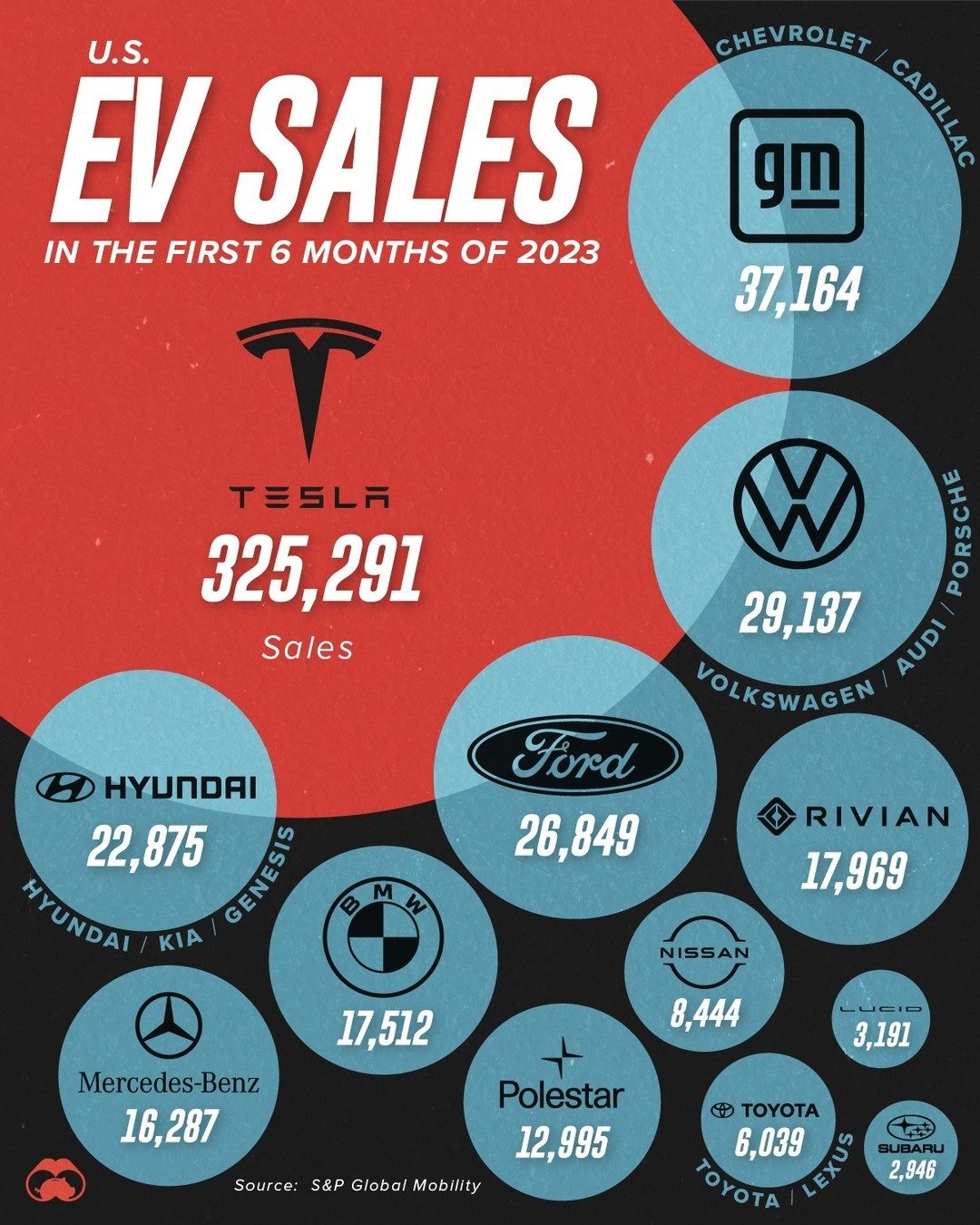
In the first six months of 2023, the U.S. electric vehicle (EV) market saw significant activity, with various brands competing for market share. The data, sourced from S&P Global Mobility, provides a clear picture of how different manufacturers performed during this period. Tesla, in particular, stood out as the clear market leader, outselling all other brands combined.
Why This Matters
The performance of EV brands in the first half of 2023 is crucial for understanding the current state of the electric vehicle market. This data helps identify trends, gauge consumer preferences, and assess the competitive landscape. As the demand for electric vehicles continues to rise, manufacturers are racing to innovate and capture a larger share of the market. The first half of 2023 offers a snapshot of who is leading the charge and who is falling behind.
Key Manufacturers and Their Performance
Tesla
Tesla dominated the EV market in the first half of 2023, selling a staggering 325,291 units. This performance underscores Tesla's position as the industry leader, with a significant gap between itself and its closest competitors. Tesla's success can be attributed to its strong brand recognition, innovative technology, and extensive charging infrastructure.
Hyundai
Hyundai sold 22,875 EVs in the same period, placing it second in the sales rankings. Hyundai has made significant strides in the EV market, offering models like the Hyundai Ioniq 5 and Kona Electric. These vehicles have been well-received for their range, efficiency, and affordable pricing.
Ford
Ford sold 26,849 EVs, making it a strong contender in the market. Ford's Mustang Mach-E and F-150 Lightning have been particularly popular, appealing to both traditional Ford loyalists and new EV enthusiasts. Ford's focus on performance and utility has helped it gain traction in the EV segment.
Volkswagen
Volkswagen sold 29,137 EVs, showcasing its growing presence in the U.S. market. The Volkswagen ID.4 and ID.Buzz have been key models driving these sales, offering a blend of European design and practicality. Volkswagen's aggressive push into the EV market is paying off, with significant investments in battery technology and production capacity.
Mercedes-Benz
Mercedes-Benz sold 16,287 EVs, demonstrating its luxury appeal in the EV market. The Mercedes EQC and EQS have been well-received for their high-end features and advanced technology. Mercedes-Benz is leveraging its luxury brand to attract affluent consumers looking for premium electric vehicles.
BMW
BMW sold 17,512 EVs, highlighting its strong position in the luxury EV segment. The BMW iX and i4 have been particularly successful, offering a blend of luxury, performance, and sustainability. BMW's commitment to electric mobility is evident in its range of high-performance EVs.
Toyota
Toyota sold 6,039 EVs, marking a modest entry into the U.S. EV market. Toyota's focus has traditionally been on hybrid technology, but it is gradually expanding its EV offerings. The Toyota bZ4X and bZ4X AWD are among the models driving these sales, showcasing Toyota's commitment to sustainable mobility.
Nissan
Nissan sold 8,444 EVs, with the Nissan Leaf and Ariya leading the charge. Nissan has been a pioneer in the EV market with the Leaf, and its continued investment in electric technology is paying off. The Nissan Leaf remains a popular choice for eco-conscious consumers.
Subaru
Subaru sold 2,946 EVs, highlighting its niche in the market. Subaru's focus on all-wheel-drive capability and off-road performance has translated well into its EV offerings, such as the Subaru Solterra.
Lucid
Lucid, a newer entrant in the market, sold 3,191 EVs. The Lucid Air has gained attention for its luxury features and impressive range, positioning Lucid as a serious competitor in the high-end EV segment.
Rivian
Rivian sold 17,969 EVs, showcasing strong consumer interest in adventure-oriented EVs. The Rivian R1T and R1S have been particularly popular, appealing to consumers looking for rugged, off-road capabilities in an electric vehicle.
Polestar
Polestar sold 12,995 EVs, further establishing its presence in the luxury EV market. The Polestar 2 has been well-received for its Scandinavian design, performance, and sustainability features. Polestar's focus on luxury and innovation is driving its success in the EV segment.
Practical Tips for EV Buyers
Research and Compare Models
When considering an electric vehicle, it's essential to research and compare different models. Each brand offers unique features, ranging from performance and range to technology and luxury. By comparing specifications and consumer reviews, buyers can make an informed decision that aligns with their needs and preferences.
Understand Charging Infrastructure
Charging infrastructure is a critical consideration for EV buyers. While Tesla has its extensive Supercharger network, other brands are rapidly expanding their charging options. Understanding the availability and compatibility of charging stations is crucial for a seamless ownership experience.
Consider Incentives and Rebates
Many governments and manufacturers offer incentives and rebates for purchasing electric vehicles. These can significantly reduce the upfront cost and make EVs more affordable. Buyers should research available incentives in their region to maximize their savings.
Evaluate Long-Term Costs
While the initial purchase price of an EV can be higher than a conventional car, the long-term costs are often lower. EVs typically have lower maintenance costs, fuel savings, and potentially higher resale values. Buyers should consider these factors when evaluating the total cost of ownership.
Test Drive and Experience
A test drive provides a firsthand experience of the vehicle's performance, comfort, and features. This is an excellent opportunity to assess the driving dynamics, interior quality, and overall suitability of the EV for the buyer's needs.
Important Takeaways
Tesla's Dominance
Tesla's dominant performance highlights its leadership in the EV market. The brand's innovative technology, extensive charging network, and strong brand loyalty are key factors contributing to its success.
Growing Competition
While Tesla leads, other brands are rapidly gaining ground. Manufacturers like Hyundai, Ford, Volkswagen, and Rivian are making significant strides, offering a diverse range of electric vehicles that cater to different consumer preferences.
Market Diversity
The U.S. EV market is becoming increasingly diverse, with a variety of brands offering different features and price points. This diversity provides consumers with more options and drives innovation in the industry.
Conclusion
The first half of 2023 has been a pivotal period for the U.S. electric vehicle market. Tesla's dominance, coupled with the growing competition from other brands, indicates a dynamic and rapidly evolving landscape. As the demand for electric vehicles continues to rise, consumers have an array of options to choose from, each offering unique features and benefits. By understanding the performance of key manufacturers and considering practical tips, buyers can make informed decisions and contribute to the transition to sustainable mobility.
Watch the Reel
Questions readers ask
Which brand led the U.S. EV sales in the first half of 2023?
Tesla was the clear leader in U.S. EV sales for the first half of 2023, outselling all other brands combined. The brand’s dominance is evident in the market, making it a key player to watch.
What are some factors that contributed to Tesla’s dominance in the EV market?
Tesla's dominance can be attributed to several factors, including strong brand recognition, innovative technology, and a robust charging infrastructure. Additionally, Tesla's focus on performance and design has resonated well with consumers.
How did Ford perform in the U.S. EV market during the first half of 2023?
Ford showed notable strides in the U.S. EV market during the first half of 2023. The brand's EV sales growth can be attributed to models like the Mustang Mach-E and F-150 Lightning, which have gained significant traction among consumers.
How did Volkswagen and Hyundai fare in the U.S. EV market in 2023?
Volkswagen and Hyundai also made significant progress in the U.S. EV market. Volkswagen’s ID.4 and Hyundai’s Ioniq 5 and Ioniq 6 models have been well-received, contributing to their growing market share in the EV segment.
What are the top-selling EVs in the U.S. for the first half of 2023?
The top-selling EVs in the U.S. for the first half of 2023 include models like the Tesla Model Y, Ford Mustang Mach-E, and Volkswagen ID.4. These vehicles have been popular among consumers due to their range, performance, and affordability.
What role did Tesla's market dominance play in the overall EV market growth in the U.S.?
Tesla's dominance played a crucial role in driving overall EV market growth in the U.S. By setting high standards for performance and innovation, Tesla has encouraged other manufacturers to improve their offerings, fostering healthy competition and accelerating the adoption of EVs.
How did BMW, Toyota, Nissan, and Mercedes perform in the U.S. EV market in 2023?
BMW, Toyota, Nissan, and Mercedes have also made strides in the U.S. EV market. BMW’s i4 and iX models have gained popularity, while Toyota's bZ4X, Nissan's Ariya, and Mercedes-Benz's EQS and EQC have contributed to their respective market positions.
Related deep dives
Similar reads based on topic and creator.


Recent articles
Fresh deep dives from the latest Reels we unpacked.




Comments
Be the first to comment.