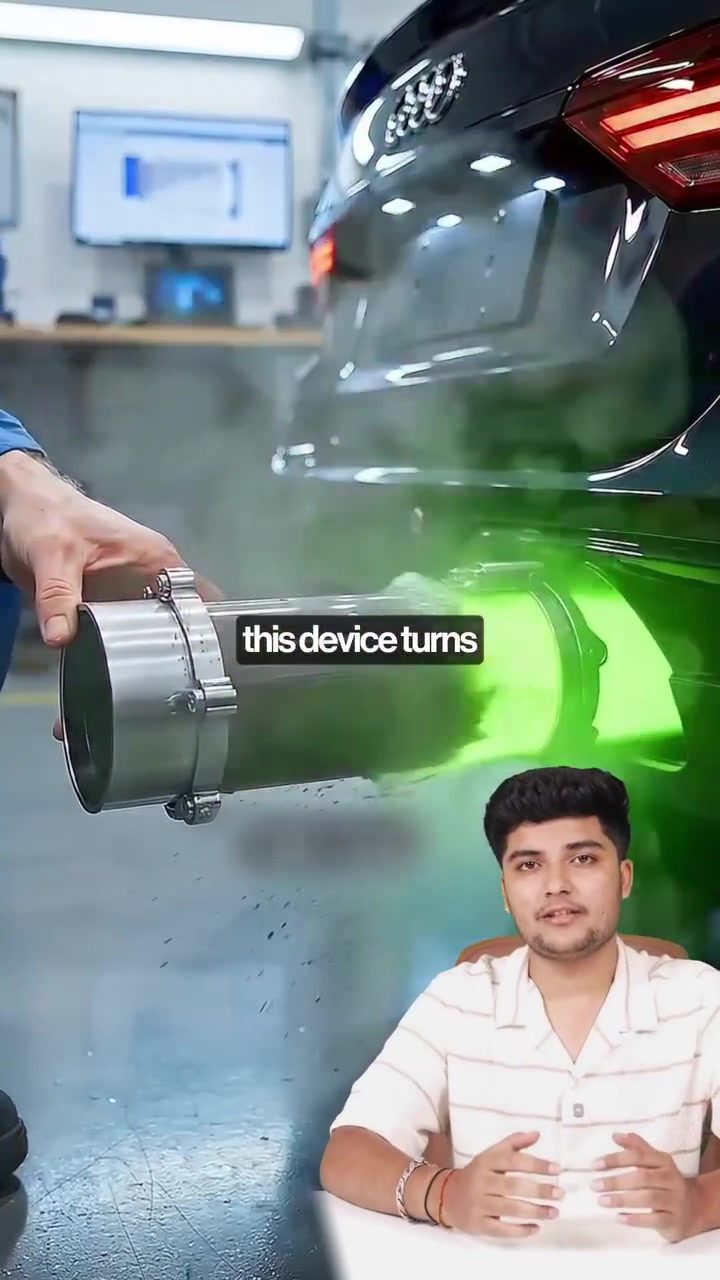
CO2 Conversion Device
CO2 conversion device technology is at the forefront of efforts to mitigate carbon emissions from vehicles. A small attachment, called the Go Green Filter, developed by high school students, uses living algae to absorb carbon dioxide before it leaves the vehicle. Inside the filter, algae, water, and LED lights work together to feed on CO₂ and release oxygen. This innovation by Rohan and Jack has garnered significant attention for its potential to reduce vehicle emissions.
Context / Why this matters
Vehicle emissions are a significant contributor to global carbon dioxide levels, which are a primary driver of climate change. Traditional methods of reducing emissions focus on improving fuel efficiency and developing electric vehicles. However, these solutions often come with high costs and significant infrastructure requirements. The Go Green Filter offers a novel approach by addressing the problem at the source—capturing and converting carbon dioxide emissions directly from the exhaust.
Main discussion
The Go Green Filter: How It Works
The Go Green Filter is a small exhaust attachment designed to convert carbon dioxide emissions into oxygen. The device uses living algae, water, and LED lights to create an environment where algae can feed on CO₂ and release oxygen. This process, known as photosynthesis, is rudimentary environmental technology that can significantly reduce the amount of carbon dioxide released into the atmosphere.
Inside the Go Green Filter, the algae are suspended in water and exposed to LED lights, which provide the necessary light energy for photosynthesis. As the exhaust gases pass through the filter, the algae absorb the CO₂ and release oxygen. The algae also grow and multiply in the process, making the filter self-sustaining to an extent, as the system is designed to require only minimal maintenance.
The Science Behind the Go Green Filter
The Go Green Filter leverages the natural process of photosynthesis, where algae convert carbon dioxide and water into oxygen and glucose (a form of sugar) using light energy. This process is highly efficient and can significantly reduce the amount of CO₂ in the exhaust gases. According to lab tests, the Go Green Filter has been able to reduce carbon dioxide emissions by around 74 percent.
The efficiency of the Go Green Filter can be attributed to several factors:
- Algae Selection: The type of algae used in the filter is specifically chosen for its high efficiency in absorbing CO₂ and releasing oxygen.
- LED Lighting: The LED lights provide the necessary light energy for photosynthesis, ensuring that the algae can perform their function effectively.
- Water and Nutrient Supply: The algae are kept in a water-based solution with the necessary nutrients, ensuring that they remain healthy and can perform photosynthesis efficiently.
- Device Design: The design of the filter maximizes the surface area for algae exposure to the exhaust gases, enhancing the efficiency of the process.
The Impact of the Go Green Filter
The Go Green Filter has the potential to make a significant impact on reducing vehicle emissions. With each unit costing less than ₹4,000 to build, it is an affordable solution that can be widely adopted. The filter's ability to reduce carbon dioxide emissions by 74 percent makes it a promising technology for mitigating the environmental impact of vehicles.
Moreover, the Go Green Filter is not just a theoretical concept; it has been tested in lab settings and proven to be effective. The creators, Rohan and Jack, have already tested hundreds of units and won a major innovation award. Their company, Ligar Science, is now focused on bringing this technology to the market and scaling it up for widespread use.
Challenges and Future Directions
While the Go Green Filter shows great promise, there are several challenges that need to be addressed for its widespread adoption:
- Scalability: The current design is suitable for individual vehicles, but scaling it up for larger vehicles or industrial applications may require significant modifications.
- Maintenance: Although the filter is designed to be self-sustaining, regular maintenance will be required to ensure that the algae remain healthy and the system functions efficiently.
- Regulatory Approval: Like any new technology, the Go Green Filter will need to go through regulatory approval processes to ensure that it meets safety and environmental standards.
Despite these challenges, the potential of the Go Green Filter is immense. With continued development and support, this technology could become a game-changer in the fight against climate change.
Practical tips
For Innovators:
- Start Small: Rohan and Jack's story showcases the power of starting with a simple, achievable goal. Begin with a small-scale prototype and refine it based on real-world testing.
- Collaborate: Don't hesitate to seek help from mentors, teachers, and peers. Collaboration can provide valuable insights and support.
- Be Persistent: Innovations often face challenges and setbacks. Persistence and a willingness to learn from failures are key to success.
For Vehicle Owners:
- Explore Sustainable Options: Keep an eye on emerging technologies like the Go Green Filter that can help reduce your vehicle's environmental impact.
- Maintain Your Vehicle: Regular maintenance can improve fuel efficiency and reduce emissions. Simple steps like keeping tires properly inflated and regular engine tune-ups can make a significant difference.
- Consider Alternative Fuels: Explore vehicles that run on alternative fuels like electric, hybrid, or hydrogen. These vehicles produce fewer emissions and are more environmentally friendly.
Important takeaways
- The Go Green Filter is a cost-effective and efficient device for reducing vehicle emissions by converting CO₂ into oxygen.
- The device was developed by high school students, demonstrating that innovation can come from anywhere.
- The Go Green Filter has the potential to make a significant impact on reducing vehicle emissions and mitigating climate change.
- Continued development and support are needed to address the challenges of scalability, maintenance, and regulatory approval.
Conclusion
The Go Green Filter is a groundbreaking innovation that highlights the potential of environmental technology in mitigating carbon emissions. Developed by high school students, this device showcases how simple, effective solutions can make a significant impact. As we continue to face the challenges of climate change, innovations like the Go Green Filter offer hope and a pathway towards a more sustainable future. By leveraging natural processes and affordable technology, we can take meaningful steps towards reducing our environmental footprint and protecting the planet for future generations.
Watch the Reel
Questions readers ask
How does the Go Green Filter work to reduce vehicle emissions?
The Go Green Filter uses living algae to capture carbon dioxide from vehicle exhaust. The algae, along with water and LED lights, convert the CO₂ into oxygen through photosynthesis, effectively reducing the amount of carbon dioxide released into the atmosphere.
What inspired the high school students to create the Go Green Filter?
The students, Rohan and Jack, were likely motivated by the pressing need to address vehicle emissions, a significant source of global carbon dioxide levels. Their innovation reflects a growing interest among young people in finding practical solutions to environmental challenges.
Can the Go Green Filter be used on all types of vehicles?
While the Go Green Filter shows promise, its current design as a small attachment may limit its application to specific vehicle types. Further development and scaling might be necessary to make it compatible with a wider range of vehicles, including larger cars, trucks, and industrial machinery.
What are the benefits of using algae for carbon capture in vehicles?
Algae are highly efficient at absorbing carbon dioxide and producing oxygen, making them an excellent choice for carbon capture in vehicles. Additionally, algae-based systems like the Go Green Filter are eco-friendly and sustainable, as they do not require complex machinery or produce harmful byproducts.
How can other students get involved in similar innovative projects?
Students interested in similar projects can start by researching algae carbon capture and vehicle emissions. Collaborating with teachers, mentors, or local environmental organizations can provide guidance and resources. Additionally, participating in science fairs, hackathons, or climate-focused competitions can offer opportunities to showcase and develop these ideas.
What challenges might the Go Green Filter face in real-world application?
Real-world challenges for the Go Green Filter may include maintaining algae health and efficiency under varying driving conditions, ensuring the device's durability and longevity, and integrating it seamlessly with different vehicle systems. Addressing these challenges will be crucial for the widespread adoption and success of the technology.
What is the potential impact of the Go Green Filter on reducing carbon dioxide emissions?
If widely adopted, the Go Green Filter could significantly reduce carbon dioxide emissions from vehicles. Given that vehicle exhaust is a major contributor to global carbon dioxide levels, this innovative solution has the potential to make a substantial difference in mitigating climate change.
Related deep dives
Similar reads based on topic and creator.




Recent articles
Fresh deep dives from the latest Reels we unpacked.




Comments
Be the first to comment.