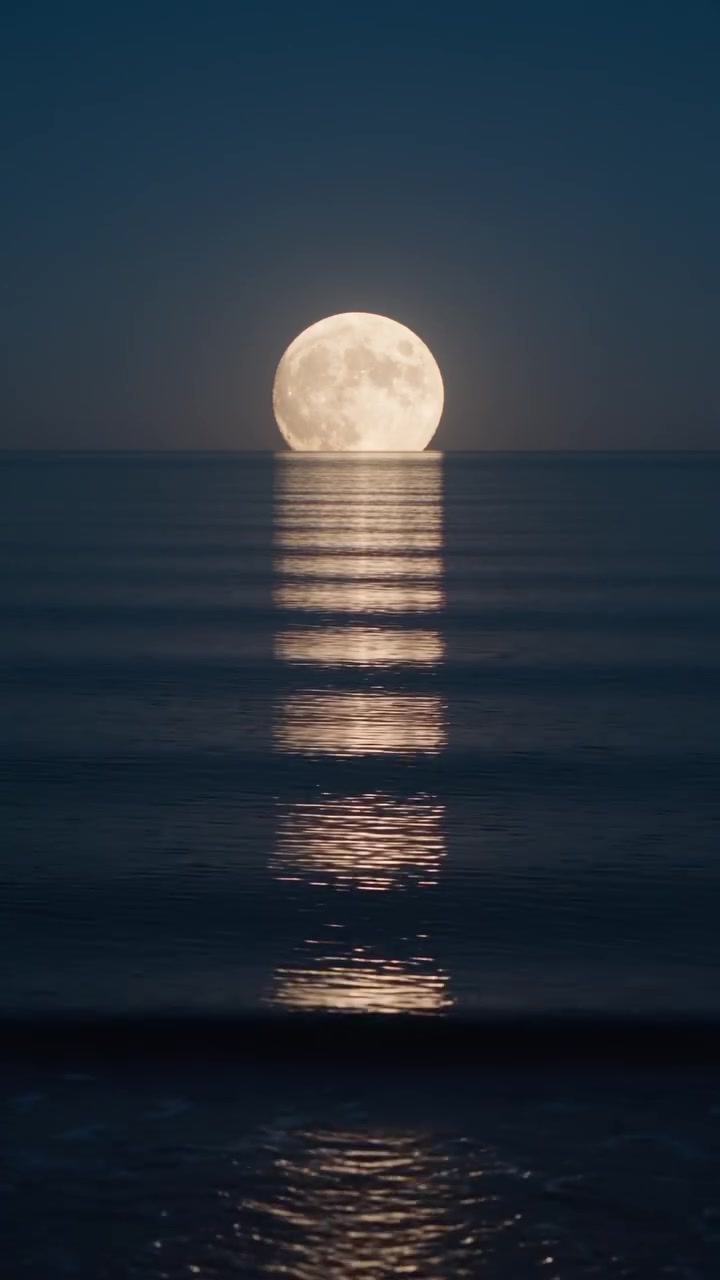
The Moon's Stealthy retreat
Every year, the moon drifts about an inch and a half farther from Earth — an inch and a half is about the same distance as the width of a smartphone — this exact measurement. This steady retreat isn’t just a matter of celestial curiosity, it reveals secrets about how our planet works.
Shooting lasers at the moon
When scientists describe bouncing lasers off mirrors on the moon, it sounds like a plot from a futuristic sci-fi movie. It's a bit like sending a high-tech message in a bottle and measuring how long it takes to get the reply. Instead of a bottle, it is a laser, and the mirror is on the moon, left by Apollo astronauts. They bounce these lasers off the mirrored surface and use the time it takes for the light to return to calculate the precise distance between the Earth and the moon. This technological marvel is crucial for understanding the moon's ongoing retreat and verifying the tides’ role. The mirrors are vital for lunar ranging experiments, essential for mapping the moon's surface and understanding the moon's internal structure.
The tides tug a receding moon
The moon's retreat is driven by the tides. Every time the moon orbits a planet, it tides it up, and those tides affect the moon's orbit. Earth spins faster than the moon orbits, which creates a bulge in our oceans. This bulge isn’t stationary; it constantly shifts due to the Earth’s spin. The effect of this movement just lets the moon leave a little bit. Scientists compare this to a gentle push on a swing. The tide bulge tugs the moon forward, giving it a slight boost in its orbit. As the moon gains momentum, it moves farther away from the Earth. There's a strange time paradox here — this process also slows down our planet's rotation. Eventually, the moon will settle into a stable orbit. It will be bigger and farther away, and our days will be substantially longer.
A day once lasted six hours
Billions of years ago, the moon loomed large in the sky. The Earth's rotation was much faster, with a single day lasting the equivalent of just six hours. Over millions of years, tidal friction between the Earth and the moon has gradually transferred angular momentum from the Earth to the moon, slowing the Earth's rotation and pushing the moon farther away. This is a stark reminder of the dynamic nature of celestial bodies. Moreover, this push-pull relationship between the Earth and the moon has crucial implications for our planet's environment. The slowing of Earth's rotation affects the length of our days, altering long-term climate patterns. Additionally, the moon’s gravitational pull influences ocean currents and coastal erosion, highlighting the intricate dance between celestial mechanics and Earth’s habitats.
Likely to keep happening?
The moon's retreat will continue, though the pace is slow. Trying to get a grip on just how long it will take for the moon to drift so far away that its effect on tides is negligible will require some pretty large calculations. Orbiting farther from Earth, the moon’s gravitational influence on our planet will weaken. The most likely outcome is that Earth and the moon will continue their slow waltz, with the moon drifting farther away at a rate of about an inch and a half per year. The retreat will continue until the point where the moon's gravitational pull is no longer strong enough to keep the Earth's rotation and the ocean tides in sync. This will happen long after humanity has vanished from the Earth.
Watch the Reel
Questions readers ask
How exactly do the tides cause the moon to drift away from Earth?
The tides create a slight gravitational pull that nudges the Moon faster and farther. As Earth rotates, it creates a tidal bulge in the oceans. This bulge is slightly ahead of the moon due to Earth’s faster rotation, and it tugs the moon forward, giving it a small boost in its orbit. This process gradually increases the moon's distance from Earth.
How do scientists measure the distance between the Earth and the moon?
Scientists use a method called lunar laser ranging. They bounce lasers off mirrors left on the moon by Apollo astronauts and measure the time it takes for the light to return. This precise measurement helps scientists track the moon's ongoing retreat and understand its orbit.
How has the moon's distance from Earth changed over time?
Billions of years ago, the moon was much closer to Earth, and a day on Earth lasted only about six hours. Over time, tidal friction has slowed Earth's rotation and pushed the moon farther away. Today, the moon drifts about 1.5 inches farther from Earth each year.
What are the long-term effects of the moon's retreat on Earth?
The moon's retreat will eventually make our days longer and alter long-term climate patterns. As the moon moves farther away, its gravitational influence on Earth will weaken, affecting ocean currents and coastal erosion. However, this process is very slow and will continue for billions of years.
Will the moon eventually stop drifting away from Earth?
The moon will continue to drift away from Earth, but the process is very slow. Eventually, the moon will settle into a stable orbit, much farther away from Earth than it is now. The exact timing of this stabilization is difficult to calculate, but it will happen over an extremely long period.
Related deep dives
Similar reads based on topic and creator.




Recent articles
Fresh deep dives from the latest Reels we unpacked.
Comments
Be the first to comment.