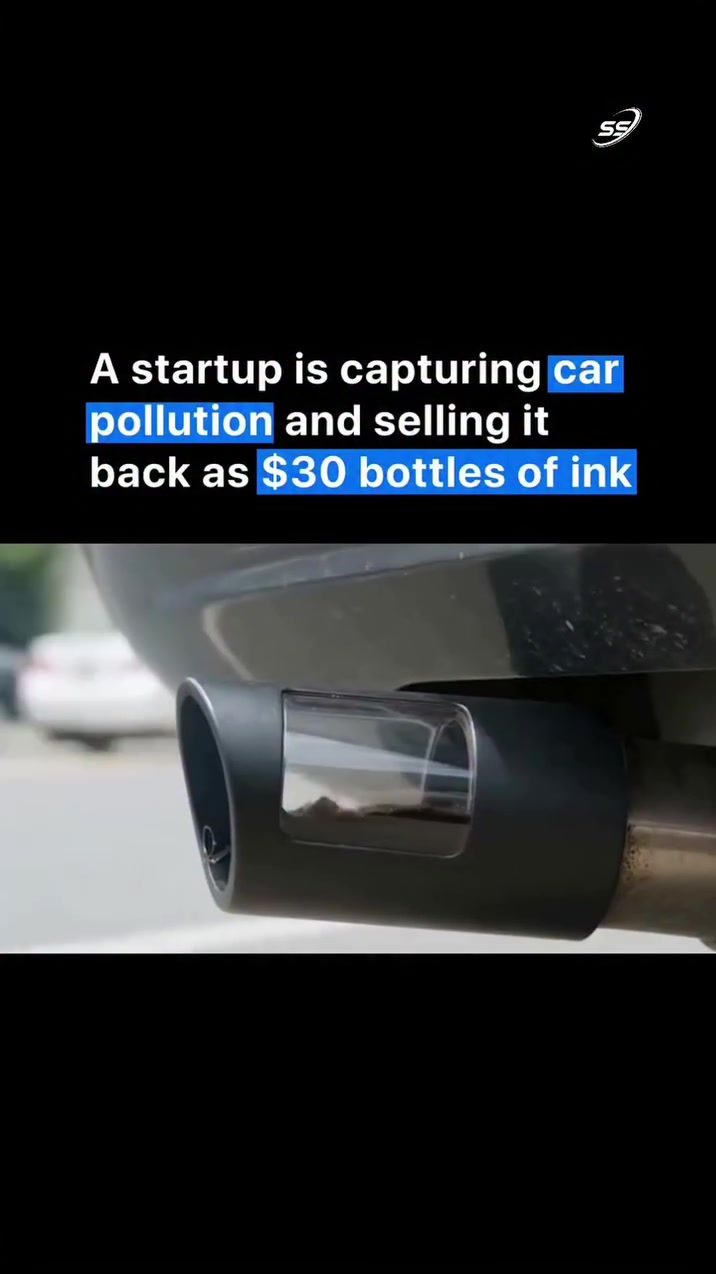
The Geometry of Carbon Arbitrage: Turning Car Pollution into Ink
The process of converting car pollution into ink is a groundbreaking example of how environmental mitigation can evolve from traditional carbon offsets to direct physical material upcycling. This innovative approach transforms a significant environmental issue into a valuable commodity, fundamentally changing the economics of waste processing.
Context / Why this Matters
As environmental concerns grow, so does the need for innovative solutions. By focusing on direct physical material upcycling, companies can turn waste into profit, reducing both environmental impact and operational costs. This shift from legacy carbon offsets to active waste-to-commodity systems represents a significant economic and environmental breakthrough.
Main Discussion
The Technology Behind Carbon Capture
The process begins with attaching a localized particulate capture filter to the exhaust systems of internal combustion engines. This filter isolates raw, unburnt carbon soot at the source of emission. By capturing this particulate matter, companies can prevent it from dispersing into the atmosphere, reducing air pollution and environmental degradation.
The Transformation Process
Once captured, the particulate matter is routed through proprietary purification and liquid suspension matrices. This process involves several stages:
- Purification: The raw carbon soot is purified to remove impurities and contaminants.
- Liquid Suspension: The purified carbon is then suspended in a liquid matrix, which can include various additives to enhance its properties.
- Synthesis: The liquid suspension is further processed to synthesize a high-margin consumer material, in this case, ink.
The result is a premium ink that can be sold commercially. This ink is not only eco-friendly but also versatile, demonstrating its usability with a pen on paper.
Economic Implications
The economics of waste processing undergo a structural evolution when companies adopt this direct physical material upcycling model. Instead of treating emissions as a permanent, non-recoverable financial penalty, companies can view them as a raw material input stream. This shift in perspective allows for the creation of a highly localized vertical commodity asset.
Strategic Adaptation
For companies to fully leverage this technology, they must align their manufacturing infrastructure with direct byproduct monetization strategies. This involves:
- Material Extraction: Securing high-yield material extraction systems at the root execution layer.
- Waste-to-Commodity Loop: Building an active waste-to-commodity capture loop to directly feed higher-value printing and manufacturing pipelines.
- Regulatory Compliance: Ensuring that the processing loop is controlled before regulatory resource overhead restricts production.
Practical Tips
For businesses looking to implement similar waste-to-commodity systems, consider the following steps:
- Assess Emission Sources: Identify where and how emissions are generated in your operations.
- Invest in Capture Technology: Install particulate capture filters to isolate raw carbon soot.
- Develop Purification Processes: Work with experts to develop proprietary purification and liquid suspension matrices.
- Market Research: Understand the market demand for the upcycled product, in this case, ink.
- Innovate and Adapt: Continuously refine the process to improve efficiency and profitability.
Important Takeaways
- Economic Potential: Direct physical material upcycling can turn waste into a valuable commodity, significantly impacting the economics of waste processing.
- Environmental Impact: This approach reduces air pollution and environmental degradation by capturing and repurposing carbon soot.
- Strategic Reengineering: Companies must adapt their manufacturing infrastructure to align with direct byproduct monetization strategies.
- Regulatory Compliance: Ensuring that the processing loop is controlled before regulatory resource overhead restricts production is crucial.
Conclusion
The transformation of car pollution into ink exemplifies how innovative environmental technology can turn a significant waste problem into a valuable commodity. By adopting this approach, companies can not only reduce their environmental impact but also create new revenue streams. As environmental concerns continue to grow, it's clear that such innovative solutions will play a crucial role in shaping the future of sustainable manufacturing.
Watch the Reel
Questions readers ask
How does the startup convert car exhaust into ink?
The startup employs a unique process that involves capturing and processing particulate matter from car exhaust. This material is then transformed into high-quality ink through a series of chemical and physical processes, turning a polluting waste stream into a valuable product.
What are the benefits of using ink made from car exhaust?
Ink produced from car exhaust offers several benefits, including reduced environmental impact, as it addresses both air pollution and resource scarcity. Additionally, it provides a new and sustainable revenue stream for environmental sustainability initiatives and promotes a circular economy by turning waste into a useful product.
Can this technology be applied to other types of pollution?
While the current focus is on car exhaust, the underlying technology of converting waste into usable materials could potentially be adapted for other types of pollution and waste streams. However, the specific processes and efficiencies may vary depending on the source and composition of the waste.
How does this approach differ from traditional carbon offsets?
Unlike traditional carbon offsets, which often involve funding environmental projects in exchange for reducing or avoiding emissions, this approach directly captures and converts waste into a saleable product. This direct capture system not only mitigates pollution at the source but also creates a new revenue stream.
What is the economic impact of this innovative technology?
This technology introduces a new economic model where waste is transformed into a valuable commodity. By reducing operational costs associated with waste disposal and generating revenue from the sale of ink, companies can achieve significant financial savings while contributing to environmental sustainability.
How effective is car exhaust to ink conversion in reducing pollution?
Car exhaust to ink conversion can significantly reduce localized pollution control by capturing and processing particulate matter that would otherwise be released into the air. This reduction in emissions contributes to improved air quality, particularly in urban areas where car pollution is prevalent.
Related deep dives
Similar reads based on topic and creator.


Recent articles
Fresh deep dives from the latest Reels we unpacked.




Comments
Be the first to comment.