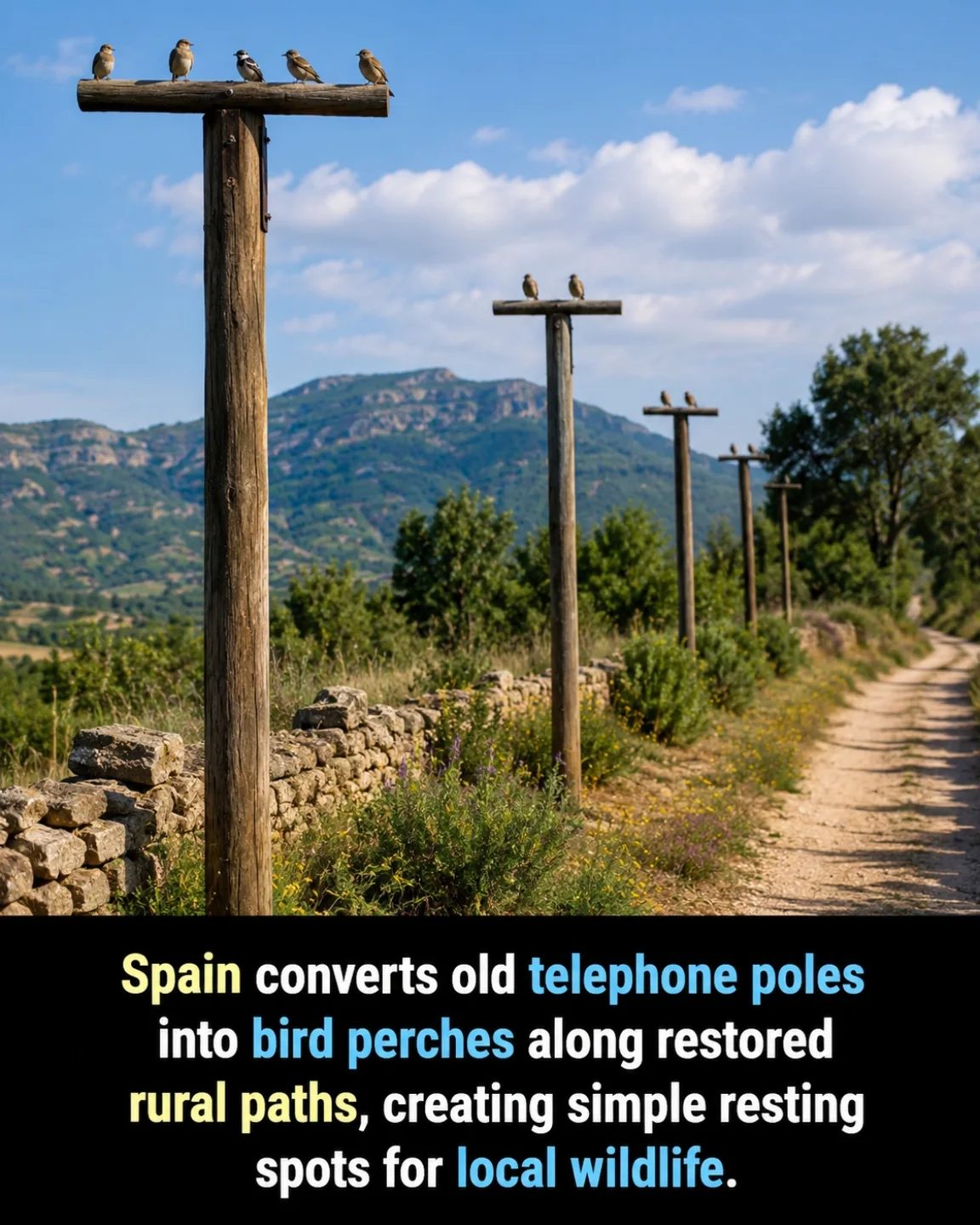
Bird-Friendly Infrastructure in Spain: Repurposing Telephone Poles for Wildlife
Spain's rural landscapes are undergoing a transformation that benefits both infrastructure and local bird populations. Old telephone poles, once symbols of outdated communication systems, are being repurposed into bird perches along restored rural paths. This initiative not only provides simple resting spots for local wildlife but also highlights a creative and eco-friendly approach to environmental conservation.
Context / Why This Matters
Birds play a crucial role in the ecosystem, aiding in pollination, pest control, and seed dispersal. However, urbanization and infrastructure development often lead to habitat loss and disruption of migratory routes. By converting old telephone poles into bird perches, Spain is taking a proactive step towards mitigating these issues. This initiative showcases how existing infrastructure can be adapted to support wildlife, promoting a harmonious coexistence between human development and natural habitats.
Main Discussion
The Initiative: Repurposing Telephone Poles
The idea of converting old telephone poles into bird perches is a testament to innovative thinking in environmental conservation. These poles, which were once integral to Spain's communication networks, are now given a new lease on life as perches for local birds. The placement of these perches along restored rural paths ensures that birds have accessible resting spots during their journeys.
Benefits to Wildlife
Bird perches offer numerous benefits to local wildlife. They provide safe and convenient resting spots for birds during their migratory journeys. These perches also serve as vantage points for birds to survey their surroundings, making it easier for them to spot potential threats or food sources. By creating these resting spots, the initiative helps to support the health and sustainability of local bird populations.
Eco-Friendly Approach
The conversion of old telephone poles into bird perches is an eco-friendly approach to environmental conservation. Rather than disposing of these poles, which would contribute to landfill waste, Spain is repurposing them for a beneficial use. This initiative demonstrates how existing infrastructure can be adapted to support wildlife, promoting a harmonious coexistence between human development and natural habitats.
Supporting Rural Paths
The placement of these perches along restored rural paths is a strategic move. Rural paths are often quieter and less disturbed by human activities, making them ideal for bird perches. This placement ensures that birds have access to safe and peaceful resting spots, away from the bustle of urban areas.
Community Engagement
The initiative also fosters a sense of community engagement. Local communities are likely to take pride in the transformation of their rural landscapes, knowing that they are contributing to the well-being of local wildlife. This engagement can lead to further environmental conservation efforts, creating a ripple effect of positive change.
Sustainability and Cost-Effectiveness
The repurposing of old telephone poles is not only environmentally beneficial but also cost-effective. Instead of investing in new infrastructure, Spain is making use of existing resources. This approach is sustainable and cost-effective, making it a feasible solution for other regions facing similar challenges.
Practical Tips
If you're inspired to create bird-friendly infrastructure in your area, consider the following tips:
- Identify Existing Infrastructure: Look for old or unused structures that can be repurposed for wildlife use. This could include old telephone poles, bridges, or even abandoned buildings.
- Choose Strategic Locations: Place bird perches in areas that are quiet and less disturbed by human activities. This will ensure that birds have safe and peaceful resting spots.
- Engage the Community: Involve local communities in the initiative. Their support and participation are crucial for the success of any conservation effort.
- Monitor and Maintain: Regularly monitor the perches to ensure they are in good condition and safe for birds. Maintenance is key to the longevity of any infrastructure.
- Educate and Raise Awareness: Educate the public about the importance of bird-friendly infrastructure and the benefits it brings to the ecosystem. Awareness campaigns can inspire more people to get involved in conservation efforts.
Important Takeaways
- Creative Solutions: Repurposing old telephone poles into bird perches is a creative and eco-friendly solution to support local wildlife.
- Community Involvement: Engaging local communities can lead to further environmental conservation efforts.
- Sustainable Practices: Making use of existing resources is a sustainable and cost-effective approach to infrastructure development.
- Benefits to Wildlife: Bird perches provide safe and convenient resting spots for local birds, supporting their health and sustainability.
- Long-Term Impact: Initiatives like these can have a long-term positive impact on the ecosystem, promoting a harmonious coexistence between human development and natural habitats.
Conclusion
Spain's initiative to convert old telephone poles into bird perches along restored rural paths is a commendable effort in environmental conservation. By repurposing existing infrastructure, Spain is not only supporting local bird populations but also promoting a harmonious coexistence between human development and natural habitats. This initiative serves as a model for other regions, demonstrating how creative and eco-friendly solutions can benefit both wildlife and local communities.
Watch the Reel
Questions readers ask
Why are old telephone poles being repurposed in Spain?
Old telephone poles in Spain are being repurposed to address two key issues: outdated infrastructure and the need for bird resting spots. By converting these poles into bird perches, Spain aims to provide essential resting areas for both local and migratory birds, while also updating rural infrastructure.
How does this initiative support local bird populations?
The initiative supports local bird populations by offering safe and convenient resting spots along rural paths. This is particularly beneficial for migratory birds, which travel long distances and require places to rest and refuel. By providing these perches, Spain helps maintain healthy bird populations and supports the broader ecosystem.
What are the benefits of eco-friendly bird perches for the environment?
Eco-friendly bird perches contribute to environmental conservation by promoting the coexistence of human development and natural habitats. They help mitigate the impact of urbanization and infrastructure development on bird populations, supporting bird activities such as pollination, pest control, and seed dispersal. Additionally, these perches enhance biodiversity in rural areas.
How does the restoration of old poles contribute to rural development in Spain?
Restoring old poles into bird perches contributes to rural development by upgrading outdated infrastructure and fostering environmental conservation. This initiative encourages wildlife-friendly infrastructure, making rural paths more functional for both humans and birds. Moreover, it enhances the appeal of rural areas for birdwatching and ecotourism.
What types of birds benefit from these repurposed telephone poles?
Both local and migratory birds benefit from these repurposed telephone poles. Local birds use them for resting and nesting, while migratory birds rely on them as crucial stopover points during their long journeys. The perches cater to a variety of bird species, contributing to overall avian biodiversity and habitat enhancement in Spain.
How can other countries replicate Spain's initiative in their own rural areas?
Other countries can replicate Spain's initiative by identifying old or unused infrastructure, such as telephone poles, and repurposing them into bird perches. Collaboration with local environmental organizations and wildlife experts is key to ensuring the perches are designed and placed effectively. Additionally, promoting public awareness and support for such initiatives can drive their success.
Related deep dives
Similar reads based on topic and creator.




Recent articles
Fresh deep dives from the latest Reels we unpacked.




Comments
Be the first to comment.