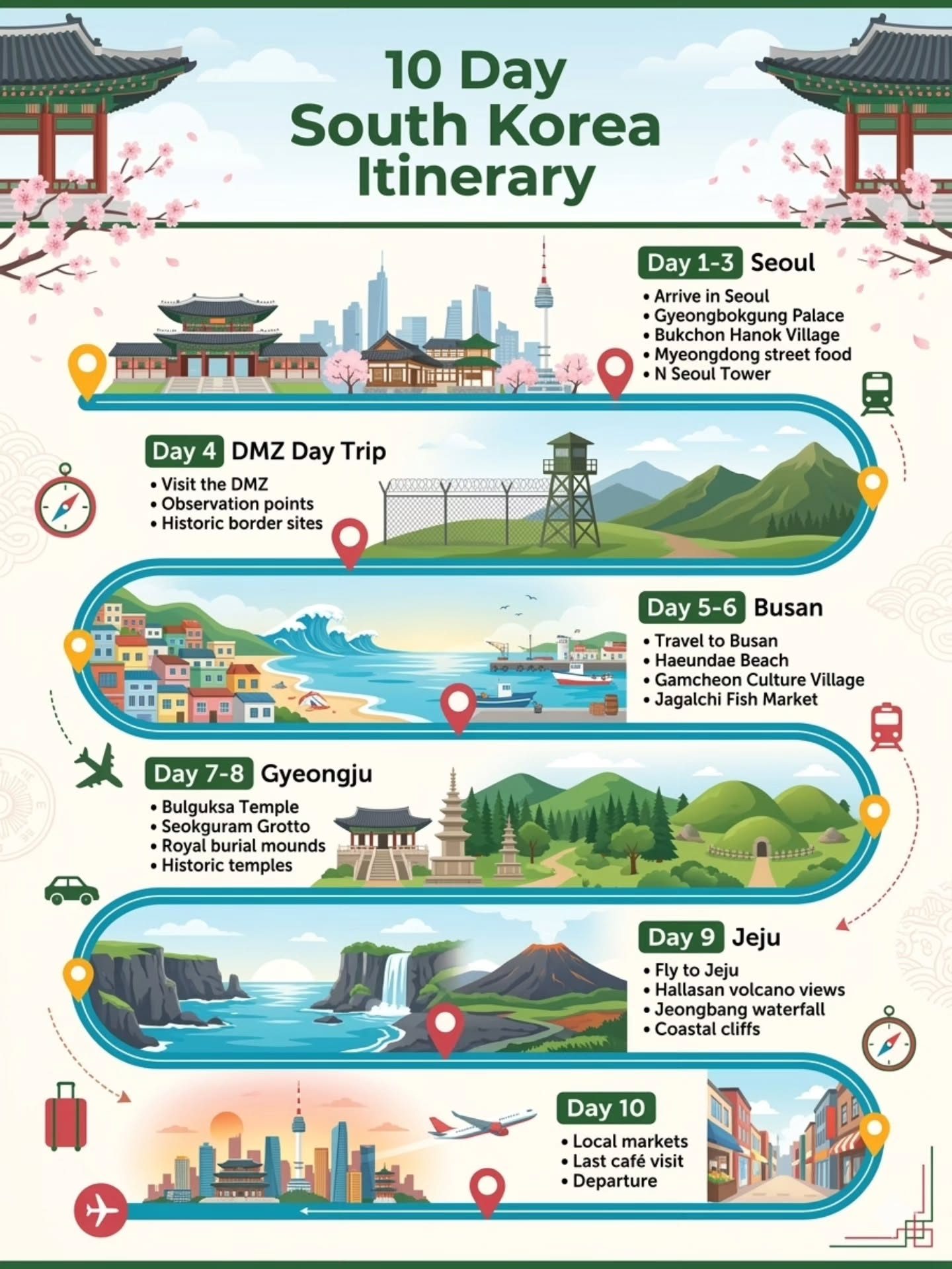
10 Day South Korea Itinerary: A Comprehensive Guide to Your Best Trip
South Korea is a land of vibrant culture, rich history, and stunning natural beauty. A well-planned itinerary can help you experience the best of what this country has to offer. This 10-day itinerary covers major cities and attractions, from the bustling streets of Seoul to the serene landscapes of Jeju Island.
Why this matters
A well-planned itinerary ensures you make the most of your trip, balancing must-see attractions with leisure time. By following this 10-day itinerary, you can immerse yourself in South Korea's diverse landscapes, vibrant culture, and historic sites. This structured journey will help you maximize your time and experience the best of what South Korea has to offer.
Main discussion
Days 1-3: Seoul
Gyeongbokgung Palace
Your journey begins in Seoul, the capital city of South Korea. Start your trip with a visit to Gyeongbokgung Palace, one of the most iconic landmarks in the country. This grand palace, built in the 14th century, is the largest of the Five Grand Palaces and offers a glimpse into the country's royal history. The meticulously restored buildings and extensive grounds make it a must-visit.
Buchon Hanok Village
For a different perspective on Seoul, head to Buchon Hanok Village. This traditional Korean village is filled with charming hanok houses, which are traditional Korean homes with tiled roofs and courtyards. Strolling through the narrow alleys, you can feel the timeless atmosphere and perhaps even stay in a hanok for a more authentic experience.
Myeongdong Street Food
No trip to Seoul is complete without indulging in its famous street food. Myeongdong is the go-to place for food lovers, offering a variety of delicious Korean snacks, from tteokbokki to hotteok. The bustling streets are lined with food stalls, making it a lively and exciting experience.
N Seoul Tower
End your Seoul adventure with a visit to N Seoul Tower. This landmark tower offers breathtaking panoramic views of the city, especially at sunset. The tower is also known for its romantic vibe, making it a popular spot for couples.
Day 4: DMZ Day Trip
Observation Points and Historic Border Sites
On your fourth day, take a day trip to the Demilitarized Zone (DMZ), a historic border area that divides North and South Korea. This area is rich in history and offers several observation points and historic border sites. Visiting the DMZ gives you a unique perspective on the Korean Peninsula's political and historical landscape.
Days 5-6: Busan
Haeundae Beach
Next, head to Busan, the second-largest city in South Korea, known for its beautiful beaches. Spend a day or two relaxing at Haeundae Beach, one of the most popular beaches in the country. The beach offers a mix of urban and coastal charm, with plenty of amenities and activities.
Gamcheon Culture Village
For a burst of culture and color, visit Gamcheon Culture Village. This vibrant hillside village is famous for its colorful streets and alleyways, filled with street art and quirky shops. The village offers a unique blend of traditional and modern elements, making it a must-visit spot for art and culture enthusiasts.
Jagalchi Fish Market
Seafood lovers will delight in a visit to Jagalchi Fish Market, one of the largest and busiest seafood markets in Korea. The market offers a wide variety of fresh seafood, from crab to octopus. It's a great place to try some local delicacies and experience the lively atmosphere of a traditional fish market.
Days 7-8: Gyeongju
Bulguksa Temple
On your journey to Gyeongju, also known as the "museum without walls," make sure to visit Bulguksa Temple. This UNESCO World Heritage Site is famous for its stunning architecture and serene surroundings. The temple is a major highlight of Gyeongju, offering a peaceful escape from the bustling city life.
Seokguram Grotto
Another must-visit in Gyeongju is the Seokguram Grotto, a historic Buddhist temple known for its intricate carvings and sculptures. This grotto is another UNESCO World Heritage Site and is often visited in conjunction with Bulguksa Temple.
Historic Temples
Gyeongju is home to numerous historic temples, each with its unique architecture and rich history. Exploring these temples offers a deep dive into Korea's Buddhist heritage and provides a glimpse into the country's spiritual and cultural roots.
Royal Burial Mounds
For a glimpse into Korea's royal past, visit the Royal Burial Mounds in Gyeongju. These mounds are the final resting places of ancient Korean kings and offer a fascinating look into the country's royal history and traditional burial practices.
Day 9: Jeju
Fly to Jeju
On the ninth day, fly to Jeju Island, a subtropical island known for its natural beauty and volcanic landscapes. The island is a popular destination for both domestic and international tourists, offering a mix of relaxation and adventure.
Hallasan Volcano Views
One of the highlights of Jeju Island is Hallasan, a dormant volcano and the highest peak in South Korea. The volcano offers stunning views of the surrounding landscapes, and hiking to the summit is a popular activity for visitors.
Jeongbang Waterfall
Another must-see attraction on Jeju Island is Jeongbang Waterfall, one of the most stunning waterfalls in the country. The waterfall cascades down a cliff directly into the sea, creating a breathtaking sight.
Coastal Cliffs
The coastal cliffs of Jeju Island are another natural wonder not to be missed. These dramatic cliffs offer stunning views of the ocean and the island's rugged coastline, providing a perfect spot for a scenic drive or a leisurely walk.
Day 10: Last Cafe Visit and Departure
Local Markets
On your final day in South Korea, take some time to explore the local markets. These markets offer a variety of traditional Korean goods, from handmade crafts to local delicacies. It's a great opportunity to pick up some souvenirs and try some last-minute local snacks.
Last Cafe Visit
Before you head to the airport, savor a cup of coffee or tea at one of South Korea's iconic cafes. The coffee culture in South Korea is vibrant and diverse, with cafes offering a range of specialty drinks and cozy atmospheres. It's a perfect way to end your trip on a relaxing note.
Departure
With memories of vibrant culture, rich history, and stunning natural beauty, it's time to bid farewell to South Korea. As you depart, you'll carry with you the experiences and stories of a trip well-traveled.
Practical tips
Accommodation
Choose accommodations that fit your travel style. In Seoul, consider staying in areas like Myeongdong or Hongdae for easy access to shopping and nightlife. For a more traditional experience, stay in a hanok village. In Busan, areas like Haeundae or Gwangalli are great for beach lovers. In Gyeongju, opt for a ryokan-style accommodation for an authentic experience. On Jeju Island, coastal areas offer stunning views and easy access to natural attractions.
Transportation
South Korea has an efficient public transportation system, making it easy to get around. Utilize the subway and buses in Seoul and Busan. For day trips to the DMZ, consider joining a guided tour. Between cities, domestic flights and high-speed trains are convenient options. Within Jeju Island, renting a car is the best way to explore the island's diverse landscapes.
Food
Dining in South Korea is an adventure in itself. From street food to high-end restaurants, there's something for every palate. Be sure to try local specialties like kimchi, bulgogi, and bibimbap. Don't forget to explore local markets for traditional snacks and ingredients.
Important takeaways
Experience the Diversity
South Korea offers a diverse range of experiences, from bustling cities to tranquil temples and natural wonders. This itinerary ensures you get a taste of it all, from the vibrant streets of Seoul to the serene landscapes of Jeju Island.
Plan Ahead
A well-planned itinerary will make your trip smoother and more enjoyable. Pre-book tickets for popular attractions, especially during peak seasons, to avoid long lines and sellouts.
Engage with the Culture
South Korea's rich cultural heritage is one of its biggest attractions. Take the time to visit historic sites, interact with locals, and immerse yourself in the country's traditions and customs.
Conclusion
A 10-day itinerary through South Korea covers a wealth of experiences, from the bustling streets of Seoul to the tranquil beaches of Jeju Island. Each destination offers unique sights and activities, making it a trip you'll never forget. Whether you're a history buff, a nature lover, or a foodie, there's something for everyone in this vibrant country.
Watch the Reel
Questions readers ask
What are the must-see attractions in Seoul for a first-time visitor?
First-time visitors to Seoul should prioritize landmarks like Gyeongbokgung Palace, the historic heart of the city. Explore the vibrant streets of Myeongdong for shopping and street food, and don't miss the iconic N Seoul Tower for panoramic city views. Additionally, Insadong offers a glimpse into traditional Korean culture with its tea houses and art galleries.
How do I get from Seoul to Jeju Island?
To travel from Seoul to Jeju Island, the most convenient option is to fly. There are numerous daily flights from Incheon International Airport (ICN) and Gimpo International Airport (GMP) in Seoul to Jeju International Airport (CJU). The flight duration is approximately 1.5 hours, making it a quick and efficient journey between the bustling capital and the scenic island.
What are the top activities in Jeju Island?
Jeju Island offers a range of activities, from exploring volcanic landscapes at Hallasan Mountain to relaxing on the beautiful beaches like Hyeopjae and Jungmun. For a unique experience, visit the Jeju Loveland sculpture park or the Manjanggul Lava Tube. Don't miss the chance to try local seafood delicacies, such as black pork and fresh sashimi.
Why is Gyeongju a recommended stop on a South Korea itinerary?
Gyeongju is a historic city often referred to as the 'museum without walls' due to its numerous archaeological sites and historical treasures. Key attractions include Bulguksa Temple, a UNESCO World Heritage Site, and the Seokguram Grotto, renowned for its intricate Buddhist carvings. The city provides a deep dive into South Korea's rich history and cultural heritage.
What is the best way to travel between Seoul and Busan?
The most efficient way to travel between Seoul and Busan is by taking the high-speed KTX train. The journey takes approximately 2.5 hours and offers comfortable seating, power outlets, and dining options. Alternatively, you can fly, with a flight duration of around 1 hour, but factor in additional time for airport procedures.
What are some unique experiences to have in South Korea?
South Korea offers a variety of unique experiences. Consider staying in a traditional hanok house in Seoul for an authentic cultural experience, or indulge in a Korean spa (jjimjilbang) for relaxation. For nature enthusiasts, hiking the scenic trails of Seoraksan National Park is a must. Additionally, visiting the vibrant night markets and exploring the local street food scene are unforgettable experiences.
Related deep dives
Similar reads based on topic and creator.




Recent articles
Fresh deep dives from the latest Reels we unpacked.




Comments
Be the first to comment.