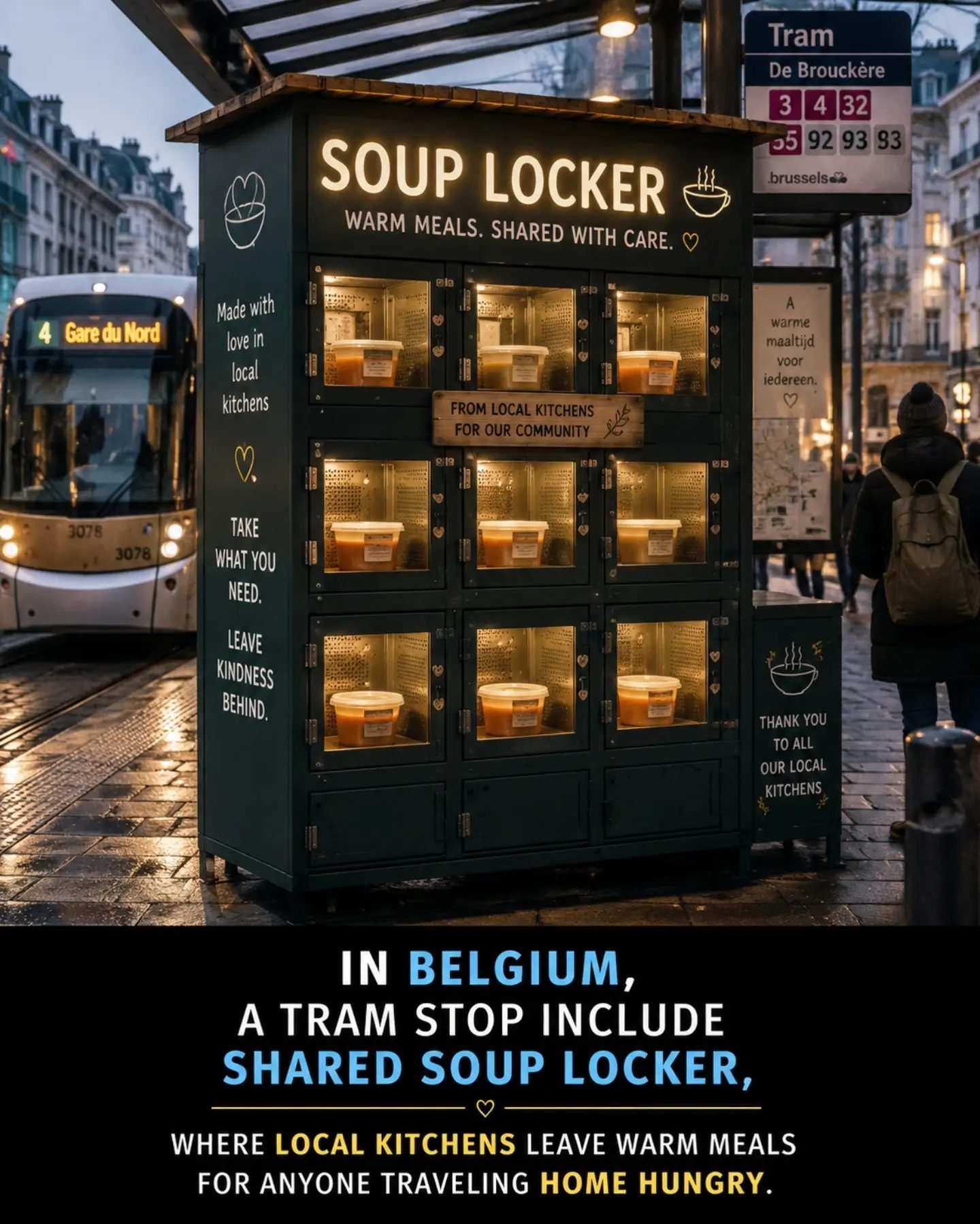
Soup Lockers in Belgium: A Community Initiative for Warm Meals on the Go
Soup Lockers are a unique community initiative in Belgium, providing warm meals to travelers at tram stops. This vending-style cabinet, known as a 'Soup Locker,' is more than just a convenient way to grab a meal; it's a testament to community support and kindness.
Why This Matters
With the hustle and bustle of daily life, finding time to prepare a warm meal can be challenging. For those traveling home late from work or school, the thought of a hot, satisfying meal can be a welcome relief. Soup Lockers address this need by offering warm, locally-prepared meals right at tram stops. This initiative not only provides a practical solution but also fosters a sense of community and shared support.
Main Discussion
The Concept
The Soup Locker is a cleverly designed vending-style cabinet filled with warm meals. It's strategically placed at tram stops, making it accessible to commuters traveling home. The concept is simple yet effective: local kitchens prepare meals, which are then left in the lockers for anyone who might be hungry. The lockers are a beacon of kindness, ensuring that no one has to go home hungry.
How It Works
The Soup Locker operates on the principle of community sharing. Local kitchens prepare and donate warm meals, which are then placed in the lockers. The meals can be accessed by anyone traveling home and in need of a warm meal. This system not only provides a practical solution to a common problem but also builds a stronger community by encouraging sharing and support.
The Community Aspect
One of the standout features of the Soup Locker initiative is its emphasis on community. The lockers are a physical manifestation of the collective effort to support one another. By sourcing meals from local kitchens, the initiative supports local businesses and encourages community involvement. The text "Made with love in local kitchens" and "From Local Kitchens for Community" highlights the heartfelt efforts behind this project.
The Impact
The Soup Locker has a profound impact on the community. It addresses the practical need for warm meals while fostering a sense of community and shared support. For travelers who might be coming home late from work or school, the Soup Locker provides a comforting and satisfying meal option. This not only improves their experience but also contributes to a more supportive and caring community.
Practical Tips
If you're interested in starting a similar initiative in your community, here are some practical tips:
Engage Local Kitchens
Reach out to local kitchens and restaurants to see if they would be willing to donate meals. Many businesses are happy to support community initiatives, and this can be a great way to foster local partnerships.
Choose Accessible Locations
Select locations that are high-traffic areas and easily accessible to commuters. Tram stops, bus stations, and train stations are excellent choices.
Promote the Initiative
Use social media, flyers, and word-of-mouth to promote the initiative. The more people know about it, the more likely they are to participate and benefit from it.
Important Takeaways
The Soup Locker initiative in Belgium is a shining example of community support and kindness. By providing warm meals to travelers at tram stops, it addresses a practical need while fostering a sense of community. The initiative not only improves the experience of commuters but also encourages local involvement and support. If you're looking for a way to make a positive impact in your community, consider starting a similar initiative.
Conclusion
Soup Lockers in Belgium are more than just a convenient way to grab a meal; they are a symbol of community support and kindness. By providing warm, locally-prepared meals at tram stops, they address a practical need while fostering a sense of community. If you're inspired by this initiative, consider starting a similar project in your community. Engage local kitchens, choose accessible locations, and promote the initiative to make a positive impact.
Watch the Reel
Questions readers ask
What are Soup Lockers and where can they be found in Belgium?
Soup Lockers are vending-style cabinets that dispense warm, locally-made meals. They are conveniently located at tram stops across Belgium, allowing travelers to grab a quick, satisfying meal during their commute.
Who stocks the Soup Lockers with food?
The Soup Lockers are stocked by communal soup kitchens and local food preparation facilities. These local kitchens ensure that the meals are fresh, homemade, and reflective of the local cuisine.
How do Soup Lockers benefit the community?
Soup Lockers provide a practical solution for busy travelers who may not have time to prepare a warm meal. They also foster a sense of community and shared support by offering meals made by local kitchens, encouraging mutual aid and connection among neighbors.
Are the meals in Soup Lockers suitable for different dietary needs?
While the specifics can vary, many Soup Lockers aim to cater to a wide range of dietary needs. It’s a good idea to check the labels or descriptions provided at the lockers to ensure the meals align with any specific dietary requirements you may have.
Can anyone use the Soup Lockers, or are they restricted to certain people?
Soup Lockers are designed to be accessible to everyone, especially travelers using the tram system. There are no restrictions, and anyone can grab a meal to enjoy during or after their journey.
How are the Soup Lockers funded and maintained?
The Soup Lockers are typically funded and maintained through community support and local initiatives. This community-driven effort ensures that the lockers are regularly stocked and operational, providing a reliable source of warm meals for travelers.
Related deep dives
Similar reads based on topic and creator.




Recent articles
Fresh deep dives from the latest Reels we unpacked.




Comments
Be the first to comment.