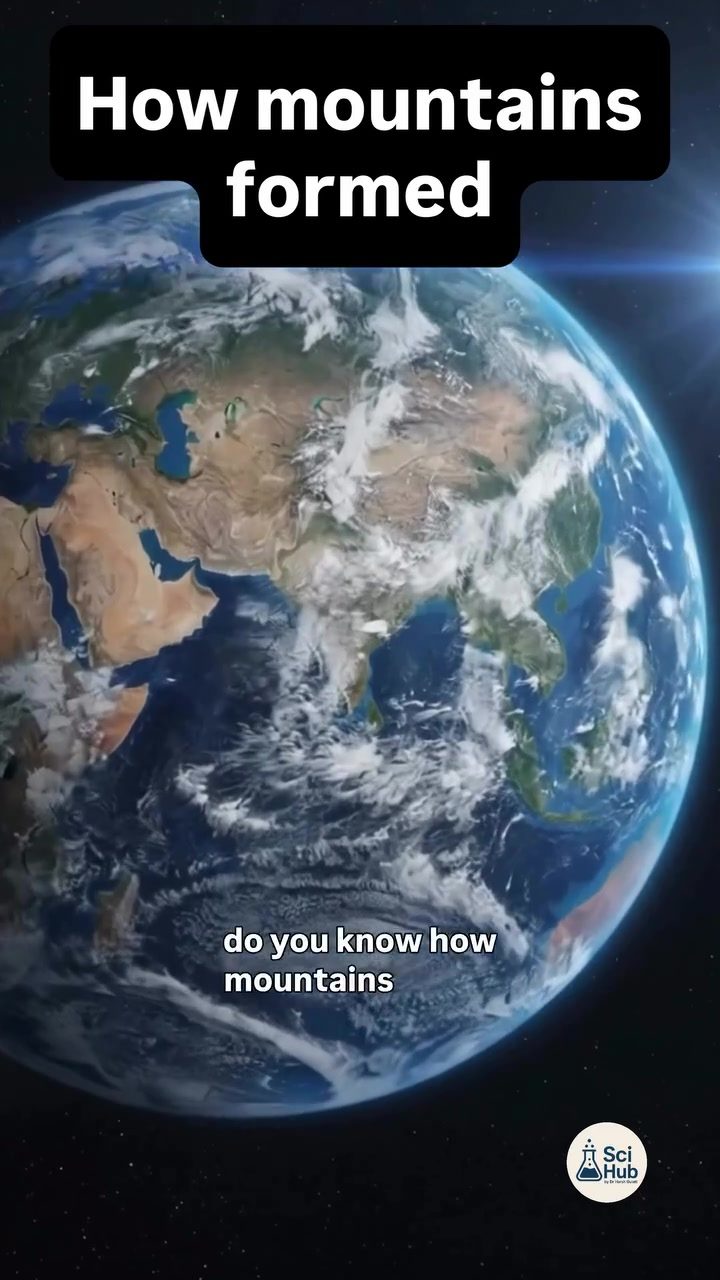
Mountain formation is a process of incredible geological activity that shapes our planet. The Earth's surface is composed of giant pieces called tectonic plates. These massive plates are continually in motion, changing the landscape over vast periods.
Why this matters
Mountain formation is essential to understanding the geological forces that shape the planet. The slow but relentless movement of tectonic plates creates not only mountains but also contributes to the formation of valleys, volcanoes, and other geological features. This process is ongoing and has significant implications for climate, biodiversity, and human civilization.
The process of mountain formation
Tectonic plates and their movement
Tectonic plates are massive sections of the Earth's crust that move at a speed of about 5 cm (2 inches) per year. While this rate might seem slow, it adds up to significant changes over millions of years. These plates can move in different directions and at different speeds, leading to various geological activities.
Collision and folding
When tectonic plates collide, they push against each other, causing the land to fold and rise. This process is known as orogenesis, or mountain-building. The collision of the Eurasian and Indian plates is a prime example of this phenomenon, resulting in the formation of the Himalayas. The Himalayas are still growing today, a testament to the ongoing geological activity.
Types of plate collisions
There are different types of plate collisions that lead to mountain formation:
-
Convergent boundaries: These occur when two tectonic plates move towards each other. If both plates are continental, they will collide and push up, forming mountains. If one plate is oceanic and the other is continental, the oceanic plate will subduct beneath the continental plate, creating volcanic activity and mountain ranges.
-
Divergent boundaries: These occur when two plates move away from each other, allowing magma to rise to the surface and form new crust. While this process often leads to the creation of oceanic ridges, it can also contribute to the formation of mountains in certain conditions.
-
Transform boundaries: These occur when two plates slide past each other horizontally. While this process usually results in earthquakes, it can also contribute to mountain formation in certain situations.
Examples of mountain ranges formed by plate collisions
The Himalayas
The collision between the Eurasian and Indian plates started around 50 million years ago and is still ongoing. The Himalayas, which include the highest peak in the world, Mount Everest, are a result of this collision. The Himalayas are an example of a continental-continental collision, where both plates are made of continental crust.
The Andes
The Andes, located along the western coast of South America, are an example of a continental-oceanic collision. The Nazca Plate, an oceanic plate, is subducting beneath the South American Plate, a continental plate. This process has led to the formation of the Andes, one of the longest continental mountain ranges in the world.
The Rockies
The Rocky Mountains in North America were formed due to a combination of tectonic plate collisions and other geological processes. The Rockies are an example of a complex mountain range formed by multiple phases of orogenesis, involving the collision of various plates and the formation of intracontinental basins.
Practical tips for understanding mountain formation
Mountain formation is a fascinating but complex process. Here are some practical tips for understanding it better:
Study geology
Studying geology can provide a solid foundation for understanding mountain formation. There are numerous resources available, both online and offline, that can help you learn about the Earth's geological processes.
Observe geological features
Observing geological features in your surroundings can provide insights into mountain formation. Look for signs of tectonic activity, such as faults, folds, and volcanic activity. These features can help you understand how mountains are formed and the forces that shape our planet.
Explore mountain ranges
Exploring mountain ranges can provide firsthand experience of mountain formation. Many mountain ranges have visitor centers and guided tours that can help you learn about their geological history and the processes that formed them. For instance, you can consider visiting a place like the Grand Canyon, which provides a clear insight into the layers of the Earth's crust and the erosion that has taken place over time.
Important takeaways
Mountain formation is a result of the slow but relentless movement of tectonic plates. The process involves the collision and folding of these plates, leading to the creation of mountain ranges. The Himalayas, the Andes, and the Rockies are examples of mountain ranges formed by plate collisions.
Conclusion
Mountains are more than just majestic landscapes; they are a testament to the dynamic and ever-changing nature of our planet. The process of mountain formation, driven by the movement of tectonic plates, has shaped the Earth's surface over millions of years. Understanding this process provides a deeper appreciation for the geological forces that continue to mold our world today.
Watch the Reel
Questions readers ask
What are tectonic plates and how do they contribute to mountain formation?
Tectonic plates are vast sections of the Earth's crust that are in constant, slow motion. When these plates collide, they push against each other, causing the Earth's crust to crumple and fold, creating the mountainous landscapes we see today. This is the fundamental process behind the formation of mountain ranges, such as the Himalayas.
Why does the process of mountain formation take millions of years?
Mountain formation is an incredibly slow process because tectonic plates move at an average rate of only a few centimeters per year. Over millions of years, these small movements accumulate, leading to the significant geological changes that result in the formation of giant mountain ranges and other landmarks.
How do volcanoes form in relation to tectonic plate activity?
Volcanoes often form along the boundaries where tectonic plates converge or diverge. In convergent boundaries, one plate subducts beneath another, leading to the melting of rock and the formation of magma, which can rise to the surface to create volcanoes. In divergent boundaries, magma rises from the mantle to fill the gaps created by the separating plates, sometimes resulting in volcanic activity.
Can tectonic activity create valleys along with mountains?
Yes, the same tectonic activity that creates mountains can also result in the formation of valleys. When plates collide, the crust may fold and uplift to form mountains, but in other areas, the crust may stretch and thin, leading to the formation of valleys, basins and other depressions.
What role does the movement of tectonic plates play in shaping Earth's landscapes?
The movement of tectonic plates is the driving force behind many long-term geological changes to Earth's landscapes. These movements can uplift and erode the Earth's surface, leading to the formation of mountain ranges, valleys, and other significant features, as well as influencing climate patterns and biodiversity over time.
How are mountains formed through plate collisions?
Mountains form through plate collisions in a process that involves intense geological activity. When two tectonic plates converge, the dense and heavy plate is pushed beneath the lighter one. This subduction causes uplift of the Earth's crust, resulting in the formation of mountains. These processes can also trigger earthquakes and volcanic eruptions.
Why is understanding mountain formation important for studying climate change and biodiversity?
Understanding the formation of mountain ranges is crucial for studying climate change and biodiversity because mountains significantly influence local and global climate patterns, and provide unique habitats for various species. The geological processes that create mountains also shape the landscape, affecting water cycles, and weather patterns, all of which are vital for biodiversity.
Recent articles
Fresh deep dives from the latest Reels we unpacked.




Comments
Be the first to comment.