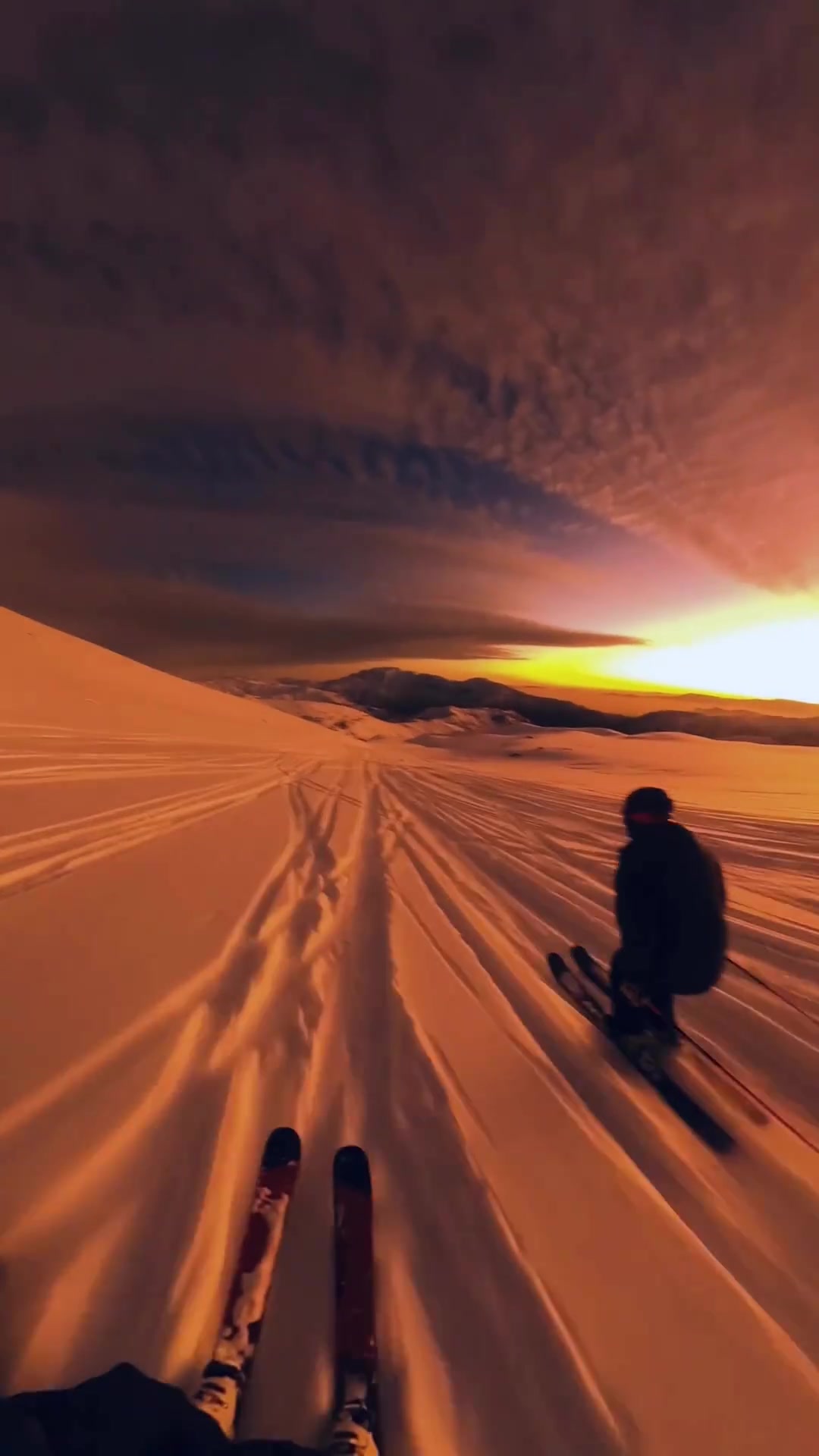
The camera glides with the skis, the setting sun bathes the slopes below. The video, shot in first-person view, captures the raw experience of gliding down a snow-capped slope in the magical hours of sunset. It’s a personal moment, shared with a world of spectators; a solitary skier cuts through fresh powder. Skiing's magic comes alive, as the skier seems to dance down the tracks — the skis digging in, the muscles working to carve the turns, the mind forgetting about everything else.
The Ski Slopes in Motion
The first person ski video lets us tag along with someone at the top of the hill. This format invites you to experience the adrenaline rush; the fact that everything is from the skier’s point of view makes it a uniquely intimate experience. You feel the rush of the wind and the cold air hitting your face as you ski on a vast expanse of snow; the vibrant colors of the sunset paint the sky above. Watching a first-person ski video lets you experience the sport in a way that is more immersive than traditional sports video. At the same time, no two runs are the same. Skiing at sunset adds a unique glow at the end of the day. The caller says a word to someone about sitting in a diner; this side-of-the-road statement is very human and relatable, but the visuals contradict the audio, creating an unusual tension between the voice and the visceral movement on screen.
Contrasting Experiences
First-person ski videos are part of a broader trend in outdoor and adventure sports. The public feels more connected to these experiences, as they allow you to pretend like you're experiencing it for yourself. While travelers and skiers go and take the jump, the audience can soak in the views of the mountain ranges and or the snow cascading from the trees. The sensations of avalanche or falling are not present in a video, and instead, there is a rush of adrenaline coursing through the skier. This feeling is unprecedented in other types of video content. In a matter of minutes, the skier comes to a stop with the sun near the horizon.
Capturing Wędkarski
So how does the skier capture the video? Many videos use GoPro cameras because they are durable and small, hence they don't interfere with the skis. There are some variations that you can find online, and you can see skiers narrating their videos as they move. However, the video in question does not. Understanding how it attaches to the skis and takes the footage is unclear, as the quality of the video is excellent and sharp.
The Rushing Slopes
The tracks on the snow make it appear like the skier has been skiing a whole bunch of times, and the chanting of the trees, as the skier rushes past, makes it seem like the hill is alive. As distant sounds of the mountains whirl around, the skier carves out a path. The sound of the skis on the snow and the wind rushing past is quite soothing.
The Double Life
The ski perspective is almost opposite to what a person would experience. The skier gets the thrill of skiing down the mountain, but from the audience's perspective, the danger of falling is missing. It is not that the skier was in a world of danger, but from an audience's perspective, you do not see the fear that a skier feels. The contradiction is clear. Thinking of the physical experience and the emotional experience is important to look at — while skiing is very dangerous, you might not see it when watching the video. Skiing is a sport that requires the right balance and a lot of skill, so it is important to be clear on the facts: more than 6% of all recreational skiers (concussion) end up falling down the mountain.
A Mater of Availability
To experience the ski video, it might be a bit difficult to find a skiing instructor for yourself, but you can try indoor skiing. Artificial ski slopes are available in most cities, and it's an easy way to get on the slope without the risk of falling on real snow. You will need the right equipment to ski on artificial slopes — for example, a pair of ski boots, skis, and a helmet. There are skiing lessons available at the slopes, and it will help you get comfortable with the sport and the artificial snow itself. Getting the snowboots on and off might be a bit tricky at first, but the reward is worth it. The first time might be a bit of practice, but as soon as you get the hang of it, you will be skiing on your own. The locations offer classes and instructors to help you learn more about the sport and the technology it uses. But there is also the secondhand market, where you can find all the equipment that you need to ski on your own.
Watch the Reel
Questions readers ask
What kind of camera is typically used to capture first-person ski videos?
GoPro cameras are commonly used for first-person ski videos due to their durability and compact size. These cameras can be mounted on helmets or other gear without interfering with the skier's movements, allowing for high-quality, immersive footage.
How does skiing at sunset enhance the viewing experience?
Skiing at sunset adds a magical element to the video. The golden hue of the setting sun transforms the slopes into a breathtaking scene, making the experience feel more enchanting and visually stunning. The vibrant colors of the sunset paint the sky, creating a unique and captivating backdrop.
What makes first-person ski videos different from traditional sports videos?
First-person ski videos offer a uniquely immersive experience. Viewers feel as if they are on the slopes themselves, experiencing the adrenaline rush, the wind, and the cold air. This perspective allows spectators to connect more deeply with the sport and the skier's personal journey down the mountain.
Why do first-person ski videos create a sense of intimacy?
The first-person perspective in these videos makes viewers feel like they are tagging along with the skier, experiencing the thrill and beauty of the slopes in a personal and immediate way. The skier's point of view, along with the raw, unfiltered footage, creates a sense of closeness and intimacy that traditional videos often lack.
Can I capture my own first-person ski videos with a GoPro?
Yes, you can capture your own first-person ski videos with a GoPro. These cameras are designed to be rugged and compact, making them ideal for outdoor activities like skiing. You can mount the GoPro on your helmet or other gear to get the same immersive, first-person perspective as seen in professional videos.
What is the contrasting experience between the skier and the audience?
The skier experiences the thrill and adventure of skiing down the mountain, feeling the wind, the cold, and the adrenaline. In contrast, the audience enjoys the visual beauty and the immersive experience from a safe distance, without the physical sensations or the danger of falling, creating a unique disconnect.
How do first-person ski videos connect with a broader trend in outdoor sports?
First-person ski videos are part of a larger trend in outdoor and adventure sports where viewers can experience the activity vicariously. This format allows viewers to feel more connected to the sport and the adventurer, making it a popular choice for sharing and enjoying outdoor experiences.
Related deep dives
Similar reads based on topic and creator.

Recent articles
Fresh deep dives from the latest Reels we unpacked.

Comments
Be the first to comment.