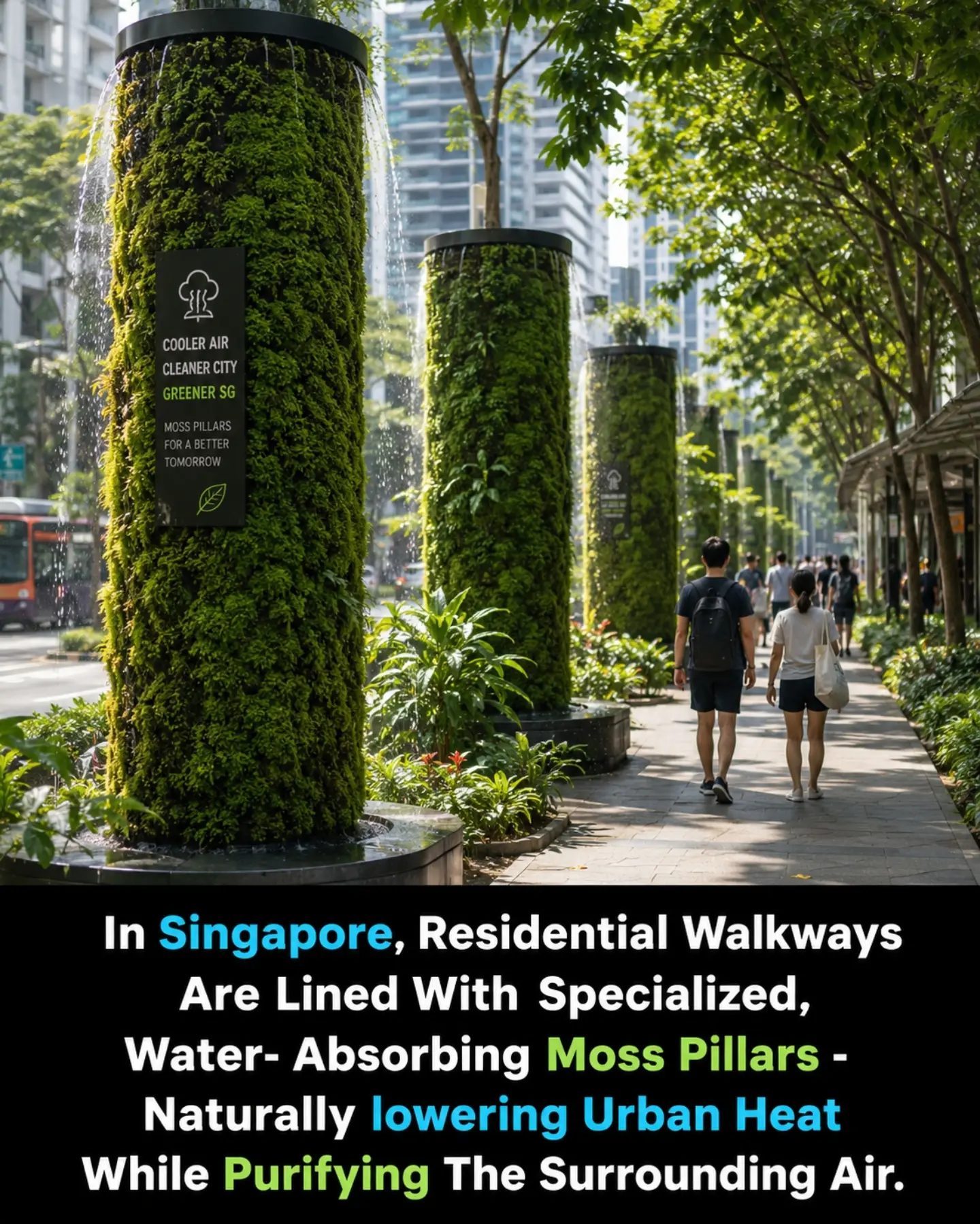
Urban Cooling with Moss Pillars
Singapore's innovative approach to urban planning involves integrating moss pillars along residential walkways. These vertical structures, coated in moss, serve a dual purpose: they absorb water and naturally mitigate urban heat while purifying the air. This initiative, part of a broader effort to create a "Greener SG," demonstrates how cities can leverage natural elements to enhance urban environments. Cooler Air Cleaner City, a key player in this endeavor, showcases these moss pillars as a practical solution for urban heat management and air purification.
Context / Why This Matters
As urban populations grow, so does the urban heat island effect, where urban areas are significantly warmer than their rural surroundings. This phenomenon is driven by factors such as heat-absorbing materials in buildings and roads, reduced vegetation, and human activities. To combat this, cities are exploring innovative strategies to cool down urban spaces and improve air quality. Moss pillars, as seen along Singapore's walkways, are one such solution. These structures not only help lower temperatures but also contribute to cleaner air, making urban environments more livable.
Main Discussion
The Science Behind Moss Pillars
Moss pillars work by harnessing the natural properties of moss. Mosses are known for their ability to absorb water, which they use for photosynthesis and to maintain their structure. When water evaporates from the moss, it cools the surrounding area through a process called evaporative cooling. This is the same principle behind sweating in humans; as water evaporates from the skin, it cools the body down.
In addition to cooling, mosses also help purify the air. They absorb pollutants and particulate matter, releasing oxygen in the process. This dual benefit of cooling and purifying makes moss pillars a valuable addition to urban landscapes.
Design and Integration
The design of moss pillars is crucial to their effectiveness. They are typically tall, cylindrical structures that maximize the surface area covered in moss. This design ensures that a significant portion of the structure is exposed to air and sunlight, enhancing both the cooling and air-purifying effects.
Integrating these pillars into the urban landscape requires careful planning. In Singapore, they are strategically placed along residential walkways, where people can benefit directly from the cooled air and improved air quality. The pillars are designed to blend seamlessly with the urban environment, adding a touch of greenery without disrupting the cityscape.
Benefits of Moss Pillars
-
Urban Heat Mitigation: By absorbing water and releasing it through evaporation, moss pillars help lower urban temperatures. This can make outdoor spaces more comfortable, especially during hot weather.
-
Air Purification: Mosses naturally filter out pollutants and particulate matter, contributing to cleaner air. This is particularly important in urban areas where air pollution is a significant concern.
-
Aesthetic Appeal: The green covering of moss adds a natural and visually appealing element to urban landscapes. This can enhance the overall aesthetic of a city, making it more pleasant for residents and visitors alike.
-
Sustainability: Moss pillars are a sustainable solution as they rely on natural processes rather than energy-consuming technologies. This aligns with broader sustainability goals in urban planning.
Challenges and Considerations
While moss pillars offer numerous benefits, there are also challenges to consider. One of the main challenges is maintenance. Mosses require regular watering to stay healthy and effective. Additionally, the effectiveness of moss pillars can be affected by environmental factors such as humidity and sunlight exposure. Proper maintenance and strategic placement are key to maximizing their benefits.
Practical Tips
If you're considering incorporating moss pillars into your urban environment, here are some practical tips:
-
Consult with Experts: Work with urban planners and environmental specialists to determine the best locations for moss pillars. They can provide valuable insights into how to maximize the benefits of these structures.
-
Choose the Right Design: Opt for tall, cylindrical designs that maximize the surface area covered in moss. This design enhances both the cooling and air-purifying effects.
-
Regular Maintenance: Ensure regular watering and maintenance to keep the moss healthy and effective. This might involve setting up an automated watering system or regular manual watering.
-
Monitor Effectiveness: Keep track of the environmental impact of the moss pillars. Use air quality monitors and temperature sensors to assess their effectiveness and make necessary adjustments.
Important Takeaways
Moss pillars are a practical and sustainable solution for urban cooling and air purification. By harnessing the natural properties of moss, these structures can significantly improve urban environments. When integrated thoughtfully into urban landscapes, moss pillars offer a range of benefits, from cooling down urban spaces to purifying the air and enhancing the city's aesthetic appeal. However, successful implementation requires careful planning, design, and maintenance.
Conclusion
The integration of moss pillars into urban planning, as seen in Singapore's residential walkways, showcases an innovative approach to combating urban heat and improving air quality. These structures, developed by Cooler Air Cleaner City, provide a natural and effective way to enhance urban environments. As cities continue to grow, it's essential to explore and implement such sustainable solutions to create more livable and pleasant urban spaces. By leveraging the natural properties of moss, moss pillars offer a promising path forward for urban cooling and air purification.
Watch the Reel
Questions readers ask
What are moss pillars and how do they help in urban cooling?
Moss pillars are tall, cylindrical structures coated with moss, strategically placed in urban areas like Singapore. They help in urban cooling by absorbing water and mitigating heat naturally, thus reducing the urban heat island effect and providing a greener, more comfortable environment.
How do moss pillars contribute to air purification in cities?
Moss pillars act as natural air filters. The moss on these structures absorbs pollutants and releases oxygen, significantly improving the quality of city air. This makes them an effective green solution for combating urban air pollution.
What is the urban heat island effect and how do moss pillars combat it?
The urban heat island effect occurs when urban areas are significantly warmer than their rural surroundings due to human activities and infrastructure. Moss pillars combat this effect by absorbing heat and water, creating cooler microclimates in urban spaces.
Who is leading the initiative to implement moss pillars in Singapore?
Cooler Air Cleaner City is a key player in Singapore's initiative to implement moss pillars. They are instrumental in showcasing these structures as a practical solution for urban heat management and air purification, contributing to the broader 'Greener SG' effort.
How are moss pillars integrated into Singapore's urban planning?
Moss pillars are integrated into Singapore's urban planning by being placed along residential walkways. This strategic placement allows them to serve both aesthetic and functional purposes, enhancing the city's green infrastructure while providing natural cooling and air purification benefits.
What are the benefits of using moss for vertical gardens in urban areas?
Moss is an excellent choice for vertical gardens in urban areas due to its ability to thrive in shaded conditions and absorb water efficiently. It also requires minimal maintenance, making it a sustainable option for creating greener, cooler urban spaces.
Related deep dives
Similar reads based on topic and creator.




Recent articles
Fresh deep dives from the latest Reels we unpacked.




Comments
Be the first to comment.